Algarve-Tourist.com
The best independent guide to the Algarve
Algarve-Tourist.com
The best independent guide to the Algarve
The Algarve’s beaches; beach guide and best beach in 2026
The Algarve is, without question, one of Europe's finest stretches of coastline. Over 200 kilometres of Atlantic shore delivers a variety that is genuinely hard to rival: ancient limestone coves framed by golden cliffs, vast open beaches built for long afternoons in the sun, and powerful surf breaks that draw riders from across the continent. Few regions on earth pack this much into a single region.
What I love most about this coastline is that the standard holds almost everywhere. Other European regions have their celebrated beaches surrounded by less inspiring stretches. Here in the Algarve, you could point almost anywhere on the map and find something genuinely worth the visit. The difficulty is not finding a good beach but choosing between the many that are exceptional.
If you have arrived at this guide wanting to know whether the Algarve's beaches are genuinely good, they are. The beaches are exceptional, and wherever you choose for your holiday you will not be disappointed. The one honest caveat is that the Atlantic keeps the sea cool year-round, noticeably cooler than the Mediterranean.
My Portuguese wife and I have lived and explored here since 2001, and this guide is built on our two decades of firsthand knowledge. Let us help you find your perfect Algarve beach.
The Algarve's best beaches
These five beaches represent the finest the Algarve has to offer, each distinctive in character and setting.
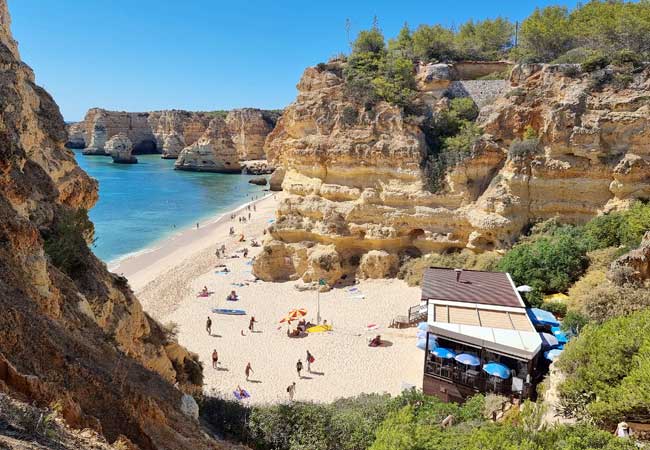
1) Praia da Marinha: The Algarve's most photographed beach, and standing here it is easy to understand why. Golden cliffs frame a sheltered cove of startlingly clear water, with a distinctive double sea arch standing just offshore. The setting defines what most visitors picture when they imagine this coastline. Praia da Marinha guide.
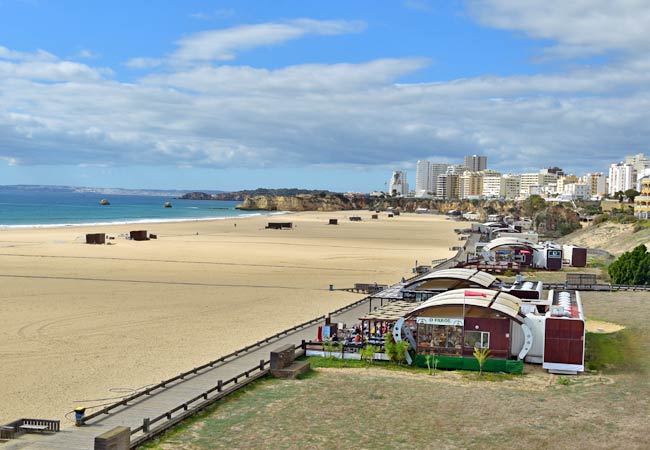
2) Praia da Rocha: This is the Algarve in full holiday spirit. One of the largest beaches on the coast, its vast sand backed by a lively resort of beach bars and chic beach clubs. If you want sun, sand and a social scene, Praia da Rocha is your beach.
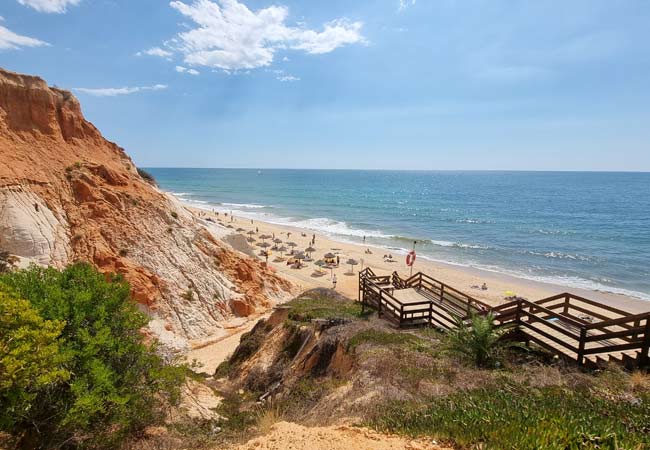
3) Praia da Falésia: This is the cliff beach. Terracotta walls rise behind golden sand, their deep burnt colour found nowhere else on this coastline. From the western end the beach stretches further than the eye can see to Vilamoura. Walk the clifftop path or settle on the sand; either way, stay longer than you planned. It is one of my favourite beaches in the Algarve. Praia da Falésia guide.
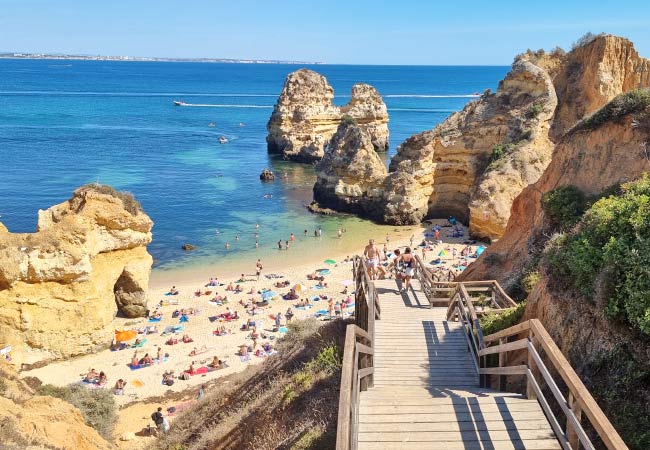
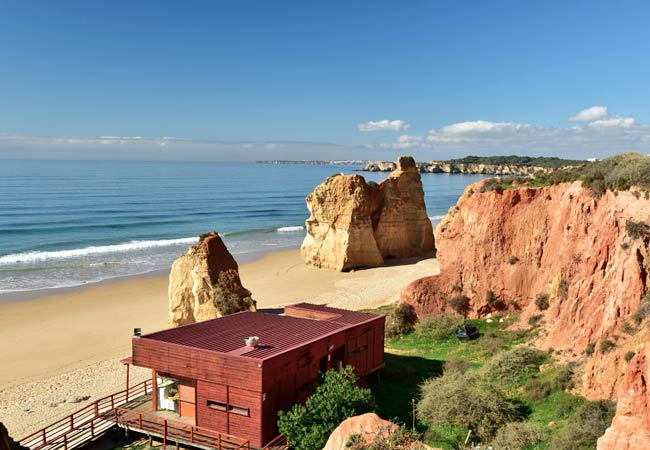
4) Praia do Camilo: A tiny cove reached by a steep wooden staircase that descends between towering cliff walls. The sculptural rock formations and intimate scale make this one of the most visually striking settings on the coast, though the limited sand fills quickly in summer.
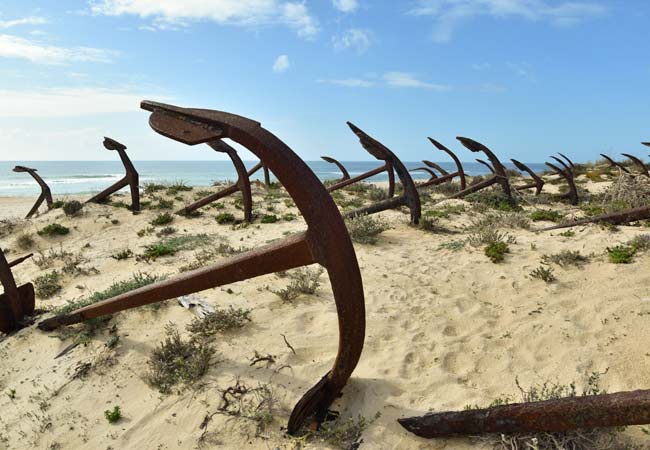
5) Praia do Barril: This remote eastern beach carries the quiet traces of a former fishing community. Hundreds of rusting anchors stand in the dunes behind the sand, a haunting memorial to the tuna fishermen who once worked this coast. The water is calm, the crowds are thin, and the sense of remoteness is rare in the Algarve. Praia do Barril guide
The map below shows the location of my favourite beaches along the Algarve coastline. The Algarve coastline stretches for over 200 kilometres, so it is worth knowing where the best beaches are before you start planning.
Legend: 1) Praia da Marinha 2) Praia da Rocha 3) Praia da Ilha Deserta 4) Praia do Beliche 5) Praia do Barril 6) Praia de Dona Ana / Praia do Camilo 7) Praia da Ilha de Tavira 8) Praia dos Pescadores (Albufeira) 9) Praia de Monte Gordo 10) Praia da Torralta 11) Praia da Falésia 12) Praia dos Caneiros 13) Praia do Burgau 14) Praia da Galé 15) Praia de Carvoeiro 16) Meia Praia
All of these beaches are detailed later in this guide.
The Algarve's three coastlines
One of the things I love most about the Algarve is how much the coast changes as you travel along it. Head east and you find sheltered lagoons and barrier islands, a slower world of tidal channels, flamingos and deserted white sands. Stay in the centre and you have the golden cliff scenery that fills every travel poster. Strike out west and the coast turns wild, bigger waves, emptier sands, and a sense that the Atlantic is in control. Each stretch has its own personality, and understanding the differences will help you choose the area that suits you best.
The Central Algarve: Lagos to Vilamoura
This is the Algarve you have scrolled past on social media, golden cliffs and turquoise water, and yes, it really does look like that.
The central coastline holds the beaches that have made this region famous worldwide: golden sandstone cliffs carved into arches and sea stacks, turquoise water filling sheltered coves, hidden grottos you can only reach by kayak. The reality, it turns out, matches the photographs.
The beaches here fall into two quite different types.
The first are the big open beaches: broad sweeps of golden sand that stretch further than the eye can see. Praia da Rocha, Praia de Alvor and Praia da Galé are the finest examples. The appeal is simple: no beach claustrophobia, room for children to run, and a quiet corner to yourself even in August.
The second type are the cove beaches, tucked at the base of golden limestone headlands, with grottos, sea stacks and hidden caves surrounding them on all sides. Hire a kayak to explore properly, or swim out from the beach if the cool water doesn't deter you.
The Ponta da Piedade headland near Lagos shelters two of the finest examples, Praia do Camilo and Praia de Dona Ana, both spectacular even by Algarve standards. Further east, Praia de Carvoeiro and Praia do Vale de Centeanes offer the same sheltered beauty, before the coastline reaches Praia da Marinha, arguably the most beautiful beach in the Algarve. Even Albufeira, better known for its busy resort beaches, hides quieter coves at Praia de São Rafael and Praia da Coelha.
Almost all of these beaches face south, sheltered from Atlantic swells by the angle of the coast, which means calm, safe water throughout the summer.
One honest note of caution: this is the most popular stretch of the Algarve, and beaches near Albufeira, Vilamoura and Portimão fill quickly in high summer. Outside peak season, even the busiest beaches feel remarkably peaceful, Praia da Marinha and Praia de Dona Ana included.
The Eastern Algarve: Faro to the Spanish Border
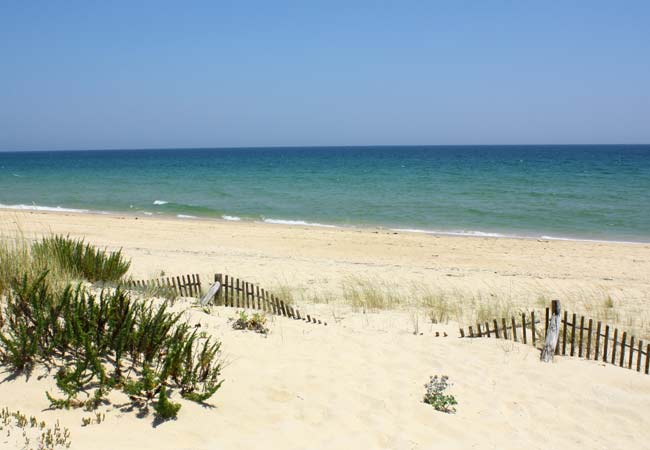
East of Faro, the coastline transforms entirely. The cliffs and coves of the central Algarve disappear, replaced by the Ria Formosa, a protected lagoon system of tidal waterways, salt marshes and sandy barrier islands stretching sixty kilometres toward Spain.
The beaches here lie offshore, on long sandbar islands that shelter the lagoon from the sea. Reaching them requires a short ferry crossing or water taxi, a small effort that quietly filters out the crowds and leaves the sands remarkably empty even in August. Ilha Deserta, Ilha de Tavira and Ilha da Culatra each offer kilometres of sand backed by dunes rather than hotels, and this is the coastline I come to when I want to escape the summer crowds entirely.
Further east, the lagoons give way to something even simpler. Beyond the beautiful hilltop village of Cacela Velha, the coast becomes a vast unbroken sweep of sand running thirteen kilometres to the Guadiana River and the Spanish border. Calm water, empty sands, and a sense of space that feels increasingly rare in southern Europe.
Even Praia de Faro, a fine beach just two kilometres from the airport, is barely known by foreign visitors. If you are looking for a holiday away from the tourist crowds, this is the part of the Algarve to explore first.
The Western Algarve: Lagos to Sagres and the West Coast
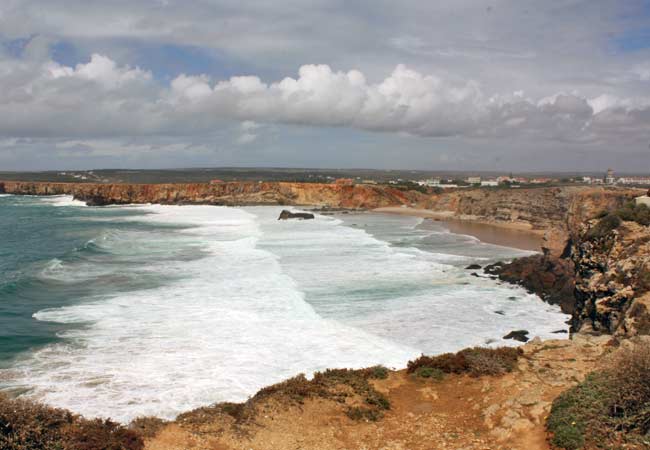
Lagos is where the Algarve begins to change, and to the west the coast grows wilder. Cliffs rise higher, beaches face the open Atlantic, and by the time you reach Sagres the family resort atmosphere has given way to something altogether more rugged. Praia do Beliche and the beaches around Sagres draw surfers seeking consistent Atlantic swells and a laid-back atmosphere built around the waves rather than the sunlounger.
North of Sagres the coast turns wild entirely. This stretch falls within the Parque Natural do Sudoeste Alentejano e Costa Vicentina, which has protected it from the development that transformed the southern coast. Beaches here are broad, the waves powerful, and the sense of remoteness is genuine. If the busy resorts of the central Algarve are not for you, this is the coastline worth knowing about.
My Favourite beaches of the Algarve
My wife and I have been exploring this coastline since 2001, and what follows are the beaches we keep returning to. Some are famous, some are barely known outside Portugal, but each one has earned its place on this list for a reason.
No.16 - Meia Praia beach
Stretching eastwards from Lagos in a vast, sweeping arc of golden sand, Meia Praia offers something the town's smaller cove beaches simply cannot: space. The name translates as "half beach," a nod to the Alvor estuary that separates this generous expanse from Praia de Alvor on the opposite bank.
The sheer scale of the beach means it absorbs even the busiest summer crowds with ease, making it a wonderfully reliable choice when the more famous coves near Lagos are at their busiest. A boardwalk promenade runs along the western section, backed by a pleasant string of restaurants and beach bars, while the eastern stretches stay noticeably quieter and far less developed. If you fancy something more active, watersports operators near the Lagos end offer everything from jet skis to kayak hire.
Related articles: Lagos guide
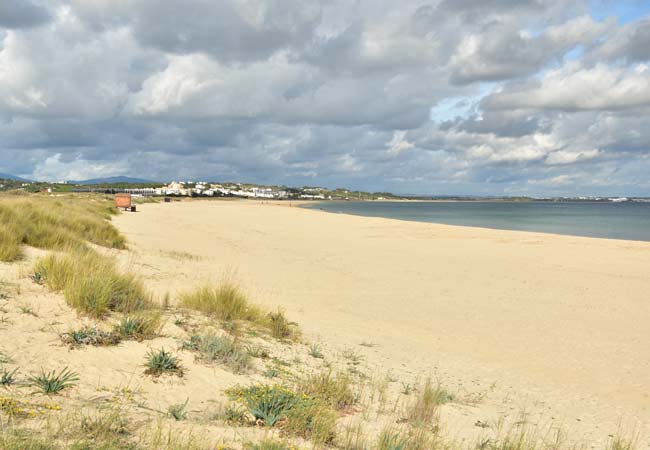
Meia Praia stretches for over four kilometres east of Lagos
No.15 - Praia de Carvoeiro
Carvoeiro's beach sits in a natural amphitheatre, framed by golden cliffs and backed by the whitewashed buildings of the old village. Fishing boats once launched from this very sand, and today the former fishermen's cottages have been lovingly converted into restaurants and bars overlooking the water.
The sheltered setting and calm water make this a wonderful choice for families, though the beach's modest size means arriving early is well worth it during the summer months. The village itself adds greatly to the appeal: a charming town that has grown around tourism without entirely losing its character.
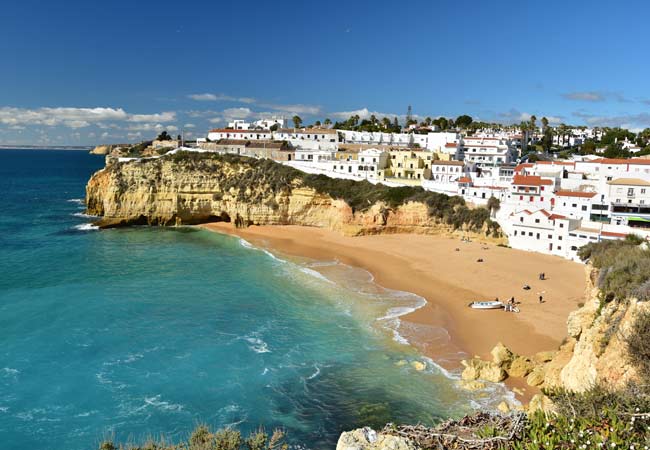
Praia de Carvoeiro on a quiet spring morning, though summer crowds fill the sand by mid-morning
No.14 -Praia da Galé
Tucked between Albufeira and Armação de Pêra, Praia da Galé sits close enough to both resorts to be convenient, yet somehow remains overlooked by the crowds that pour onto their main beaches. The result is a surprisingly long stretch of sand that holds onto its sense of space and quiet even at the height of summer, rarely feeling anything other than pleasantly uncrowded. The beach's name is said to derive from a 16th-century galley that ran aground on the reefs just offshore, and the rocks here still have a way of surprising the unwary at low tide.
At low tide, rock formations divide the beach into distinct sections. On the eastern headland, natural tunnels carved through the cliff face allow you to walk directly through to the secluded Praia do Chiringuito, one of those small discoveries that makes a beach day feel like a proper adventure. A distinctive razor-edged limestone outcrop known locally as the Shark Fin stands on this eastern section, its silhouette shifting as the sun moves through the day.
The western end has a very different character. It is quieter here, backed by low dunes rather than cliffs and covered in curry plant. On warm afternoons you will notice the scent before you see the source, a distinctive spiced smell that drifts across the sand. Just behind the beach, the Lagoa dos Salgados lagoon is one of the better birdwatching spots in the area, and I spotted a flock of greater flamingos there last year.
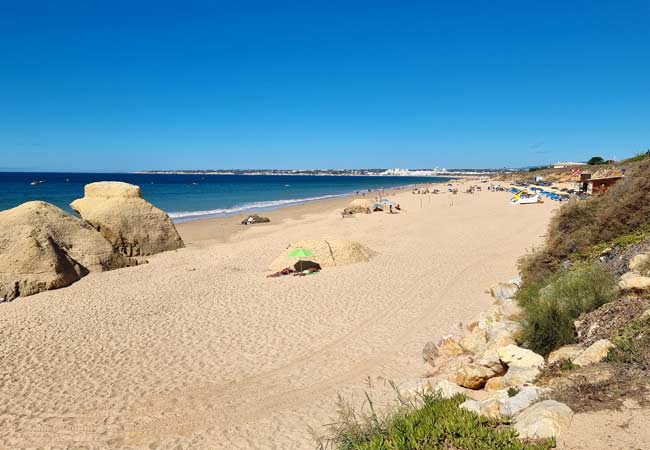
Rock formations at Praia da Galé create sheltered sections along the beach
No.13 - Praia do Burgau
The western Algarve coast is dotted with small villages built around sheltered coves, and Burgau ranks among the prettiest of them. The beach sits snugly at the foot of the village, well protected from the Atlantic winds that batter more exposed stretches of this dramatic coastline.
The sand is clean and the water calm enough for children, while the village above retains a gentle, unhurried atmosphere that the larger resorts lost long ago. A handful of restaurants and cafés serve the beach without overwhelming it. For those drawn to this kind of character, the neighbouring villages of Salema and Praia da Luz are well worth considering.
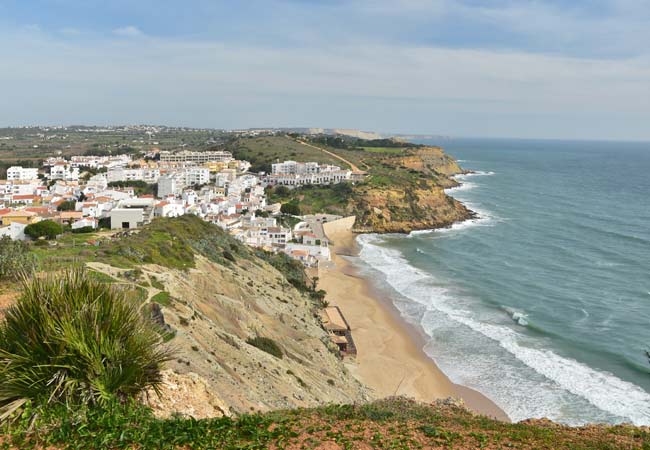
The rugged coastline of the western Algarve and the pretty village of Burgau
No.12 -Praia dos Caneiros
Occupying a fine position on the Ponta do Altar headland, where the Arade River meets the sea, Praia dos Caneiros is one of those beaches that feels genuinely discovered rather than merely visited. Golden cliffs rise behind the sand, their ochre-coloured rock carved from ancient calcarenite. This is one of my favourite beaches in the Algarve, particularly in summer, though parking can be a challenge so arriving early pays off.
The headland has largely escaped development, giving Caneiros a natural setting that contrasts sharply with the high-rise sprawl visible across the river at Praia da Rocha. A single beach restaurant serves the cove, keeping things refreshingly unhurried. Just offshore, the limestone sea stack of Leixão das Gaivotas is a designated nature reserve and a nesting site for European shags and yellow-legged gulls.
On the western headland, a dramatic natural blowhole known locally as a fojo drops vertically from the clifftop down to the ocean below, formed by the collapse of an ancient sea cave roof. Coastal walking trails lead from the beach along the clifftops with views across the Arade estuary, and this is one of the best short walks in the area.
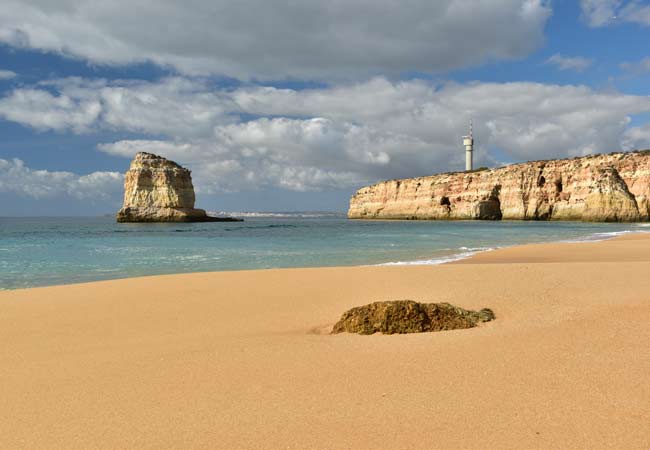
The Leixão das Gaivotas rises from the water off Praia dos Caneiros
No.11 -Praia da Falésia
Praia da Falésia runs for six kilometres between Olhos de Água and Vilamoura, backed by striking cliffs that shift from pale yellow to deep terracotta along their length. The colours are unlike anything else in the Algarve, and after rain the iron-rich rock bleeds rust-coloured streaks down through the paler layers below, giving the cliff face an almost painterly quality. The sheer height of the cliffs has kept developers at bay along most of this stretch, leaving it one of the least built-up beaches in the central Algarve.
Near Vilamoura the cliffs diminish and access becomes easier, but at the Olhos de Água end they rise to their most dramatic, with wooden boardwalks descending to the sand below. This is a beach I keep coming back to on holidays in Vilamoura. My approach is to take an Uber to one of the central access points and spend the day walking the full length back towards the resort. It is a simple plan, but it works beautifully.
The cliffs at Praia da Falésia reach their full height near Olhos de Água
No.10 - Praia da Torralta
Praia da Torralta sits east of Alvor at the point where the long flat sands of Meia Praia give way to the more dramatic cliff scenery of the central Algarve. The sand here is notably fine and white, filtered by the Alvor estuary in a way that keeps the darker silts at bay, and the setting is framed by the kind of sculptural golden cliffs the region is known for. If you have a car, this is also one of the easier beaches to reach in high summer, with a large free car park right behind the beach that takes the stress out of arrival.
The facilities are minimal, which is rather the point. This suits visitors based around Alvor who want a quieter morning on the sand without the noise of a busier resort beach. A clifftop path leads east towards more sheltered coves for those who want to keep exploring. From the western end, the Alvor Boardwalks offer a three kilometre trail through the marshes and dunes of the nature reserve, a good way to spend an hour if you fancy a change of pace.
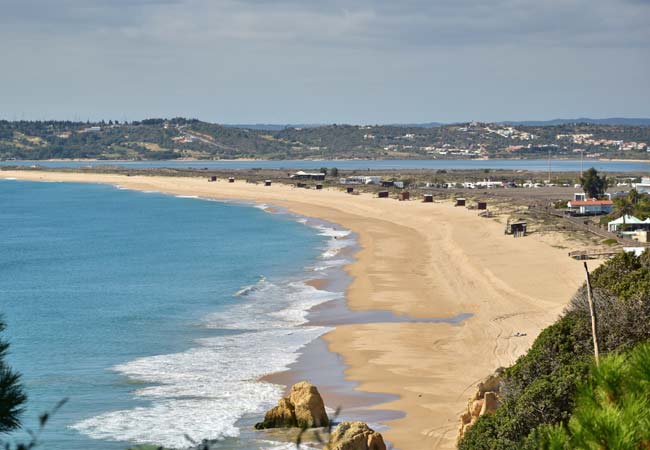
Looking along Praia da Torralta from the cliffs towards Alvor
No.9 – Praia de Monte Gordo
Monte Gordo offers the largest and most accessible beach in the eastern Algarve, a long sweep of sand backed by a purpose-built resort town. The beach forms part of an eight-kilometre stretch of continuous coastline running toward the Spanish border.
The eastern Algarve faces calmer waters than the Atlantic-exposed beaches further west. Waves here are gentler, currents weaker, and the sand noticeably finer and softer underfoot. Families with young children find these conditions ideal. The trade-off is a resort that lacks the character of the traditional towns further along the coast, though the beach itself is well worth the visit.
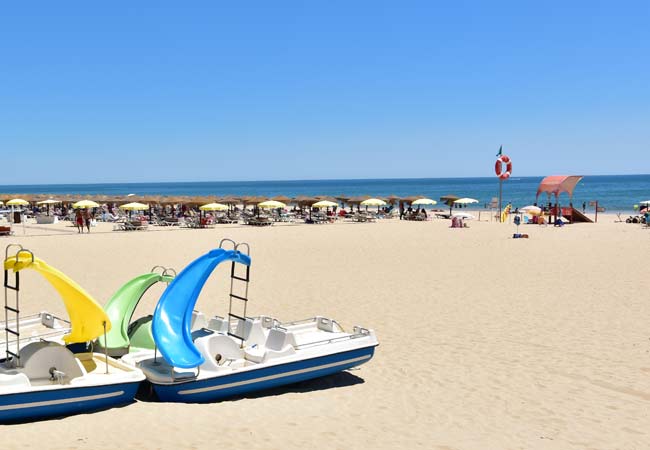
The soft, fine sand of Monte Gordo stretches toward the Spanish border
No.8 – Praia dos Pescadores, Albufeira
Praia dos Pescadores sits at the heart of Albufeira, the Algarve's busiest resort town, and the beach reflects that energy: banana boats, inflatable rides, beach bars, and crowds that build through the morning and stay until sunset.
The sand is excellent, the water safe for swimming, and the old town sits just minutes away up a short slope. Visitors wanting atmosphere and activity rather than solitude will find it here. Those seeking peace should arrive early or look elsewhere.
Related articles: Albufeira guide
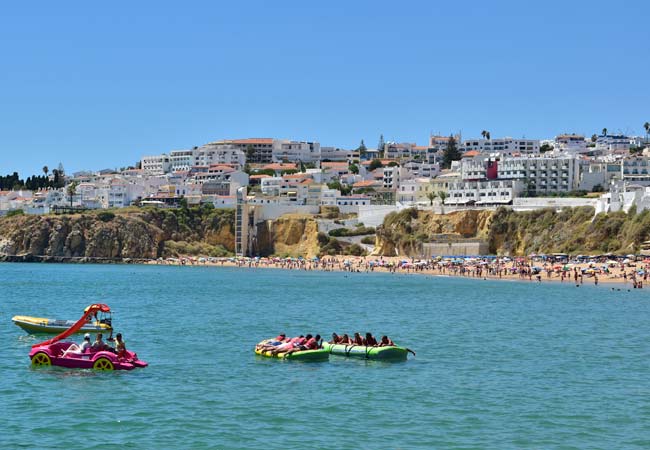
Praia dos Pescadores in full summer swing
No.7 -Praia da Ilha de Tavira
Tavira Island lies within the protected Ria Formosa lagoon, its southern shore forming one of the finest beaches in the eastern Algarve. A short ferry from Tavira town drops you onto sand that feels genuinely unspoilt despite its popularity.
Most arrivals settle near the ferry landing, where a beach bar and former campsite provide basic facilities. Walking south along the shore quickly leaves the crowds behind, revealing kilometre after kilometre of empty sand backed by low dunes. The further you walk, the quieter it gets.
Related article: Tavira guide
Just a short walk along the coastline of Tavira Island are empty beaches
No.3 – Praia da Ilha Deserta
Ilha Deserta lives up to its name. This barrier island in the Ria Formosa lagoon has no permanent residents, no roads, and no development beyond a single restaurant near the boat landing. The beach runs for six kilometres along the southern shore, and even in high summer only a handful of visitors share the sand.
Reaching the island requires a boat from Faro, either a scheduled tour or a water taxi. The journey across the lagoon, through channels busy with wading birds and traditional fishing boats, forms part of the appeal. At the island's southeastern tip stands the Cabo de Santa Maria, the most southerly point of mainland Portugal, marked by a driftwood sculpture that suits the isolated setting.
Related article: Faro guide
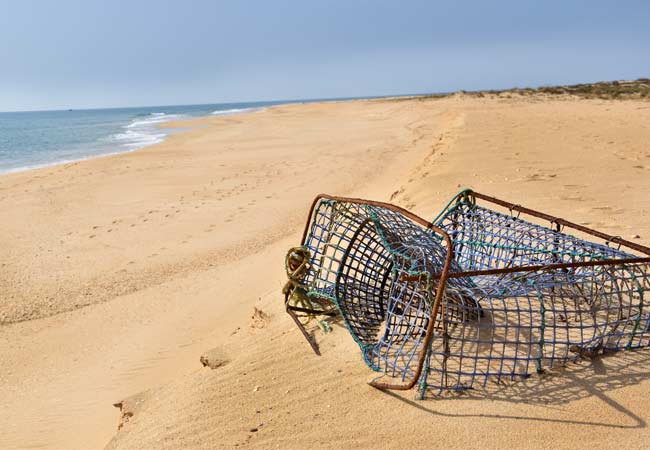
Kilometres of empty sand stretch along Ilha Deserta's southern shore
No.5 – Praia do Barril
Praia do Barril is as much a piece of local history as it is a beach. The site once supported a tuna fishing community, abandoned in the 1960s when stocks collapsed. The former fishing huts now house beach bars and restaurants, while hundreds of rusting anchors stand in the dunes behind the sand, a memorial known as the Anchor Cemetery.
The beach itself stretches for kilometres along the Ria Formosa coastline, with calm water and a natural setting that rarely feels crowded. Access from the mainland adds to the appeal: a one-kilometre walk from Santa Luzia, or a ride on the miniature railway that once transported the catch. For visitors based near Tavira, Barril is an easier alternative to the ferry-dependent island beaches.
Related article: Praia do Barril beach guide
The rusting anchors of the Anchor Cemetery stand among the dunes
No.4 – Praia do Beliche
Praia do Beliche ranks among the finest surf beaches in southern Portugal. High cliffs shelter the sand from the winds that scour the Sagres peninsula, while the west-facing aspect catches Atlantic swells that arrive with consistent power.
A broad sweep of sand sits enclosed by 40-metre cliffs, with serious waves rolling in from the open ocean. This is a beach for surfers and confident swimmers rather than families seeking calm paddling water. The nearby town of Sagres provides the support infrastructure: board rental, surf schools, and a laid-back atmosphere built around the waves.
When conditions at Beliche prove too gentle, surfers head to Praia do Tonel on the south side of Sagres, where the exposure delivers bigger swells.
Related article: Sagres guide

Praia do Beliche, Sagres
No.3 – Praia de Dona Ana and Praia do Camilo
The Ponta da Piedade headland south of Lagos has eroded into a series of small coves, each framed by golden cliffs and sea stacks. Dona Ana and Camilo are the two most accessible, and among the most photographed beaches in Portugal.
Both offer the classic Algarve combination: sculpted sandstone, clear turquoise water, and sheltered swimming. Dona Ana is the larger of the two, with a restaurant and good facilities. Camilo sits in a tighter cove reached by a steep wooden staircase descending between cliff walls. The settings are exceptional, though the limited sand at both beaches fills quickly in summer.
Related articles: The Ponta da Piedade
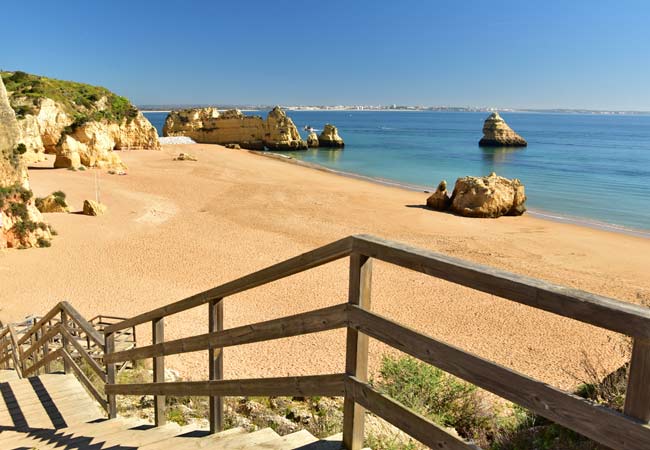
Praia de Dona Ana, framed by the weathered cliffs of the Ponta da Piedade
No.2 – Praia da Rocha
Praia da Rocha is the Algarve's definitive resort beach. A broad expanse of sand, over 200 metres wide at low tide, sits beneath vivid orange cliffs, with a fully developed resort town rising above. The combination of natural beauty and modern facilities explains why this remains one of the Algarve's most popular destinations.
The beach caters to those who want activity rather than solitude. Beach bars line the sand, watersports operators offer everything from jet skis to parasailing, and a sports complex provides volleyball and football courts. Lounge bars such as NoSoloÁgua serve cocktails with sea views, while the resort above delivers restaurants, nightlife and summer festivals. The development is extensive, but the scale of the beach absorbs it without feeling overwhelmed.
The cliffs and rock formations at either end provide visual drama, and the water quality remains excellent despite the crowds. If you want a beach with everything close to hand, this is the place.
Related article: Praia da Rocha guide
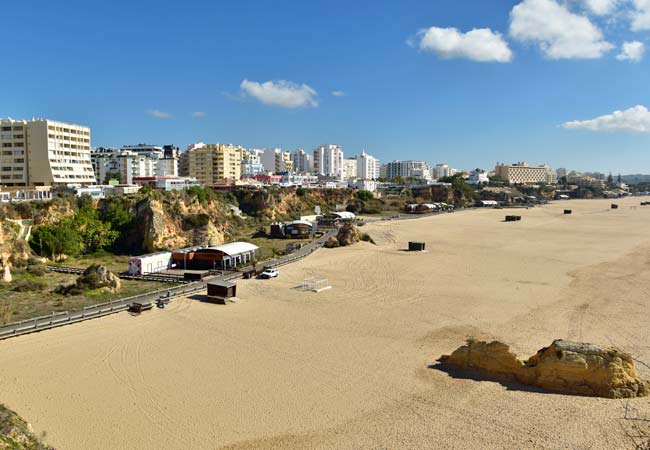
Praia da Rocha's broad sands stretch beneath the resort town's clifftop promenade
No.1 - Praia da Marinha
Praia da Marinha appears on every list of Europe's finest beaches, and a single visit explains why. Golden cliffs rise around a sheltered cove, eroded into an extraordinary collection of sea stacks, arches and sculptural rock formations. Offshore, the famous double arch of the Arcos Naturais frames the turquoise water.
The clear, calm conditions and submerged rock formations make this one of the best snorkelling spots on the Algarve coast, with marine life visible even to those just floating on the surface.
Access requires a steep descent from the clifftop car park, which helps keep the crowds down despite the beach's fame. The Sete Vales Suspensos hiking trail runs along the cliffs above, with views down into the cove and continuing west towards Benagil and its famous sea cave, making Marinha a natural stop on one of the Algarve's finest coastal walks.
Related articles: Praia da Marinha
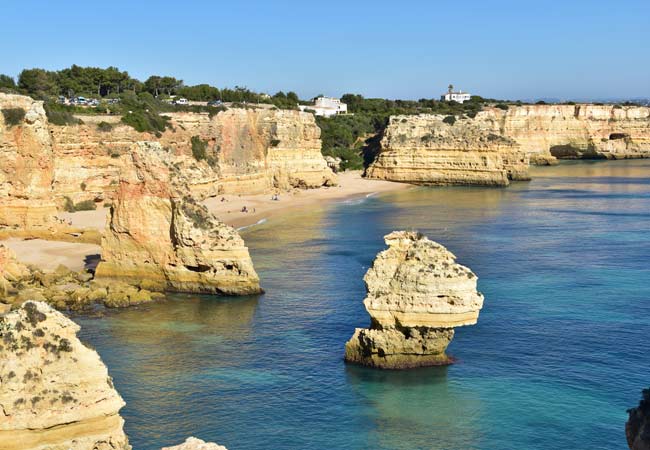
The crystal-clear seawaters with its numerous rock features make the Praia da Marinha fantastic for snorkelling
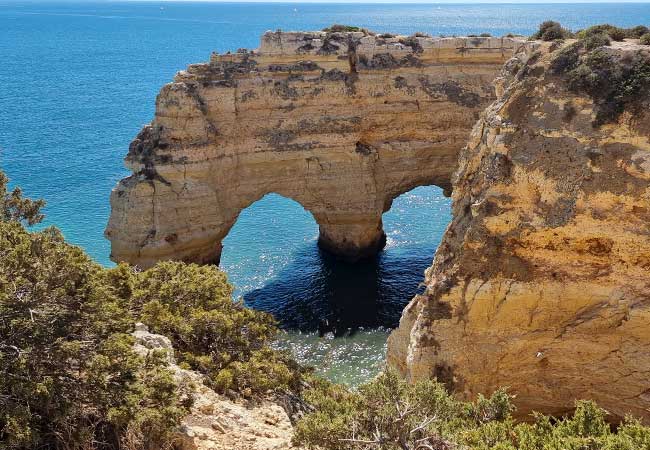
The double arch of the Arcos Naturais, Praia da Marinha's defining landmark
Our most popular guides to the Algarve


About the author: I'm Philip Giddings and have been writing these independent guides since 2009. I first visited the Algarve in 2001 when my Portuguese wife, Carla, was proud to show her country to me. We now live in Lisbon but I'm in the region most weeks researching and updating this site or visiting Carla’s extended family who live here. Having both Portuguese-family and friends who live within the Algarve gives me the local insight and personal connection to the region.
I love the Algarve region and strive to ensure every practical detail (such as ticket prices, opening hours) is correct, by checking against official sources and confirming in person on the many trips I make. I am experienced in Portuguese travel having written almost 2,000 guides for my wider set of Portugal Guides, and this is my full-time work and passion. The site is funded by affiliate commissions on tour and accommodation bookings, disclosed on every page that carries them. No tourist board, tour operator or attraction pays to appear here. My full story can be read here.