Algarve-Tourist.com
The best independent guide to the Algarve
Algarve-Tourist.com
The best independent guide to the Algarve
The Algarve in April: Is it a good time to visit?
April is when the Algarve starts to come alive. The landscape is green, the temperatures are climbing, and the coast has not yet been claimed by the summer crowds.
This is the month for doing things. The clifftop trails are at their best, wildflowers still covering the headlands, with none of the heat that makes the same walks uncomfortable in July. Golf courses are uncrowded, boat trips run without the chaos of high season, and the restaurants, caves, and inland towns that require patience in August are simply there, waiting.
The beach is starting to come into its own too. Tucked into a sheltered cove out of the wind, you can find genuine warmth in April. It is not guaranteed swimming weather, but it is closer than most people expect. The Algarve is considerably drier than Lisbon or Porto at this time of year, and while a grey day or two is possible, a week of washout is unlikely.
Outside Easter week, accommodation prices are significantly lower than summer and the coast feels genuinely uncrowded. This is one of the best value months on the Algarve calendar.
I have been exploring the Algarve with my Portuguese wife since 2001 and April is a month I have come to rate highly. Hire a car, explore inland, and you will find a region that feels genuinely Portuguese rather than a stage set for summer visitors. If you want to actually see and do the Algarve rather than just lie on it, this is one of the best months to come.
Highlights of the Algarve in April
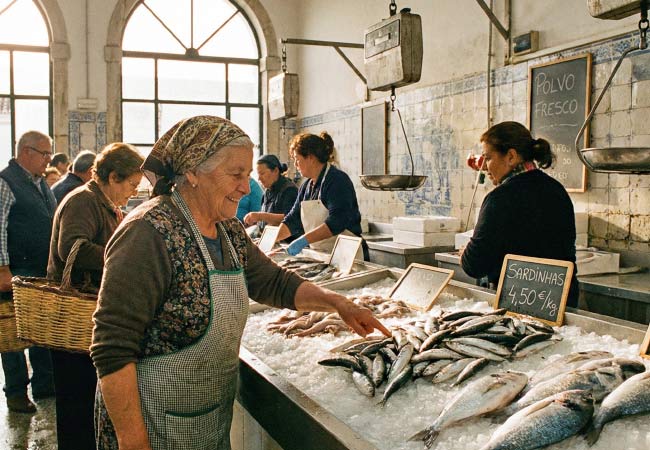
1. Authentic Town Life Without Tourist Crowds: The larger towns like Lagos and Tavira operate year-round, and in April you experience them as residents do. Wander the cobbled streets of Lagos's historic centre, browse the market of Loulé, or cross Tavira's Roman bridge without dodging tour groups.
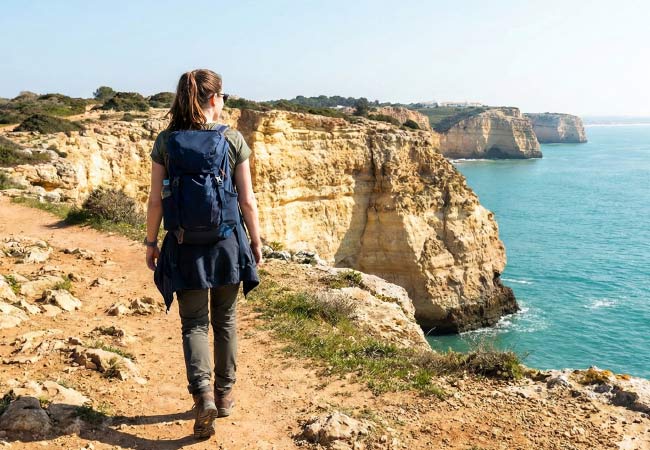
2. Coastal Walks: The Algarve's hiking trails reach their scenic peak in April, as the winter rains have turned the clifftops into ribbons of wildflowers. The Seven Hanging Valleys trail is particularly striking, with spring blooms framing views of turquoise coves below.
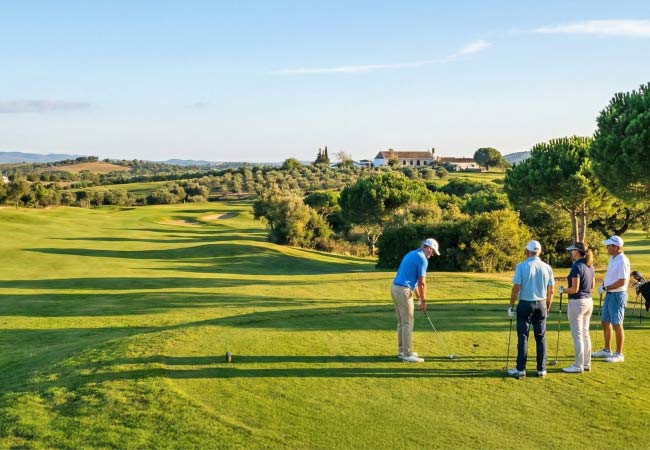
3. Golf in Prime Conditions: April marks the sweet spot for golfers. The fairways are immaculate after winter recovery, temperatures are comfortable, and courses that require advance booking in summer welcome players with ease.
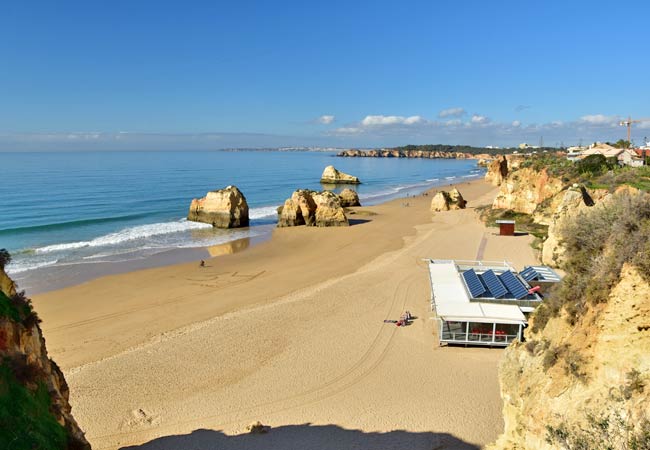
4. Empty Beaches: While April is not reliable for sunbathing, it offers something summer cannot: solitude. The dramatic rock formations at Praia da Marinha or the sweeping sands of Meia Praia are yours alone. On the warmer days, you can claim an entire cove to yourself, an impossibility in July.
Algarve weather in April
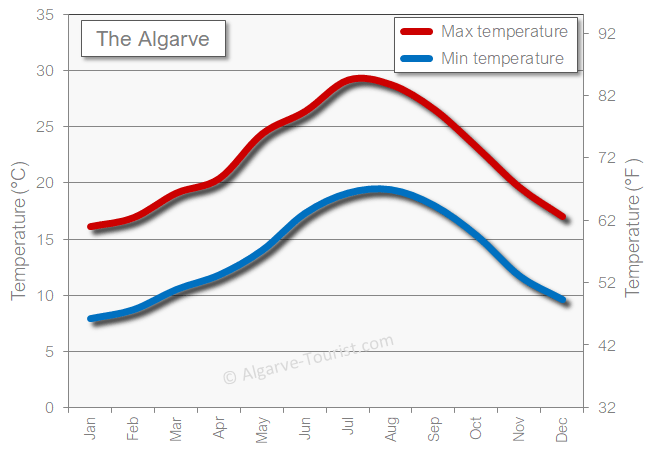
April's weather in the Algarve is best understood as a lottery with decent odds. The region is transitioning from spring to early summer, but this shift happens unevenly, sometimes within a single day. Daily maximum temperatures typically range from 19°C to 22°C, though these figures tell only part of the story.
On clear days with light winds, the sun has real strength. Sheltered spots can feel genuinely warm, with a "real feel" pushing towards 25°C or 26°C during the early afternoon. T-shirt weather is common, and on the best days, the beach becomes viable. However, conditions change quickly. Cloud cover or an Atlantic breeze can make the same temperature feel noticeably cool, and evenings remain fresh. Nighttime lows sit between 11°C and 13°C, meaning a jacket is essential after sunset.
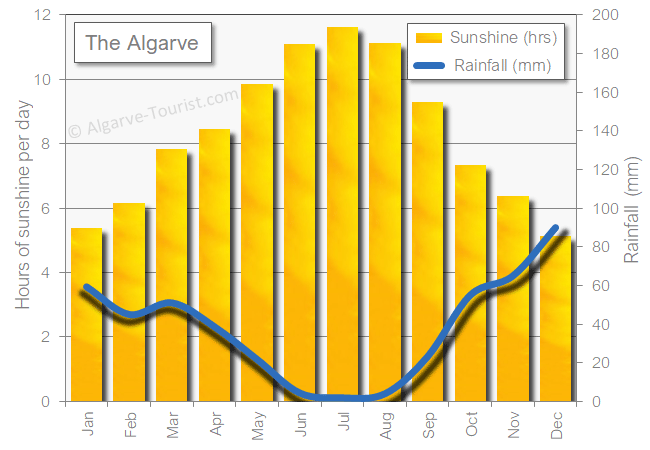
Rainfall statistics show April averaging around 40mm across five to seven wet days. This is a significant improvement on March, but the pattern is erratic. The month might deliver a week of unbroken sunshine followed by three grey days in succession, or scatter showers unpredictably throughout. When rain does arrive, it tends to be lighter and shorter-lived than winter downpours, though occasional heavier systems can roll in from the Atlantic.
For practical planning, expect roughly one in four days to offer proper beach weather: warm sun, blue skies, and conditions suited to swimming or serious sunbathing. Around half your days will be bright and dry but better suited to activities than the beach. The remaining quarter will be overcast, with perhaps half of those bringing some rain. These are honest odds rather than guarantees.
The Atlantic Ocean remains stubbornly cold. Sea temperatures hover between 16°C and 17°C, still close to the winter minimum. Swimming without a wetsuit is possible for the hardy, but most visitors will find it bracing at best. The water does not reach comfortable swimming temperatures until June.
What to really expect from an April holiday to the Algarve
The biggest risk with an April visit is arriving with the wrong expectations. This is not summer. The Algarve in April requires flexibility and a willingness to adapt plans based on what the weather delivers each morning.
The Quiet Factor
Outside of Easter week, the region operates in a strange limbo between low and high season. Larger towns with permanent populations, such as Lagos, Albufeira, and Faro, function normally with restaurants, shops, and attractions open for business. However, smaller resort towns and purpose-built tourist areas can feel surprisingly empty. Villages like Carvoeiro, Alvor, and Olhos de Água will have some services running, but do not expect the full complement of beach bars, water sports operators, or evening entertainment.
Nightlife Limitations
The party scene is effectively dormant. Albufeira's Strip, which becomes a neon-lit corridor of bars and clubs in summer, operates at a fraction of its capacity. A handful of venues stay open, but the atmosphere is subdued. Expect quiet drinks rather than dance floors. This is categorically not the month for stag weekends, hen parties, or anyone seeking high-energy nightlife.
The Easter Exception
Easter week transforms the region temporarily. Portuguese families traditionally holiday domestically during this period, and European visitors arrive in significant numbers. Hotels fill up, restaurants require reservations, and beaches see genuine activity. Prices spike accordingly, often doubling from the rates available two weeks earlier. If Easter falls in April, expect a completely different experience during that week compared to the rest of the month.
The Genuine Rewards
For all these caveats, April delivers real advantages for the right traveller. Accommodation prices remain well below peak season rates, often 30% to 50% cheaper than July or August for equivalent quality. The lack of crowds transforms popular attractions. Visiting Benagil cave, walking the clifftops at Ponta da Piedade, or exploring Silves becomes a peaceful experience rather than an exercise in navigating tour groups.
The landscape is at its most beautiful. Winter rains have left the countryside green and alive with wildflowers. For hiking, cycling, golf, or any outdoor pursuit beyond swimming, conditions are arguably better than peak summer when the heat becomes oppressive.
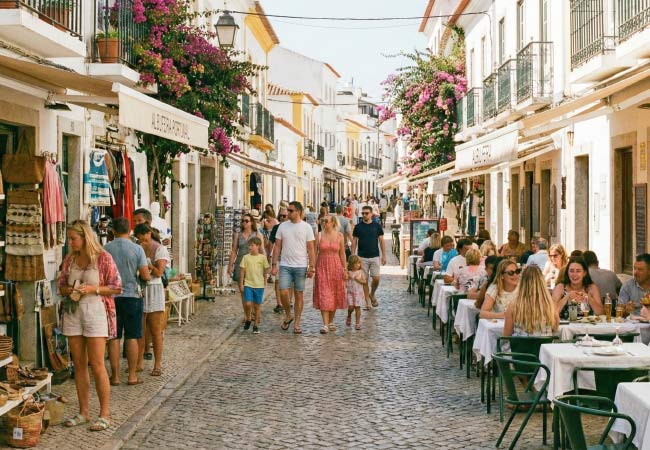
There will be a buzz about the larger towns of the Algarve during the easter holidays
Who Should Visit in April
April suits couples seeking a quiet escape, active travellers who prioritise hiking or golf over beaches, and anyone who values authenticity over convenience. It works well for those who can adapt plans daily based on weather and who find joy in unexpected discoveries rather than rigid itineraries.
It is less suitable for families with young children expecting beach days, groups seeking nightlife and parties, or anyone whose enjoyment depends on guaranteed sunshine and swimming conditions. For those travellers, June onwards is the safer choice.
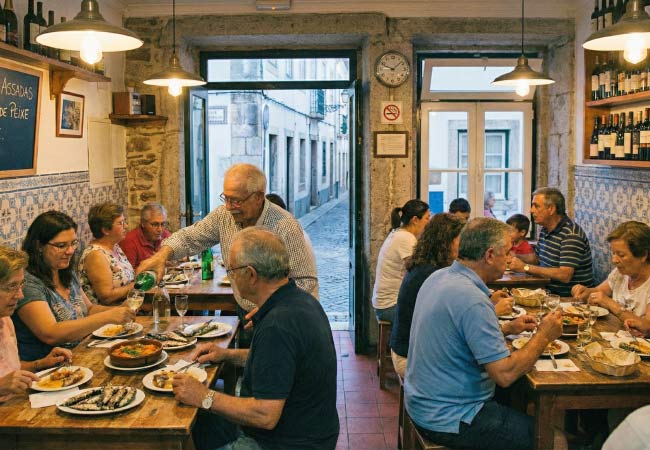
Which town to stay at?
Choosing your base in April requires more thought than a summer visit. The seasonal divide that runs through the Algarve means some towns operate at full capacity while others remain half-asleep. Getting this decision right shapes your entire experience.
The safest approach is to anchor yourself in one of the four main towns that function year-round: Lagos, Albufeira, Vilamoura, or Tavira. Each offers reliable infrastructure, open restaurants, and enough activity to sustain a week without feeling isolated. The smaller resort towns have their charms, but can feel very quiet outside of the Easter holidays.
Lagos
Best for: Culture seekers, active travellers, and those wanting authentic Portuguese atmosphere
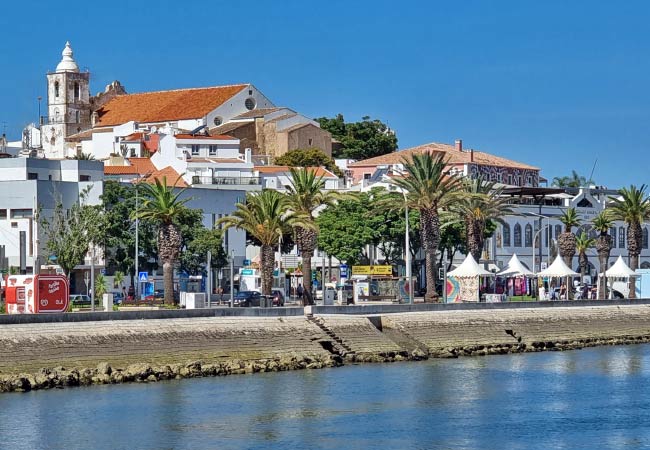
Lagos consistently emerges as the strongest recommendation for April visitors. Unlike purpose-built resorts, it functions as a genuine working city with a permanent population that keeps businesses open regardless of tourist numbers. The historic centre, enclosed by 16th-century walls, offers a maze of cobbled streets, independent shops, and restaurants that cater to locals as much as visitors.
The town attracts a distinctive crowd: surfers drawn by the nearby Atlantic breaks, digital nomads working from laptop-friendly cafes, and culturally-minded travellers who appreciate history alongside their holiday. This creates an atmosphere that feels alive without being overwhelming.
The coastline here ranks among Europe's finest. Ponta da Piedade, a headland of golden limestone stacks and sea arches, lies within walking distance of the centre. The contrast between these dramatic formations and the long sweep of Meia Praia beach gives variety that other towns cannot match.
The trade-off is exposure. Lagos sits on the western Algarve, where Atlantic weather systems arrive with less interruption. Expect more wind and occasionally rougher conditions than the central or eastern coast. Our guide to Lagos
Albufeira
Best for: Families, first-time visitors, and those wanting a central base for exploration
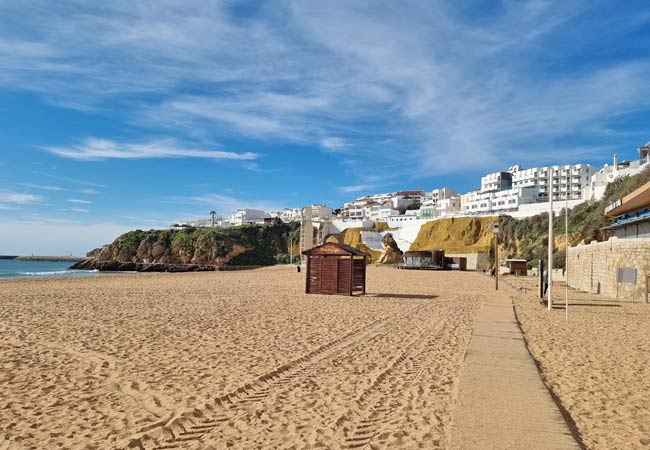
Albufeira operates as the Algarve's tourism capital, and this brings both advantages and complications in April. The town splits into two distinct personalities. The Old Town (Centro Histórico) retains genuine character, with whitewashed buildings tumbling down hillsides towards Praia dos Pescadores. The main square, Largo Engenheiro Duarte Pacheco, remains the social heart, surrounded by cafes and restaurants that trade year-round.
The Strip (Areias de São João), famous for its summer nightlife, tells a different story in April. Many bars remain shuttered, and the neon-lit energy is simply absent. If partying features in your plans, look elsewhere or visit later in the year.
What Albufeira offers better than anywhere else is geography. Its central coastal position places almost every Algarve attraction within easy reach. Day trips to Lagos, Tavira, Silves, or the water parks require minimal driving. For families or those wanting to explore broadly rather than deeply, this practical advantage matters.
The beach infrastructure around Albufeira is extensive, meaning that when warm days arrive, you have genuine options. Praia da Falésia stretches for kilometres of golden sand backed by orange cliffs, rarely crowded in April. The famous sea caves at Benagil lie a short drive west.
Accommodation choice is widest here, spanning budget apartments to luxury resorts, with April prices representing genuine value compared to peak season. The downside is that the resort areas away from the Old Town can feel hollow when occupancy is low. Our guide to Albufeira
Vilamoura
Best for: Golfers, couples seeking polish and convenience
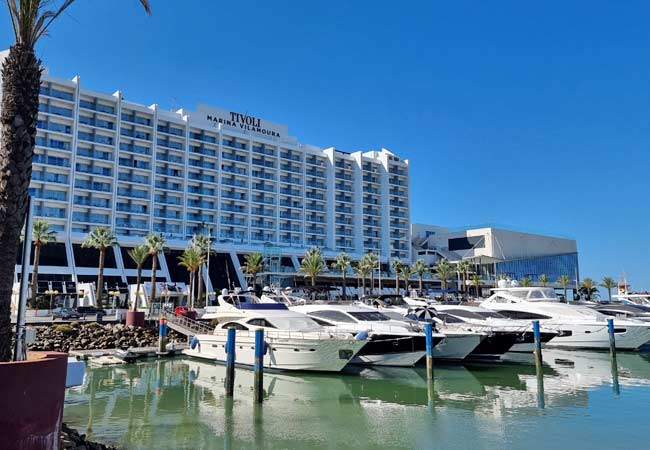
Vilamoura exists in a category of its own. This is not a town that evolved organically but a purpose-built resort designed around a marina and five championship golf courses. In April, this singular focus becomes an advantage.
Golf is the reason Vilamoura thrives when other resorts slumber. April sits squarely in prime playing season, and the courses draw serious players from across Europe. This keeps the hotels occupied, the restaurants open, and the marina promenade busy with an affluent, predominantly older crowd. If golf features in your plans, nowhere else in the Algarve offers such concentration of quality courses within minutes of your accommodation.
The marina itself provides a pleasant, if manicured, environment for evening meals. Restaurants here skew expensive but maintain consistent standards. The setting, with yachts bobbing in the harbour and the evening light softening the modern architecture, makes for agreeable dining even on cooler nights.
What Vilamoura lacks is soul. There is no historic centre, no centuries-old church on a cobbled square, no sense of Portuguese life continuing independent of tourism. Everything exists to serve visitors, which some find comfortable and others find sterile. The beaches are immaculate but characterless compared to the dramatic coves further west.
For a golf-focused trip or a polished, hassle-free base, Vilamoura delivers reliably in April. For those seeking cultural depth or authentic atmosphere, it will likely disappoint. Our guide to Vilamoura
Tavira
Best for: Visitors wanting genuine Portuguese character
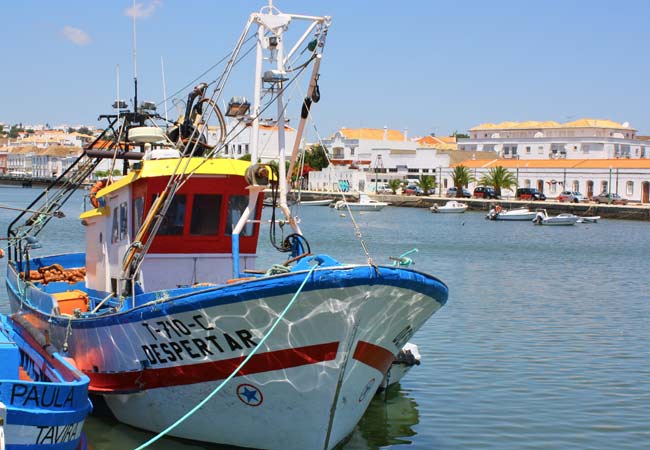
Tavira stands apart from every other Algarve town. Located in the quieter eastern region, it feels more like a small city from the Alentejo than a coastal resort. The skyline is defined by church towers and it’s small castle, rather than hotel blocks. The River Gilão flows through the centre, crossed by an ancient Roman-style pedestrian bridge that serves as the town's defining image.
In April, Tavira's year-round population keeps the town functioning with quiet dignity. Restaurants and cafes operate on Portuguese schedules, serving locals who have lived here for generations alongside the visitors who have discovered its charms. The pace is slower, the atmosphere more refined, and the sense of authenticity stronger than anywhere on the central coast.
The beach situation differs here. Rather than sand directly accessible from town, Tavira's beaches lie on Ilha de Tavira, a barrier island reached by ferry across the Ria Formosa lagoon. This adds a layer of effort but rewards with pristine stretches of sand that feel genuinely remote. In April, with fewer ferries running, check schedules in advance.
The eastern Algarve benefits from natural shelter, meaning Tavira often enjoys slightly warmer temperatures and calmer conditions than Lagos or the exposed western beaches. When Atlantic systems bring grey skies to the west, the east sometimes escapes with sunshine.
The compromise is remoteness from other attractions. Day trips to the buzz of the central Algarve with its water parks and theme parks involve significant driving. Tavira works best for those content to explore the immediate area deeply rather than rush across the region. The town itself, the surrounding salt pans, the villages of Cacela Velha and Santa Luzia, and the Ria Formosa nature reserve provide ample interest for a week, but only if you appreciate a slower rhythm. Our guide to Tavira
The Smaller Towns:
Alvor
Alvor combines a pretty fishing village centre with access to one of the Algarve's finest beaches. The old town clusters around a small harbour, with narrow streets leading to a handful of restaurants that remain open year-round. The boardwalk across the estuary to Praia de Alvor provides a memorable walk, and the beach itself stretches for kilometres of golden sand.
Carvoeiro
Carvoeiro occupies a dramatic setting, its whitewashed buildings stacked around a small cove beach framed by golden cliffs. The village centre is compact and attractive, with enough restaurants to provide options most evenings. The Algar Seco boardwalk, winding along the clifftops past rock formations and blowholes, offers one of the coast's most scenic short walks.
Olhos de Água
Olhos de Água began as a fishing village and retains traces of that heritage despite encroaching development. The beach sits in an attractive cove, named for the freshwater springs that bubble up through the sand. Several seafood restaurants cluster near the shore, and the village maintains a more local feel than neighbouring Albufeira.
Our most popular guides to the Algarve


About the author: I'm Philip Giddings and have been writing these independent guides since 2009. I first visited the Algarve in 2001 when my Portuguese wife, Carla, was proud to show her country to me. We now live in Lisbon but I'm in the region most weeks researching and updating this site or visiting Carla’s extended family who live here. Having both Portuguese-family and friends who live within the Algarve gives me the local insight and personal connection to the region.
I love the Algarve region and strive to ensure every practical detail (such as ticket prices, opening hours) is correct, by checking against official sources and confirming in person on the many trips I make. I am experienced in Portuguese travel having written almost 2,000 guides for my wider set of Portugal Guides, and this is my full-time work and passion. The site is funded by affiliate commissions on tour and accommodation bookings, disclosed on every page that carries them. No tourist board, tour operator or attraction pays to appear here. My full story can be read here.