Algarve-Tourist.com
The best independent guide to the Algarve
Algarve-Tourist.com
The best independent guide to the Algarve
Day trips in the Algarve for 2026
The Algarve rewards exploration beyond the beach. This compact region packs historic towns, traditional fishing villages, dramatic coastlines, and lively resorts into a strip of southern Portugal that takes just two hours to drive from end to end.
The variety suits almost any mood. Tavira offers cobbled streets and thirty churches. Lagos combines maritime history with golden sea cliffs. Faro reveals a surprisingly characterful old quarter behind its airport-town reputation. Those seeking nightlife find it at Albufeira and Praia da Rocha, while the windswept headlands around Sagres provide the antidote: raw Atlantic scenery and barely a tourist in sight.
A holiday here can be as relaxed or as active as you choose. This guide details the best day trips across the region, from quiet eastern towns near the Spanish border to the surf beaches of the wild west coast.
Getting around: Regular buses and trains connect the main towns along the coastline, with inland services reaching Silves and Loulé. For the more remote destinations, particularly Sagres and the Serra de Monchique hills, a rental car is essential.
The 10 best day trips in the Algarve
1) Tavira stands apart as the most beautiful town in the Algarve. Traditional tiled houses line cobbled streets that wind past over thirty churches, a hilltop castle, and the slow-flowing Gilão River. The eastern Algarve location means fewer tourists and a more authentic Portuguese atmosphere than the busier central resorts.
2) Lagos blends a historic centre full of churches, plazas, and seafaring heritage with one of the region's most spectacular natural features. South of town, the Ponta da Piedade headland drops into the Atlantic as a maze of golden sea stacks, arches, and hidden grottos carved by centuries of winter storms.
3) Sagres and Cabo de São Vicente occupy the windswept southwestern corner of mainland Europe. This remote stretch of coast attracts surfers chasing powerful Atlantic swells and visitors drawn to dramatic clifftop scenery that feels a world away from the manicured resorts further east.
4) Silves served as the Moorish capital of the Algarve and retains an imposing red-brick castle overlooking the town. Cobbled streets, an ancient cathedral, and a slow pace of life make this the finest inland destination in the region, easily explored in a few hours.
5) Faro with its compact old quarter sits within ancient walls, containing a gothic cathedral, baroque architecture, and the macabre Capela dos Ossos, a chapel lined with the bones of over 1,100 monks. Boat tours into the Ria Formosa nature reserve depart from the nearby harbour.
Beyond these five, the Algarve offers further day trips to suit different tastes. Albufeira draws visitors seeking lively beaches, a colourful marina, and the nightlife of the notorious Strip. Loulé provides the most authentic market experience in the region, particularly on Saturday mornings when a gypsy market joins the daily covered halls.
The fishing town of Olhão serves outstanding seafood and offers ferry connections to pristine barrier island beaches. At the far eastern edge of the region, Vila Real de Santo António sits on the Spanish border with grand Baroque architecture and a pretty riverside promenade. For those with a car, the Serra de Monchique hills reward a day of winding roads, hot springs, and panoramic views from the highest point in the Algarve.
The interactive map below shows all ten destinations, with towns marked in blue, natural features in green, and theme parks in yellow.
Day trips (blue) 1) Sagres 2) Burgau 3) Lagos 4) Alvor 5) Praia da Rocha 6) Portimão 7) Ferragudo 8) Monchique 9) Carvoeiro 10) Albufeira 11) Vilamoura 12) Quarteira 13) Loulé 14) Faro 15) Estoi 16) Olhão 17) Tavira 18) Castro Marim 19) Vila Real de Santo António
Theme/water parks (yellow) 1) Slide & Splash 2) Aqualand 3) Zoomarine 4) Aquashow Park
Natural sights (green) 1) Cabo de São Vicente 2) Ponta da Piedade 3) Benagil Caves 4) Praia da Marinha 5) Praia da Falésia 6) Ilha Deserta 7) Parque Natural da Ria Formosa 8) Cemitério das Âncoras
A note on Lisbon: The capital lies too far north for a comfortable day trip from the Algarve. A visit to Lisbon deserves at least two nights, or three to include a day trip to Sintra. (Our Lisbon guide)
The following sections cover each destination in detail.
Tavira as a day trip
Tavira is the most beautiful town in the Algarve. Cobbled streets wind past over thirty churches, a hilltop castle, and traditional houses decorated with painted tiles. The Gilão River divides the town in two, its banks shaded by trees and crossed by ancient bridges.
The eastern Algarve location keeps Tavira quieter than the central resorts, preserving a genuinely Portuguese atmosphere that has largely vanished from busier towns further west. Local life continues in the daily market, the riverside cafes, and the fishing boats that still work the waters offshore.
The beaches lie a short ferry ride away on the Ilha de Tavira, a sandbar island with kilometres of pristine sand backed by dunes rather than development.
Related articles: Tavira guide
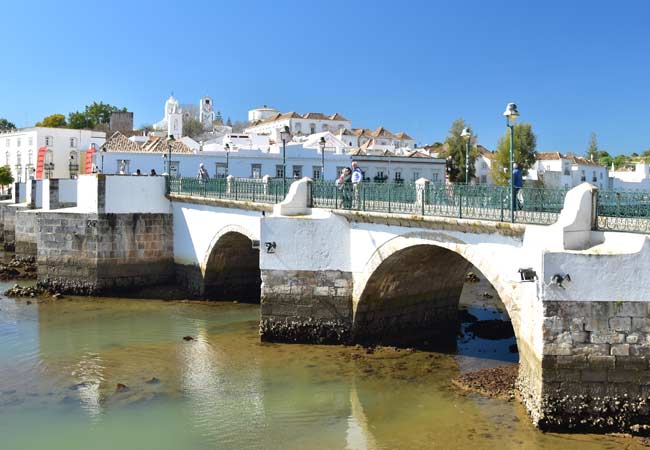
Tavira is bursting with character
Lagos
Lagos built its wealth on seafaring and exploration. This was the port from which Prince Henry the Navigator launched 15th-century expeditions down the African coast, and the town's maritime heritage still shapes its character today.
The historic centre contains the Igreja de Santo António, widely considered the finest baroque church in the Algarve, along with the old Bandeira fort and a busy covered market. Pedestrianised streets lined with cafes, shops, and restaurants lead down to an estuary where a modern marina now occupies the old harbour.
South of town, the Ponta da Piedade headland ranks among the most dramatic coastal scenery in Portugal. Winter storms have carved the golden sandstone into a maze of sea stacks, arches, and grottos that can be explored by boat or kayak.
Related articles: Introduction to Lagos
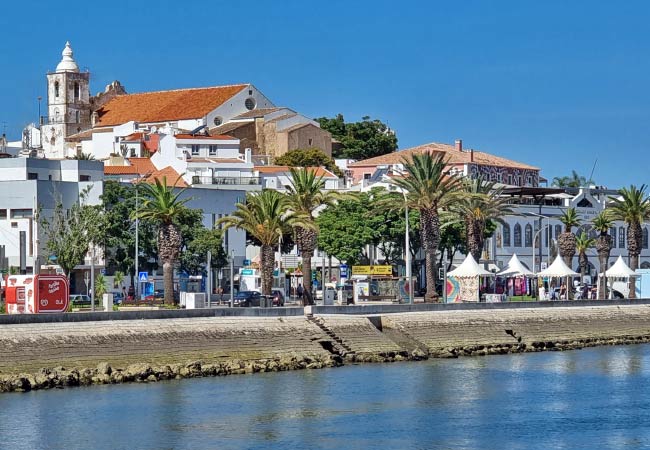
The historic centre of Lagos and the estuary leading to the modern marina
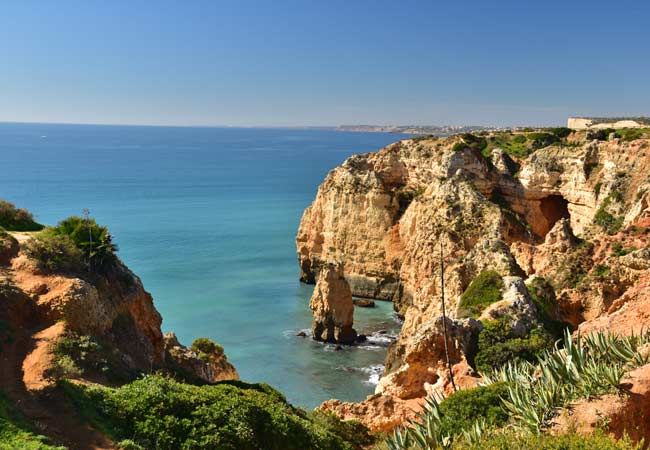
The Ponta da Piedade headland is one of the finest natural features of the Algarve
Sagres, Cabo de São Vicente and the western Algarve (car needed)
Sagres feels a world apart from the rest of the Algarve. This small town clings to a windswept peninsula at the southwestern tip of Portugal, where powerful Atlantic swells roll in from the open ocean and break on vast sandy beaches. The surf draws a loyal following, and the town has developed a laid-back atmosphere shaped by wave riders, local fishermen, and visitors seeking empty landscapes over manicured resorts.
The Fortaleza de Sagres dominates the headland south of town, a 15th-century fort protected on three sides by sheer cliffs dropping to the sea. Below it, a small fishing harbour shelters in the lee of the peninsula, its colourful boats evidence that traditional ways persist here despite the surf shops and beach bars.
Six kilometres further west, the Cabo de São Vicente marks the southwestern tip of mainland Europe. Medieval sailors believed this bleak promontory to be the end of the known world. A 19th-century lighthouse now stands at the cliff edge, its beam visible 50 kilometres out to sea.
Related articles: Sagres guide
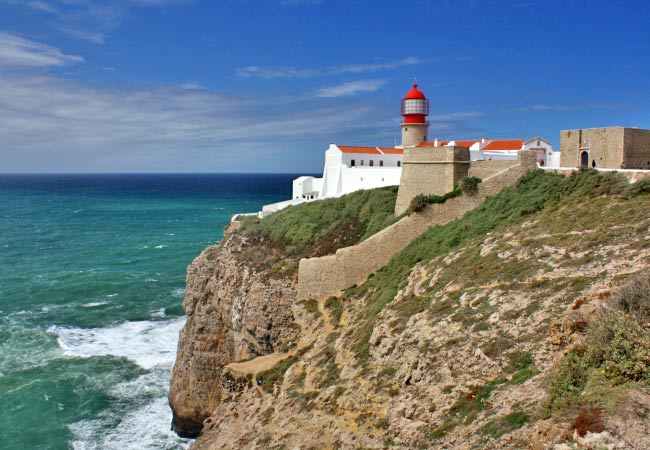
Huge waves and strong winds batter the cliffs at Cabo de São Vicente
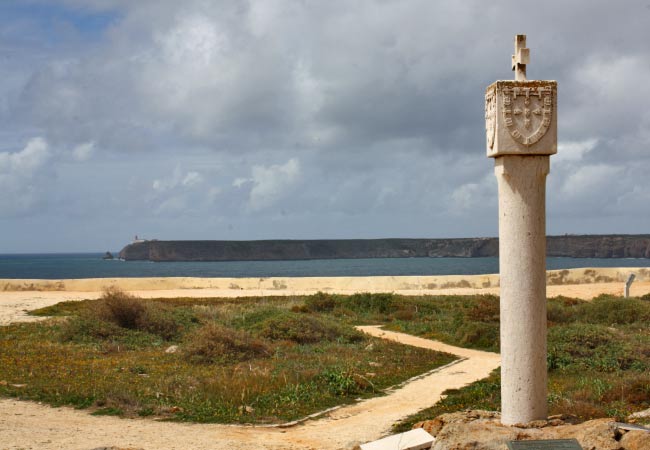
The Fortaleza de Sagres, with Cabo de São Vicente visible in the distance
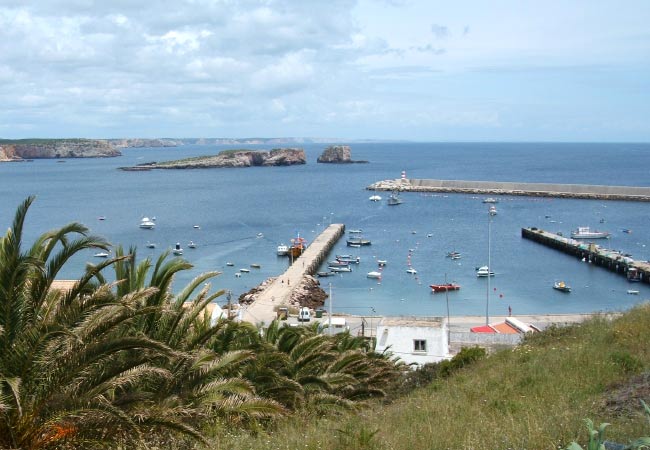
The fishing harbour occupies the sheltered side of the peninsula
Silves
Silves was the capital of the Algarve under Moorish rule. Between the 9th and 12th centuries, this prosperous trading town commanded the region from its hilltop position above the Rio Arade, connected to the sea by a river that was then navigable to ocean-going vessels.
The castle remains the defining landmark, its massive red-brick walls among the best-preserved Moorish fortifications in Portugal. Below, the old town retains a quiet charm: cobbled streets, a 13th-century cathedral built on the site of a former mosque, and sturdy town walls that still trace their medieval course.
Silves sees few tourists compared to the coastal resorts, and daily life continues at an unhurried pace. The covered market trades each morning, locals fill the cafe terraces by mid-morning, and the afternoon heat empties the streets until evening. The town is small enough to explore comfortably in half a day.
Related article: A day trip to Silves
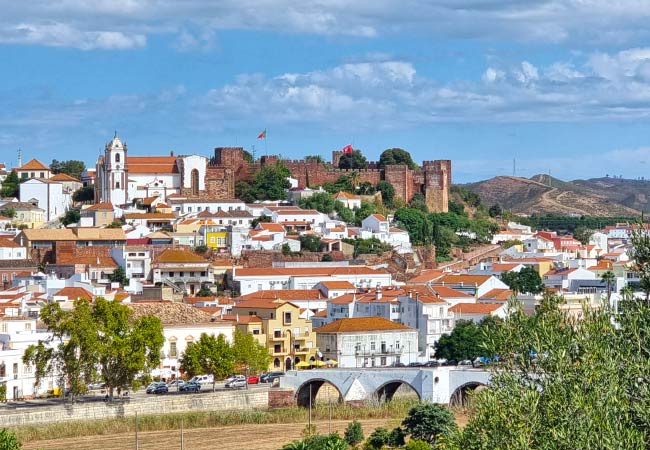
Silves and its Moorish castle above the Rio Arade
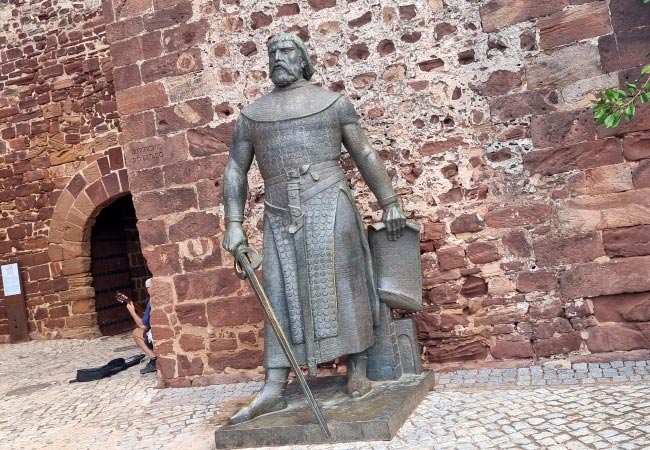
King Sancho I, who besieged the town for three months in 1189
Faro
Most visitors pass through Faro on their way to somewhere else. The airport lies just outside town, and few people think to stop. This is a mistake.
The old quarter sits within medieval walls, entered through the grand Arco da Vila archway. Inside, cobbled streets lead past a gothic cathedral, baroque churches, and the peaceful Largo da Sé square. The atmosphere feels far removed from the beach resorts, more like a small provincial city than a tourist destination.
The most unusual sight lies behind the Igreja do Carmo church. The Capela dos Ossos is a small chapel lined floor to ceiling with the bones and skulls of over 1,100 monks, arranged into patterns by 19th-century friars when the cemetery became overcrowded.
Beyond the old town, Faro sits at the edge of the Ria Formosa, a protected lagoon system stretching sixty kilometres along the coast. Boat tours depart from the harbour, exploring channels where flamingos wade through the shallows and traditional fishing methods survive largely unchanged.
Related articles: Faro introduction – The bone chapel
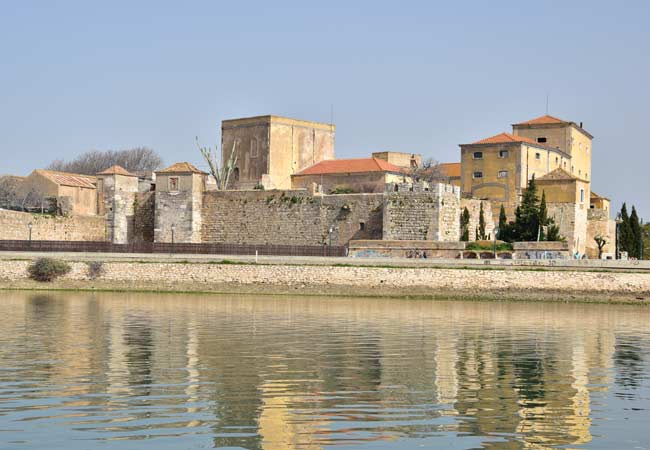
Faro's old quarter is delightful
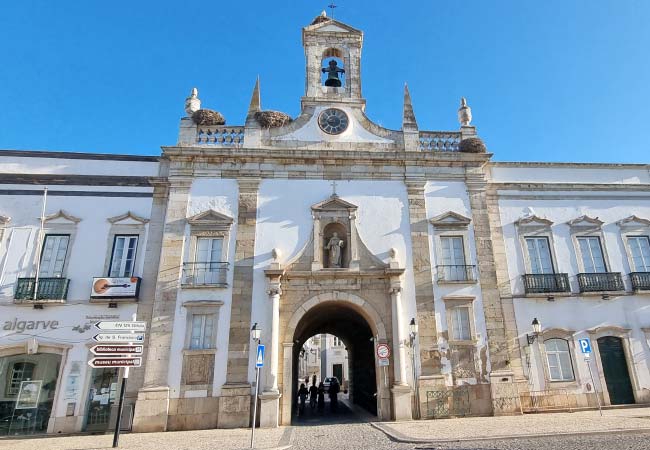
The Arco da Vila, the ornamental gateway into the old town
Albufeira as a day trip
Albufeira has a reputation. The largest resort in the Algarve draws crowds seeking big nights out, all-day drinking, and the kind of holiday that makes for good stories and bad decisions. The Strip, a neon-lit avenue of themed bars in the Montechoro district, delivers exactly that.
The old town tells a different story. The original fishing village survives at the heart of the modern resort, its whitewashed buildings and narrow streets now filled with restaurants and cafes rather than net-menders and boat builders. The lanes wind downhill to Praia dos Pescadores, a generous sweep of sand framed by ochre cliffs.
A modern marina complex sits to the west, its boardwalks lined with restaurants and tour operators offering dolphin watching, cave trips, and fishing excursions. Clifftop paths connect the beaches either side of town, offering views along the coast.
Albufeira rewards visitors willing to look past its party image. A full guide to spending a day in Albufeira can be read here.
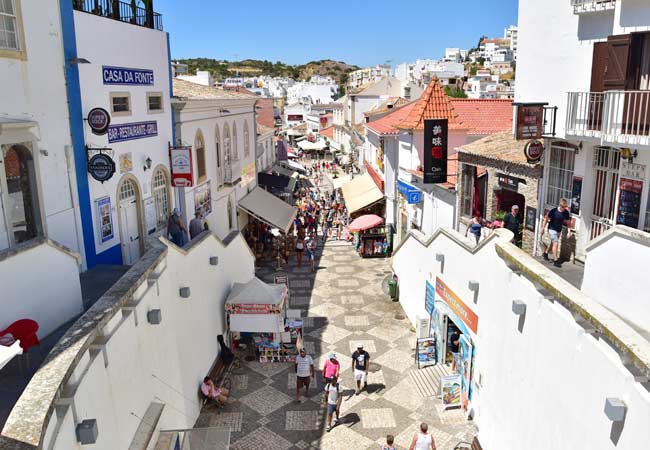
The old town retains its whitewashed charm

The marina, departure point for boat tours along the coast
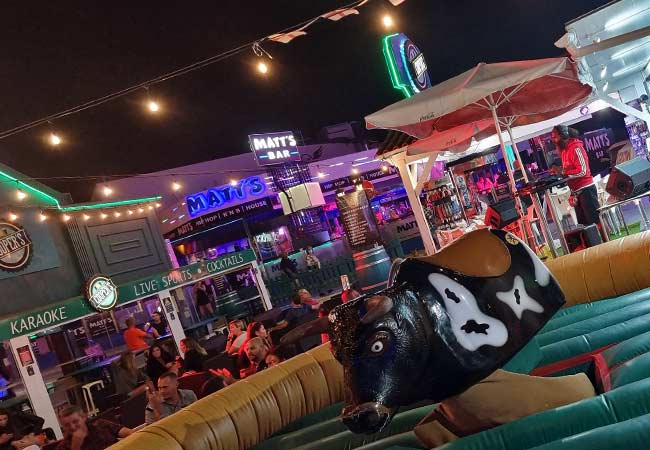
The Strip at night, the centre of Albufeira's party scene
Loulé
Loulé offers the most authentic market experience in the Algarve. The Mercado Municipal occupies a striking building with Moorish-inspired arches and red domes, its stalls trading in fresh fish, local fruit and vegetables, cured meats, and traditional handicrafts. Arriving early provides the best selection and a chance to see local restaurateurs choosing their ingredients for the day.
Saturday morning is the best time to visit. A farmers' market sets up outside the covered hall, selling organic produce, honey, and homemade preserves direct from local smallholdings. On the edge of town, a large gypsy market spreads across several streets, offering everything from clothing and household goods to live chickens.
Beyond the market, Loulé rewards exploration. The old quarter contains narrow streets lined with traditional workshops where craftsmen still make copper pans, leather goods, and woven baskets. A 13th-century castle overlooks the town centre, and shaded plazas fill with locals as the morning warms.
Related article: Loulé guide
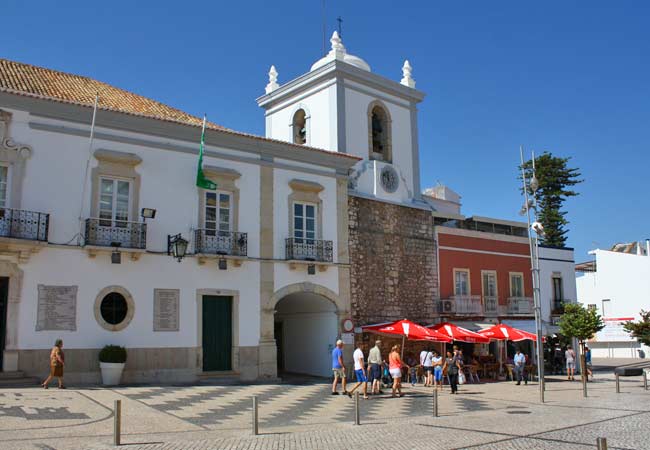
The old quarter of Loulé
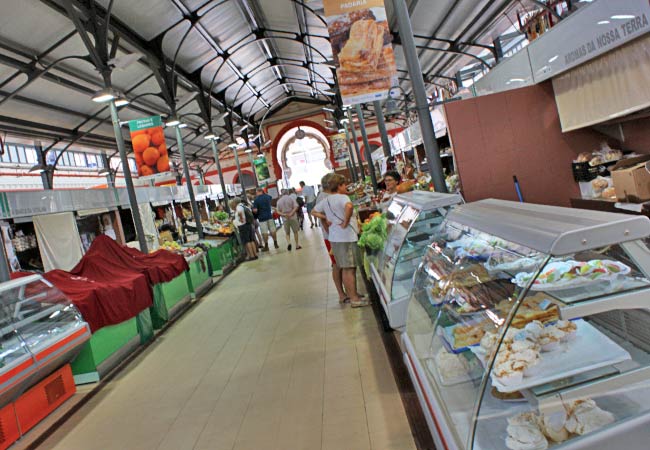
The Mercado Municipal
Olhão
Olhão is a working fishing town first and a tourist destination second. While neighbouring resorts court holidaymakers, Olhão's economy still runs on the catch landed each morning at its busy harbour. The result is some of the best and most affordable seafood in the Algarve, served in no-frills restaurants where the fish was swimming hours earlier.
The waterfront looks out across the Ria Formosa lagoon, with ferries departing regularly for the barrier islands offshore. The Ilha da Armona and Ilha da Culatra both offer long stretches of undeveloped beach, a contrast to the busier sands of the central Algarve.
Inland from the harbour, the old fishermen's quarter has a character unlike anywhere else in the region. Cubic whitewashed houses, inspired by trade links with North Africa, line narrow streets that feel closer to Morocco than mainstream Portugal. Two red-brick market buildings anchor the waterfront, one for fish and one for fruit and vegetables.
Related article: Olhão guide
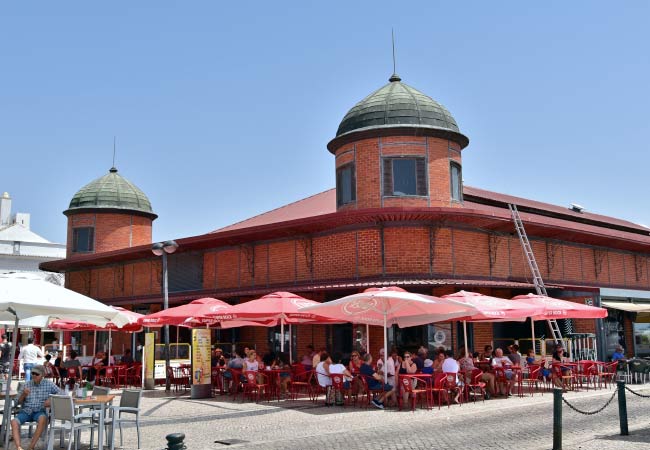
The red-brick market buildings on the Olhão waterfront
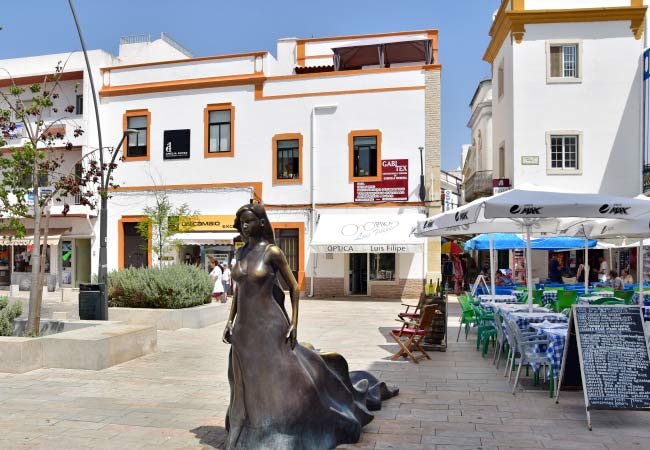
The fishermen's quarter, home to the town's best seafood restaurants
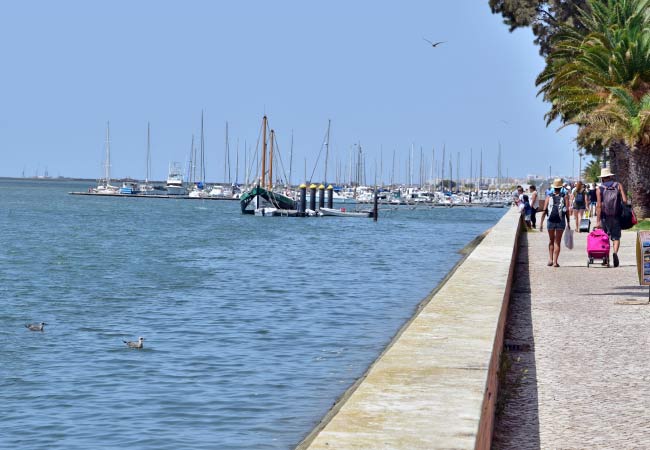
The waterfront promenade overlooking the Ria Formosa
Day trip to Alvor
Alvor is the perfect destination for a slower-paced day. The town lies on the magnificent Praia de Alvor beach and overlooks the calm waters of the Ria de Alvor Estuary.
Alvor has a delightful waterfront where small fishing boats are moored, while within the town there are traditional whitewashed houses and cobbled streets. The town is a popular holiday destination filled with a mix of bustling cafes, independent shops, and family-run restaurants.
South of Alvor are the Passadiços de Alvor boardwalks, a series of raised wooden footpaths that cross the Alvor estuary wetlands and extend along the beachfront. To the far eastern side of Praia de Alvor beach are the Praia dos Três Irmãos rock formations. Alvor may not have as many sights as other day trip destinations, but its calm, authentic Portuguese atmosphere makes it a visitor favourite.
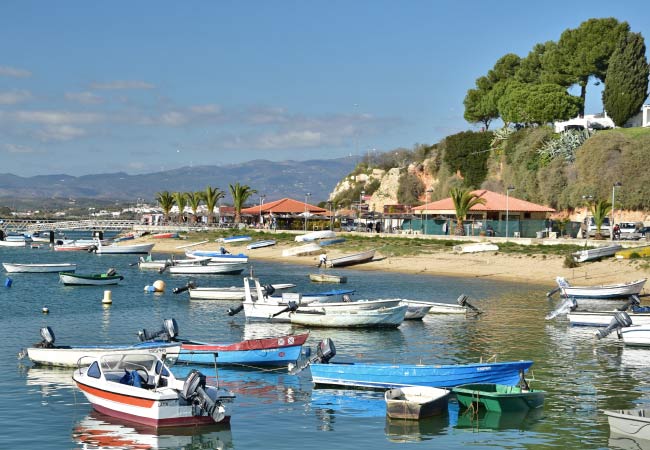
The picturesque Ria de Alvor Estuary
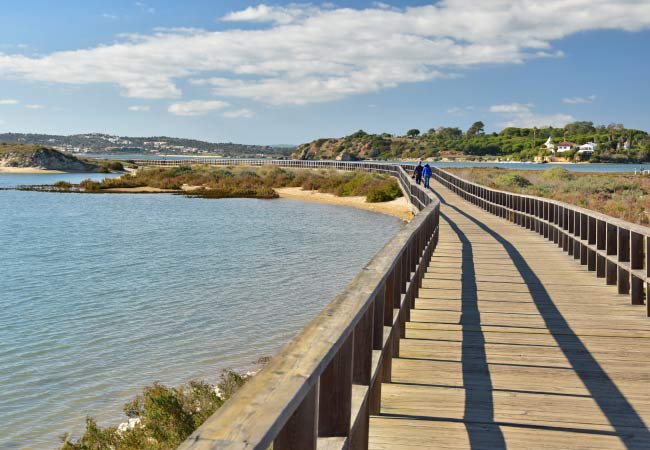
The scenic Passadiços de Alvor boardwalk crossing the wetlands.
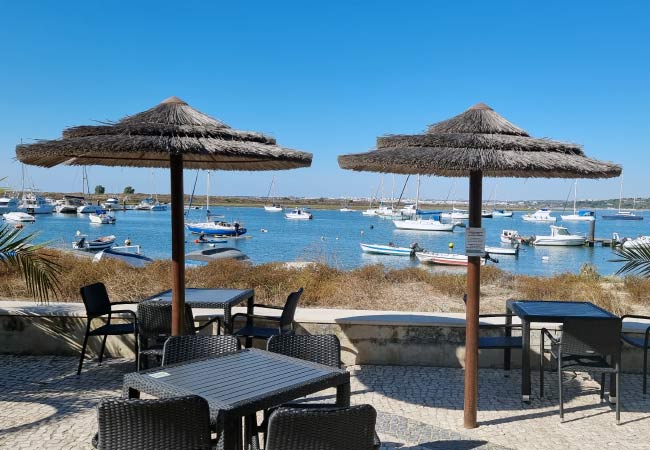
Alvor is the perfect destination for a relaxing day trip.
Vila Real de Santo Antonio
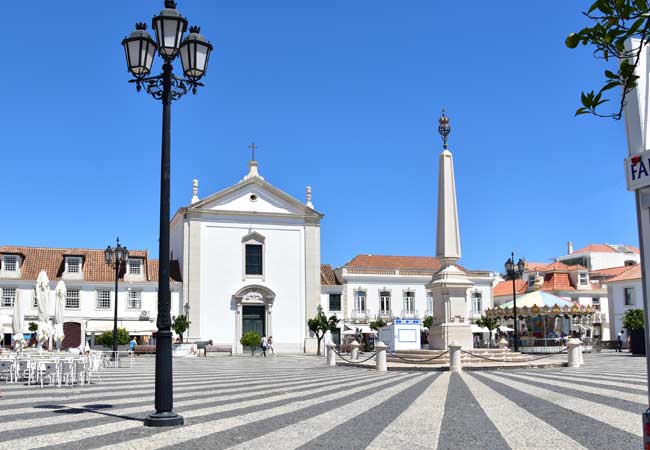
Vila Real de Santo António stands at the eastern edge of the Algarve, overlooking Spain across the broad waters of the Rio Guadiana. The town centre was built in just five months in 1774, using the same grid layout and architectural style as Lisbon's Baixa district following the 1755 earthquake. The result is a grandeur that belies the town's modest size: wide streets, elegant Baroque buildings, and a central plaza paved in traditional black and white stone.
A waterfront promenade follows the river north, offering views across to the Spanish town of Ayamonte. Ferries make the ten-minute crossing throughout the day, allowing an easy side trip into Spain. South of town, quiet beaches backed by pine forests stretch toward the Ria Formosa, far less crowded than the sands of the central Algarve.
Related articles: Vila Real de Santo Antonio
Monchique and the Serra hills (car needed)
The Serra de Monchique rises inland from the coast, a forested mountain range that offers cooler air, scenic drives, and a complete change of scenery from the beaches below. The highest point, Mount Fóia (902m), provides panoramic views south across the entire Algarve to the Atlantic.
The N266 climbs into the hills from Portimão, reaching first the village of Caldas de Monchique. Hot springs here (31°C) have drawn visitors since Roman times, and spa hotels now cluster around the source. A short detour leads to Fonte dos Amores, a natural spring in a shaded forest clearing that makes an ideal picnic spot.
Further uphill, the town of Monchique sits surrounded by eucalyptus and cork oak forest. The 16th-century Igreja Matriz contains an unusual Manueline doorway, and the ruins of the Convento de Nossa Senhora do Desterro stand on the hillside above. Viewpoints around the town look out across wooded valleys.
From Monchique, the road continues to the summit of Fóia. The drive westward along the N267 extends the day trip, winding through rolling hills to the village of Aljezur with its hilltop castle and access to the wild beaches of the Costa Vicentina.
Portimão and Praia da Rocha
Portimão and Praia da Rocha sit a few kilometres apart but offer completely different experiences. Together they make a day trip that covers both the traditional and modern sides of the Algarve.
Portimão grew wealthy on sardine fishing and canning, industries that collapsed in the 1980s but left their mark on the town. The old waterfront warehouses have been converted into a riverside promenade, and the Museu de Portimão, housed in a former cannery, traces this heritage. The town centre contains grand plazas and pedestrianised shopping streets, though the real draw lies near the Ponte Velha bridge, where simple restaurants grill fresh sardines over charcoal and serve them at communal tables.
Praia da Rocha makes no pretence at subtlety. This high-rise resort stretches along one of the finest beaches in the Algarve, a wide sweep of golden sand beneath dramatic ochre cliffs. A modern marina occupies the mouth of the Arade estuary, its boardwalks lined with restaurants and bars. The nightlife rivals Albufeira for energy if not quite for scale, and the beach clubs keep the atmosphere lively from morning until late.
The two towns combine well: Portimão for lunch and a wander through the old streets, Praia da Rocha for an afternoon on the sand and dinner overlooking the sea.
Related articles: Guide to Portimão
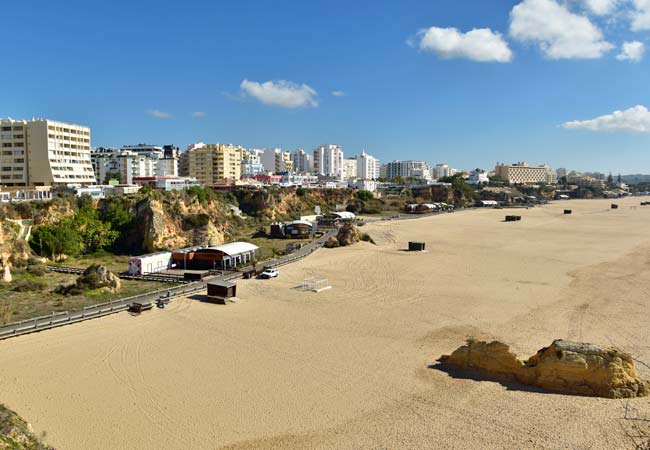
The beach at Praia da Rocha, one of the finest in the Algarve
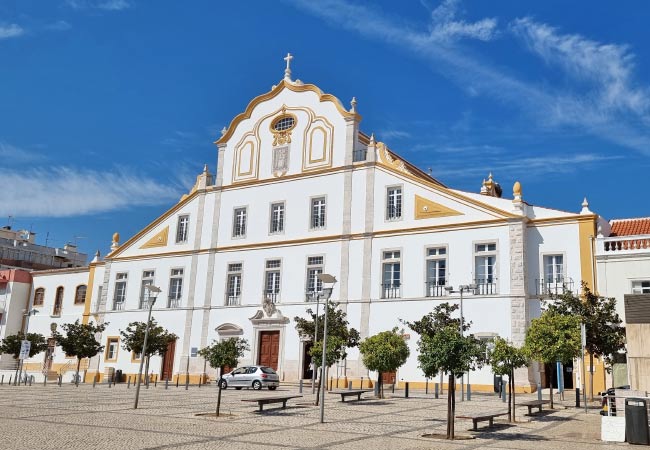
The Convento do Colégio dos Jesuítas in Portimão's old town
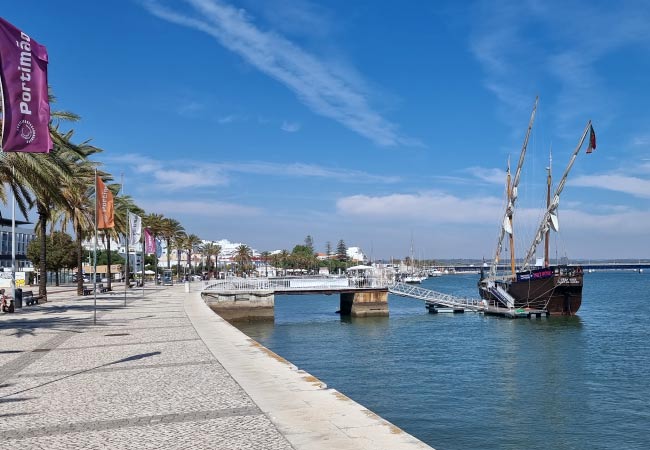
Portimão's waterfront promenade, converted from the old fishing warehouses
Our most popular guides to the Algarve


About the author: I'm Philip Giddings and have been writing these independent guides since 2009. I first visited the Algarve in 2001 when my Portuguese wife, Carla, was proud to show her country to me. We now live in Lisbon but I'm in the region most weeks researching and updating this site or visiting Carla’s extended family who live here. Having both Portuguese-family and friends who live within the Algarve gives me the local insight and personal connection to the region.
I love the Algarve region and strive to ensure every practical detail (such as ticket prices, opening hours) is correct, by checking against official sources and confirming in person on the many trips I make. I am experienced in Portuguese travel having written almost 2,000 guides for my wider set of Portugal Guides, and this is my full-time work and passion. The site is funded by affiliate commissions on tour and accommodation bookings, disclosed on every page that carries them. No tourist board, tour operator or attraction pays to appear here. My full story can be read here.