Algarve-Tourist.com
The best independent guide to the Algarve
Algarve-Tourist.com
The best independent guide to the Algarve
Loulé: Sights, attractions and things to do and see for 2026
Loulé is the Algarve's most rewarding inland destination. This market town sits just 16km from Faro, yet feels a world away from the coastal resorts. Moorish architecture lines narrow medieval streets. Local farmers still sell their morning's harvest at the municipal market. Traditional craftsmen work from shopfronts that have changed little in decades.
The town rewards a full day of exploration. Morning visitors can browse the market halls before wandering through the Cidade Velha, the atmospheric old quarter built over the original medieval street plan. The castle and its museum provide context for Loulé's layered history: Roman foundations, Islamic rule, Christian reconquest. By afternoon, the surrounding region offers wine estates, nature reserves, and one of the Algarve's most unexpected sights: a Tibetan stupa on a remote hilltop.
This guide covers all major sights within Loulé and the worthwhile attractions in the surrounding countryside.
Overview of the major sights of Loulé
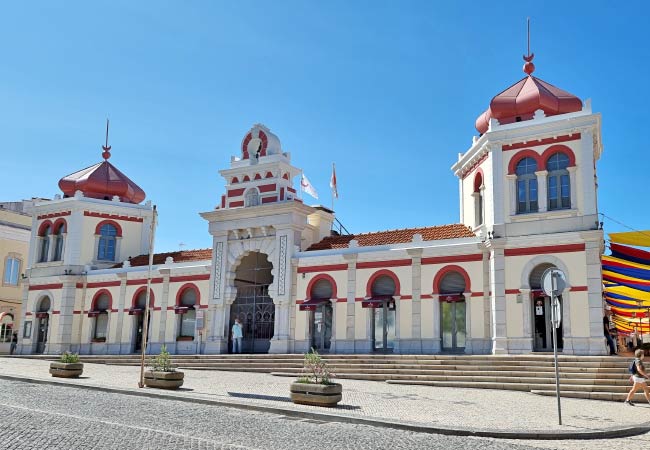
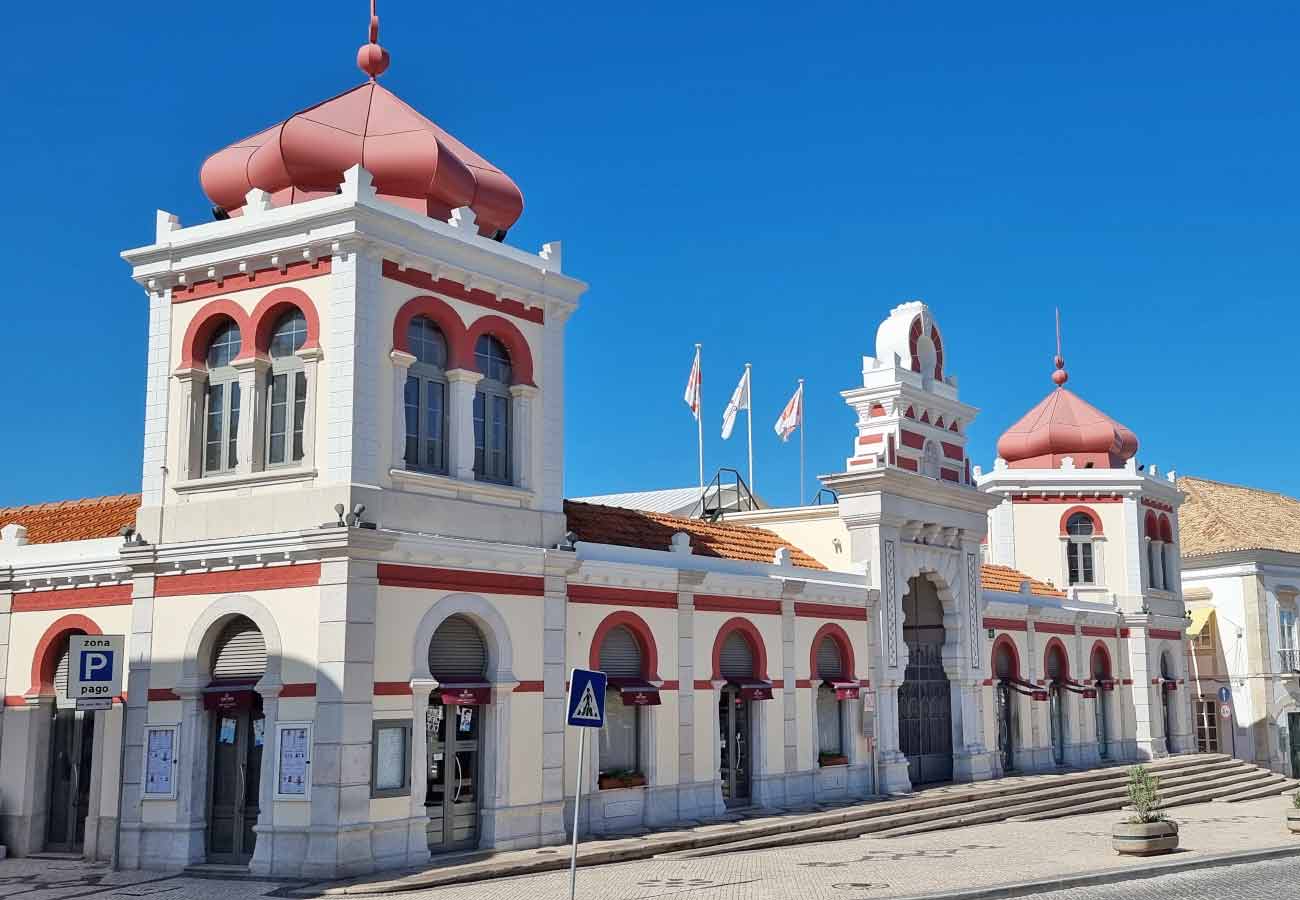
Mercado Municipal de Loulé - Pink domes and horseshoe arches mark this 1908 Neo-Arabian market hall, where local farmers sell fresh produce daily. Saturday mornings bring an outdoor market to the surrounding streets, with vendors selling leather goods, clothing, and local honey.
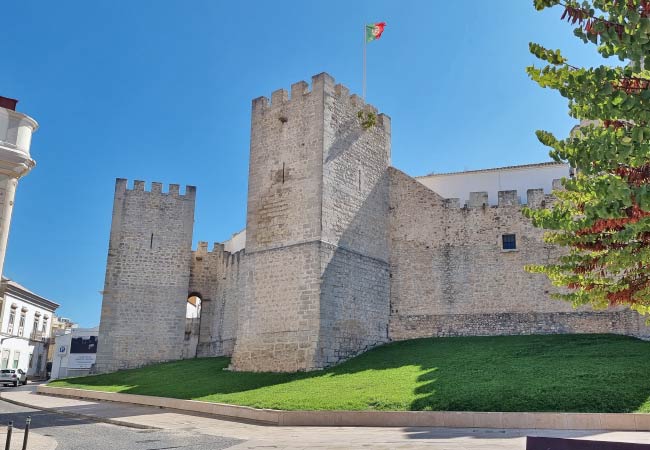
Castelo de Loulé - Roman foundations, Moorish walls, and three towers rebuilt after the Christian reconquest in 1249. Three stone towers rise above the northwest corner of the old town, connected by restored 13th-century walls. Climb two for views across Loulé; the third contains the municipal museum.
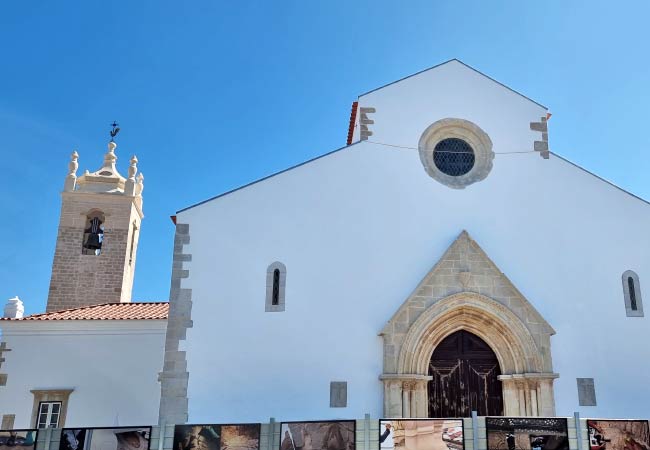
Igreja Matriz de São Clemente - The Gothic parish church rose over a Moorish mosque in the late 13th century. Its bell tower was once a minaret: the only surviving mosque structure from the Islamic period still standing in Portugal.
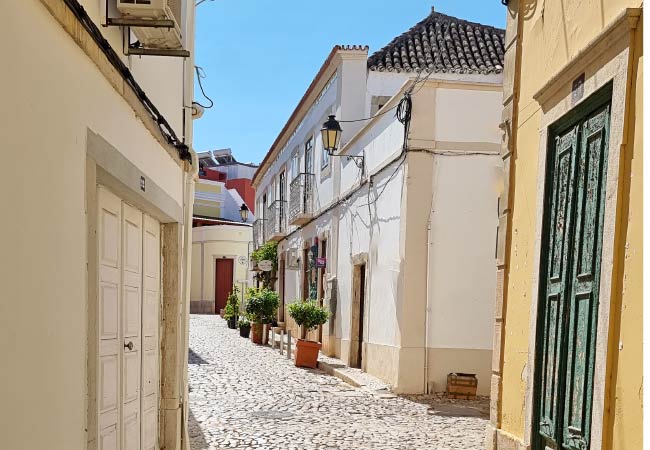
The Cidade Velha – Narrow cobbled streets around Rua Almeida Garrett follow Loulé's original medieval layout. Traditional craftsmen still work from houses with workshops and storefronts opening directly onto the lanes.
Capela de Nossa Senhora da Conceição - Behind a plain 17th-century exterior lies an 18th-century interior of gilded altarwork and azulejo tile panels depicting scenes from the Virgin Mary's life.
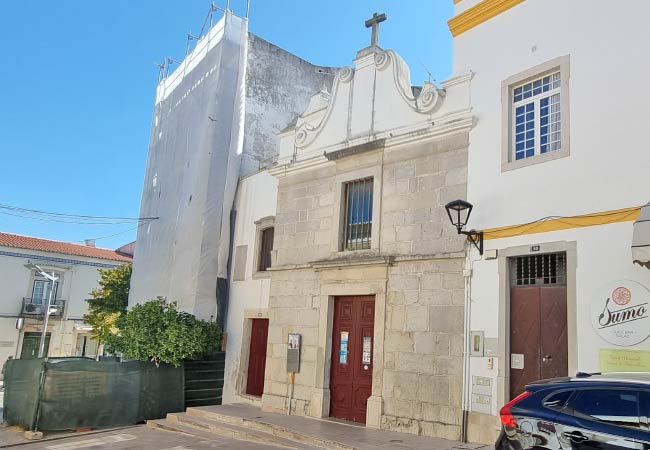
Mina de Sal-Gema (Rock Salt Mine) – Guided tours descend 230 metres into Portugal's only visitable rock salt mine, passing through 1.5km of illuminated tunnels in a working extraction facility. – Tickets can be purchased here.
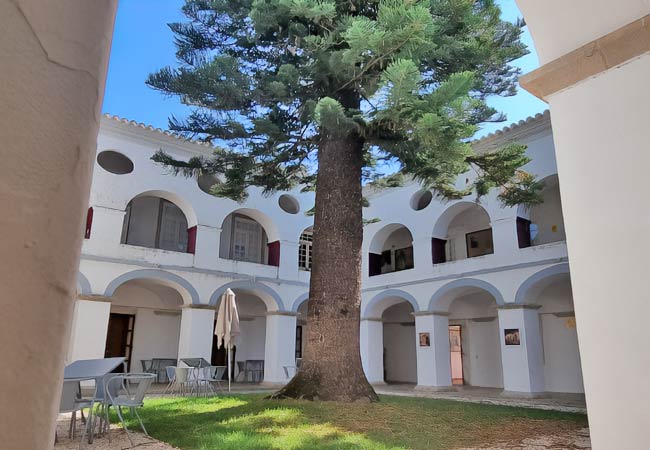
Convento do Espírito Santo - The elegant 17th-century Convento do Espírito Santo now serves as Loulé's vibrant municipal art gallery and cultural center, hosting rotating exhibitions and cultural events.
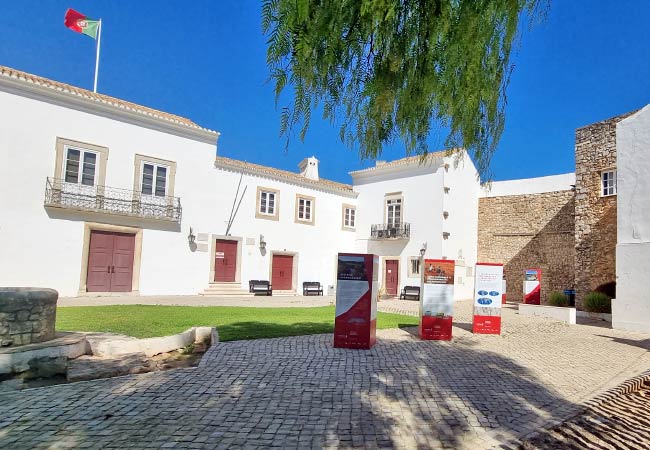
Museu Municipal de Loulé - Three rooms within the castle walls display archaeological finds in chronological sequence: prehistoric artefacts, Roman-era objects, and material from five centuries of Islamic rule.
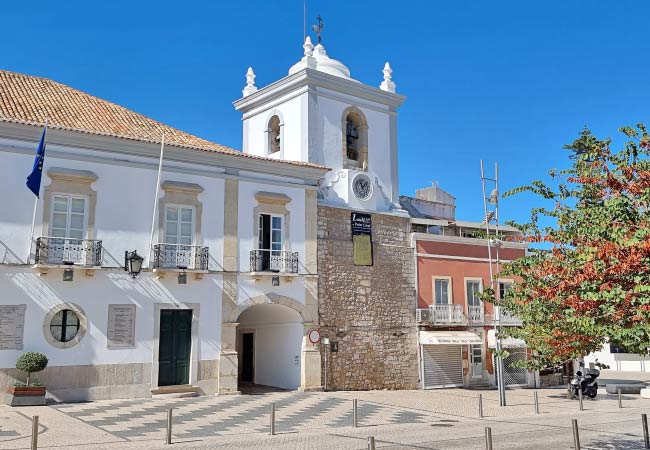
Praça da República – The town's main square, lined with outdoor cafés and anchored by the 1842 neoclassical town hall. The historic Café Calcinha, restored to its 1929 art deco design, occupies one corner.
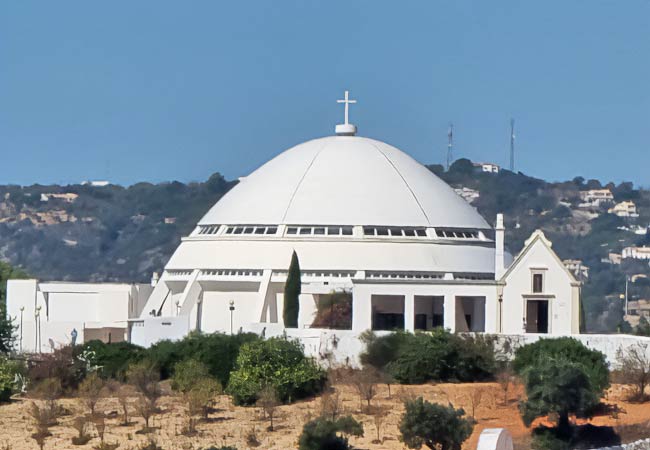
Santuário de Nossa Senhora da Piedade - A modern circular temple stands on a hilltop 2km from town beside a 16th-century hermitage. The site hosts the Festa da Mãe Soberana, southern Portugal's most important religious festival, held at Easter for over 500 years.
Palácio Gama Lobo - An 18th-century palace displaying six wolves on its façade, a pun on the Lobo family name. Now home to ECOA, a craft and design centre with exhibitions, workshops, and a shop.
A detailed description of all of these sights is given towards the end of this guide.
The following map shows the location of the main sights of Loulé, and of the surround region (next section).
Legend: 1) Mercado Municipal 2) Castelo de Loulé 3) Castle walls 4) Igreja Matriz de São Clemente 5) Cidade Velha 6) Capela de Nossa Senhora da Conceição 7) Convento do Espírito Santo 8) Museu Municipal de Loulé 9) Praça da República 10) Santuário de Nossa Senhora da Piedade 11) Palácio Gama Lobo 12) Mina de Sal-Gema 13) Quinta da Tôr Winery 14) Estádio Algarve (Algarve Stadium) 15) Fonte Benémola Nature Reserve 16) Buddhist Stupa
There are many enjoyable activities with Loulé and the surrounding region. We have worked with GetYourGuide for the previous seven years and some of their best activities in Loulé include:
Sights around Loulé
Quinta da Tôr Winery (7km from Loulé) - This family-run vineyard occupies rolling countryside north of town. The estate specialises in full-bodied wines with high alcohol content, characteristic of the Algarve's warm climate. Guided tours cover the vineyards and cellars before concluding with a tasting of regional varieties.– Tickets for wine tasting and tours
Estádio Algarve (8km from Loule) - Built for Euro 2004, the 30,000-seat stadium features a distinctive roof structure inspired by local maritime traditions. The venue hosts occasional concerts and sporting events; check schedules before visiting.
Fonte Benémola Nature Reserve (12km from Loule) - Water flows year-round through this 400-hectare protected landscape, a rarity in the dry Algarve. The Menalva River sustains over 300 plant species and draws more than 100 bird varieties. Walking trails pass traditional water mills, small dams, and historic irrigation channels through dense Mediterranean vegetation..
Alto do Malhão: Buddhist Stupa and Mosteiro de Mú (26km north of Loulé) - A rose granite stupa rises at 537 metres elevation in the Serra do Caldeirão, erected in 2008 beside a small Buddhist meditation centre and an old whitewashed windmill. Prayer flags flutter in the mountain breeze. The panoramic views extend across the serra to the Alentejo; sunset is the best time to visit.
Detailed descriptions of the sights of Loulé
Mercado Municipal de Loulé
The municipal market announces itself with pink domes and horseshoe arches, a Neo-Arabian design from 1908 that nods to the region's Islamic heritage. Moorish Revival architecture was fashionable across Europe at the time, and Loulé's market remains one of the style's finest surviving examples in Portugal.
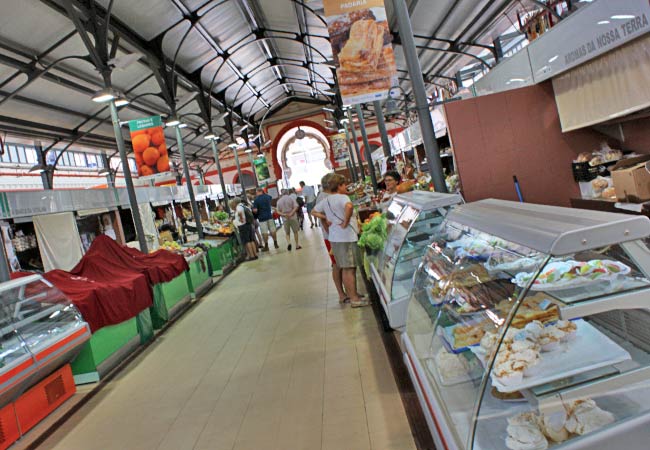
Inside, the market serves its original purpose: feeding the town. Local farmers arrange seasonal produce harvested that morning from surrounding fields. Fishmongers present the day's catch on marble slabs. Butchers prepare traditional Portuguese cuts while customers wait. The air carries piri-piri, cured ham, and the sharp tang of regional cheese.
This is not a market dressed up for tourists. Loulé's residents do their weekly shopping here, haggling in Portuguese over prices and quality. The building underwent significant renovation in 2017, modernising facilities while preserving its historical character, but the atmosphere remains unchanged.
Saturday mornings transform the surrounding streets. The weekly outdoor market draws vendors selling handcrafted leather goods, clothing, household items, and jars of local honey. Arrive early; by midday the best produce is gone and stallholders begin packing up.
Castelo de Loulé
Three towers and a run of restored medieval walls occupy the northwest corner of the old town. The site's military history stretches back to Roman fortifications from the 2nd century, though the structure visitors see today dates largely from 1268, when King Afonso III expanded the defences after the Christian reconquest.
The 1755 earthquake caused severe damage, as it did across southern Portugal. A minor tremor in 1969 added further destruction. Careful restoration work in the 19th and 20th centuries saved what remained.
Visitors enter through the main gate tower, which once served as both castle entrance and city gate. The courtyard contains a well and reconstructed medieval siege equipment. Two of the three defensive towers can be climbed for views across Loulé and the surrounding countryside. The third rises directly above the Municipal Museum.
Recent archaeological excavations beneath the castle have revealed Islamic-era remains. Sections of the original city walls survive incorporated into surrounding buildings along Rua da Barbacã and Largo D. Afonso III. The castle itself is best viewed from outside the Cidade Velha on Rua da Barbacã, where the full extent of the fortifications becomes clear.
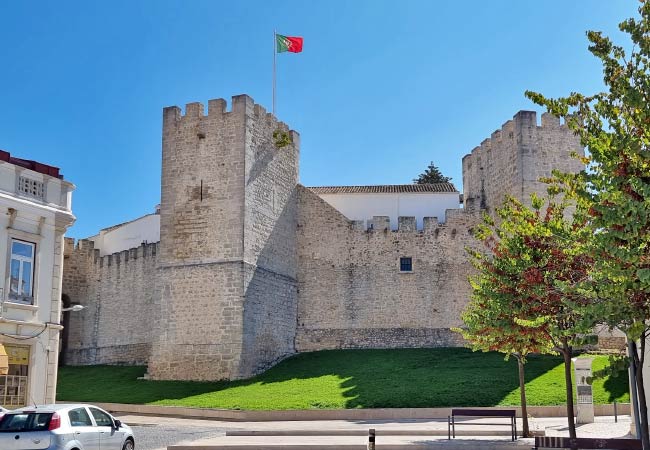
The castle is best viewed from outside of the Cidade Velha on the Rua da Barbacã
Igreja Matriz de São Clemente
Loulé's parish church stands as physical proof of the town's layered history. The Gothic structure rose in the late 13th century on the foundations of a Moorish mosque. Its bell tower was once a minaret: the only surviving mosque structure from the Islamic period still standing in Portugal.
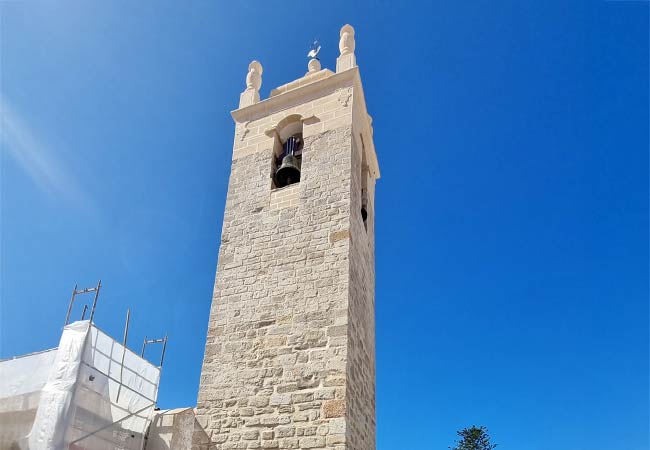
The church takes its name from the date of Loulé's reconquest. Christian forces took the town on 23 November 1249, the feast day of Saint Clement.
Beyond the whitewashed exterior and impressive Gothic portal with its three ogival arches, the interior reveals centuries of accumulated craftsmanship. Three naves divide beneath Gothic arches supported by narrow columns of varying heights, likely repurposed from Roman or Arab buildings. The capitals display intricate leaf carvings, possibly the work of Muslim craftsmen who remained after the reconquest.
Later additions enriched the space. Several 16th-century Manueline side chapels appeared during renovations, including the chapels of Nossa Senhora da Consolação and Saint Brás. The main altar features an ornate gilded altarpiece in the Portuguese Baroque style, added in the 18th century.
Outside, the Jardim dos Amuados occupies ground that once served as the town cemetery. The garden now offers a quiet spot with views across the surrounding countryside.
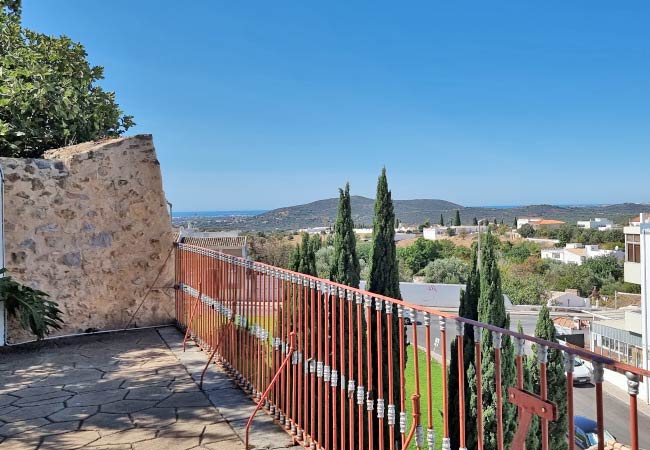
The view from the Miradouro do Jardim dos Amuados
Praça da República
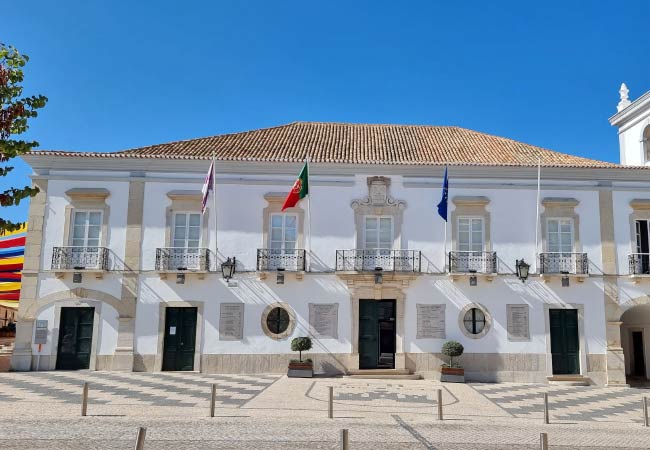
This wide square functions as Loulé's living room. Locals read newspapers at outdoor café tables. Families browse the pottery shops. The 19th-century Câmara Municipal anchors one end, its neoclassical façade dating from 1842. To its right, preserved sections of medieval city wall frame an ancient archway leading into the cobbled old town.
The historic Café Calcinha deserves a stop. Established in 1929 and recently restored to its original art deco design, the café once divided seating by social class. Women were not permitted entry until the 1960s. A bronze statue outside depicts António Aleixo, an early 20th-century poet, seated at his own table as if waiting for coffee.
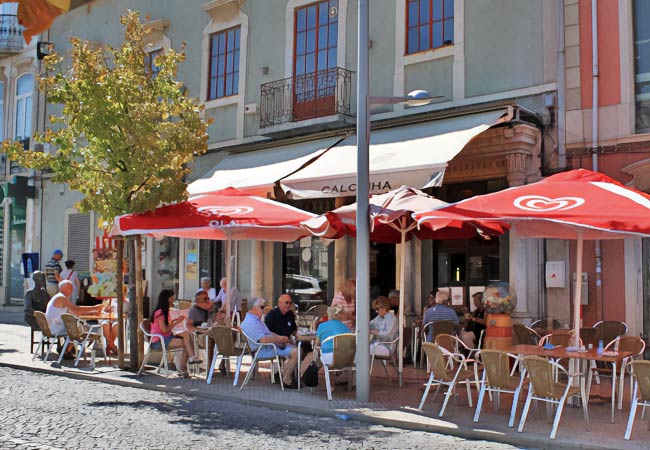
Café Calcinha is always popular
The giant Araucaria tree
A 200-year-old Norfolk Island Pine rises from the grounds of the Convento do Espírito Santo. At 45 metres, it surpasses every building in Loulé and dominates the town's skyline. The species originates from Norfolk Island near Australia; how this particular specimen came to be planted in an Algarvian convent two centuries ago remains unclear. Its symmetrical branches make it visible from across town, a natural landmark more prominent than any church tower.
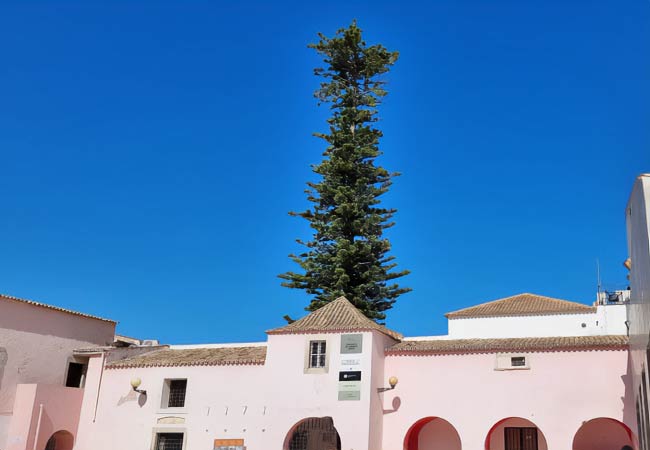
The Araucaria tree is the tallest landmark in Loulé
Convento do Espírito Santo
The 17th-century convent now operates as Loulé's municipal art gallery and cultural centre, hosting rotating exhibitions throughout the year. The building's finest architectural element is its neoclassical cloister, added in the 1790s and considered one of the best examples of the style in the Algarve.
The convent's history reflects Portugal's religious upheavals. Franciscan nuns of the Conceptionist Rule lived here until 1836, when the state dissolved religious orders across the country. The building subsequently served as a theatre, a courthouse, and treasury offices before its current cultural purpose.
Archaeological excavations beneath the structure have uncovered Islamic-era remains, including portions of Almohad-period walls and ceramic fragments.
Capela de Nossa Senhora da Conceição
The chapel exterior gives little away: a simple façade on a quiet street opposite the castle. Inside, the contrast is immediate. An 18th-century interior of gilded altarwork and azulejo tile panels fills the single nave. The tiles depict scenes from the Virgin Mary's life; the barrel-vaulted ceiling draws the eye upward.
The chapel's origins tie to Portuguese independence. When Portugal broke from Spanish rule in 1640, King John IV declared Nossa Senhora da Conceição the nation's patroness. The monarch mandated dedicated chapels at town entrances throughout the country. This structure, built in 1656 and renovated between 1743 and 1747, was Loulé's response. It backs onto one of the gates in the medieval city walls, fulfilling the royal requirement to mark the entrance to town.
Museu Municipal de Loulé
The municipal museum occupies the former mayor's office within the castle walls. Three exhibition rooms present Loulé's archaeological discoveries in chronological sequence: prehistoric artefacts, Roman-era finds, and objects from five centuries of Islamic rule.
The collection includes pottery, coins, and household items that document daily life across successive civilisations. A final room covers the medieval and modern periods, including pieces recovered from the Convent of Our Lady of Graça.
Santuário de Nossa Senhora da Piedade
The sanctuary stands on a hilltop 2km northwest of Loulé, its circular modern temple visible from the town below. The architecture divides opinion: some find the 20th-century structure bold, others compare it to a spacecraft. Adjacent to the modern building, the original 16th-century hermitage from 1553 survives, displaying traditional ex-votos left by the faithful.
The site hosts southern Portugal's most important religious festival. The Festa da Mãe Soberana has taken place continuously for over 500 years. At Easter, the celebration unfolds in two parts. During the Festa Pequena, the statue of Nossa Senhora da Piedade is carried down the hill into town. Two weeks later, for the Festa Grande, eight men dressed in white carry the statue back up the steep slope. Thousands line the route. The views from the hilltop extend across Loulé and the surrounding countryside.
Palácio Gama Lobo
Manuel da Gama Lobo began construction of this palace around 1760; work continued until 1875. The façade displays the family coat of arms: six wolves, a visual pun on the Lobo name.
The building's later history includes an unexpected chapter. During the Spanish Civil War, the palace sheltered Jesuit refugees fleeing across the border, earning it the local nickname "Palácio dos Espanhóis."
After decades of varied uses, restoration in 2019 transformed the palace into ECOA, the Creative, Crafts and Arts Space. The centre now serves as headquarters for Loulé Criativo, exhibiting traditional Algarvian crafts alongside contemporary design. Workshops run regularly, and a shop sells work by local artisans.
Alto do Malhão: Buddhist Stupa and Mosteiro de Mú (26km north of Loulé)
A white Tibetan stupa rises from the Serra do Caldeirão at 537 metres elevation, its rose granite form visible against the mountain scrub. The monument was erected in 2008 and symbolises the enlightened being in Buddhist tradition.
Visitors walk clockwise around the structure, a practice said to bring healing and beneficial effects. Above the stupa, the Mosteiro de Mú occupies the highest point beside an old whitewashed windmill. This small Buddhist centre offers meditation and retreat facilities. Colourful prayer flags stretch between buildings, their flutter audible before the monastery comes into view.
The panoramic views extend across the Serra do Caldeirão to the neighbouring Alentejo region. Sunset draws the most visitors, when the light softens across the hills and the coast disappears into haze.
Our most popular guides to the Algarve


About the author: I'm Philip Giddings and have been writing these independent guides since 2009. I first visited the Algarve in 2001 when my Portuguese wife, Carla, was proud to show her country to me. We now live in Lisbon but I'm in the region most weeks researching and updating this site or visiting Carla’s extended family who live here. Having both Portuguese-family and friends who live within the Algarve gives me the local insight and personal connection to the region.
I love the Algarve region and strive to ensure every practical detail (such as ticket prices, opening hours) is correct, by checking against official sources and confirming in person on the many trips I make. I am experienced in Portuguese travel having written almost 2,000 guides for my wider set of Portugal Guides, and this is my full-time work and passion. The site is funded by affiliate commissions on tour and accommodation bookings, disclosed on every page that carries them. No tourist board, tour operator or attraction pays to appear here. My full story can be read here.