Algarve-Tourist.com
The best independent guide to the Algarve
Algarve-Tourist.com
The best independent guide to the Algarve
Day trips from Albufeira: the best places to visit and towns to see in 2026
Albufeira makes an excellent base for exploring the central Algarve. The town itself delivers on all the essentials: golden beaches, lively nightlife and plenty to keep you occupied. But venture beyond the resort and you'll discover a region rich in history, natural beauty and authentic Portuguese character.
Within easy reach are medieval cities with Moorish castles, traditional market towns where daily life unfolds at a gentler pace, and fishing villages largely untouched by mass tourism. The coastline here ranks among the most dramatic in Europe, with towering cliffs, hidden sea caves and beaches that regularly feature on "world's best" lists.
If beach lounging leaves you restless, day trips open up a different side of Portugal entirely. The good news: getting around is straightforward. Public transport connects Albufeira to most popular destinations, and anything further afield is a short Uber or Bolt ride away.
This guide covers the best day trips from Albufeira, with practical information on how to reach each destination.
Related articles: Albufeira introduction - Sights and activities
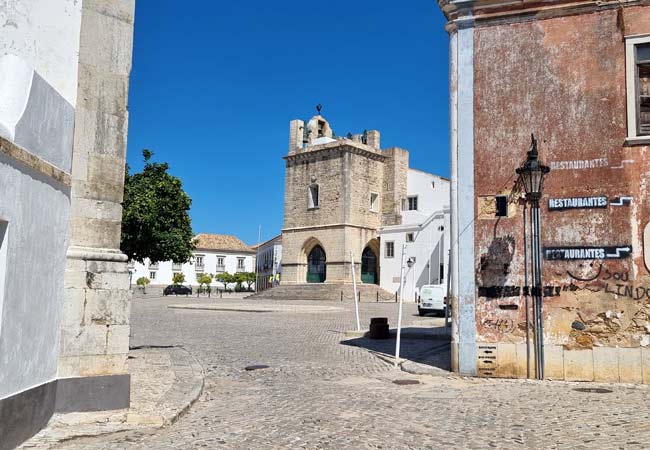
Faro's charming old quarter with its cobblestone streets and historic buildings
The best day trips from Albufeira
The best day trips from Albufeira include:
• Silves, once the Moorish capital of the Algarve, remains a standout destination, and its imposing red-brick castle is the finest example of Islamic military architecture in southern Portugal. - Silves guide
• Faro is the capital of the Algarve region, with a walled medieval quarter containing a Gothic cathedral, Baroque architecture, and the macabre Capela dos Ossos, lined with the bones of over 1,250 monks. bone chapel (day trip to Faro guide)
• Loulé - A traditional market town that hosts two lively Saturday markets. This is a great place to experience the authentic daily life of Portugal. (Loulé guide)
• Zoomarine is a marine-themed park combining animal shows, water slides, and educational exhibits to offer adventure for all ages.
• Vilamoura is the most sophisticated resort in the Algarve, centred on a glamorous marina lined with million-dollar yachts, fine-dining restaurants, and upmarket boutiques. World-class golf courses surround the town, drawing an international crowd year-round.
• Sete Vales Suspensos is a 5.7km clifftop trail ranked among Europe's finest coastal walks, passing dramatic limestone formations, secluded beaches, and the famous Benagil Cave. (Sete Vales hike guide)
• Slide & Splash is Portugal's largest water park, with over 25 rides ranging from toddler splash zones to adrenaline slides dropping near-vertically.
• Benagil Cave boat tours explore the dramatic coastline around Carvoeiro, visiting sea caves, rock arches, and hidden grottos carved into the golden cliffs.
• Praia da Marinha beach regularly features on lists of the world's most beautiful beaches, with golden cliffs framing turquoise water and a distinctive double sea arch at the western end. (Praia da Marinha guide)
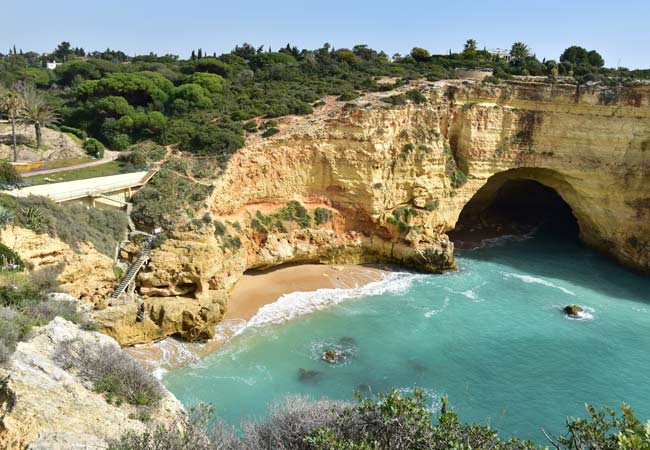
The Praia de Vale Covo at the end of the Sete Vales Suspensos hiking trail
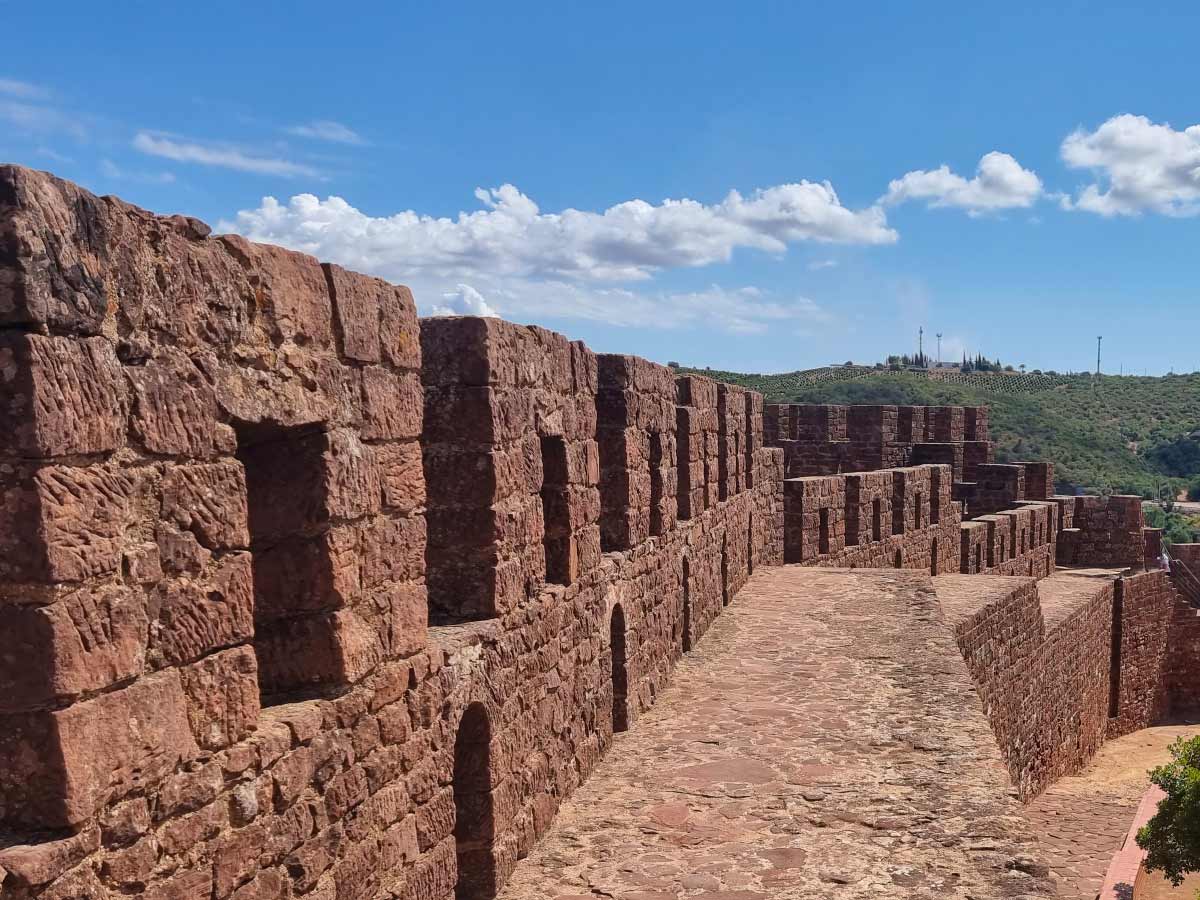
The red brick Moorish castle at Silves
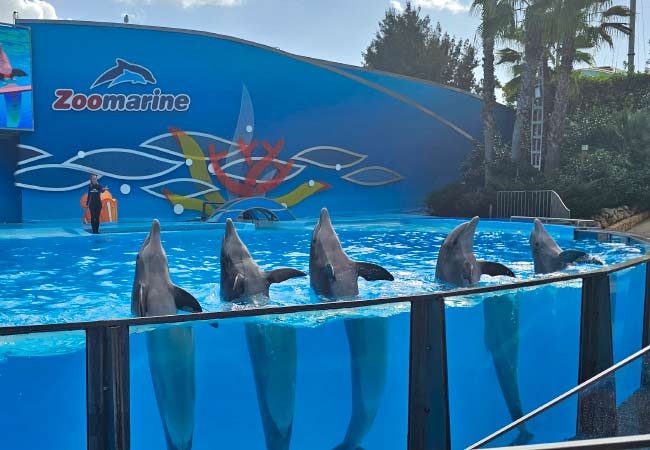
The fantastic dolphin show at Zoomarine
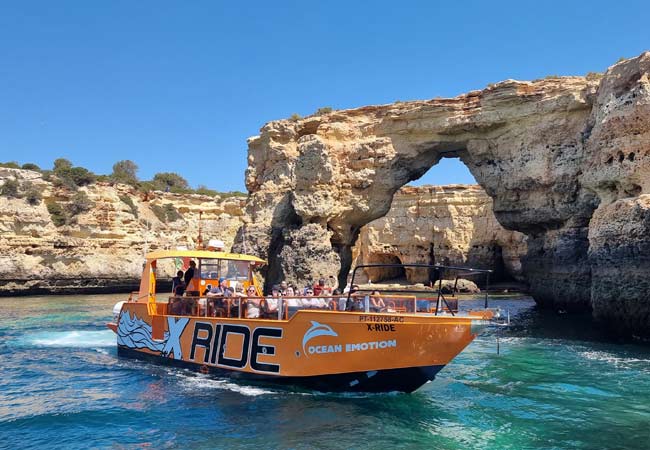
A speed boat tour of the Algarve coastline
The map below highlights the best day trips from Albufeira. Towns are marked in blue, natural features in green, and theme parks and waterparks in yellow. Albufeira is indicated by marker 10. (Zoom in or out to see all points.)
Legend: 1) Silves 2) Faro 3) Loulé 4) Vilamoura 5) Portimão 6) Lagos 7) Ferragudo 8) Olhão 9) Slide & Splash (waterpark) 10) Aqualand (waterpark) 11) Zoomarine (theme park)12) Aquashow Park (waterpark) 13) Benagil Cave 14) Praia da Marinha (beach) 15) Praia da Falésia (beach)
The best day trips from Albufeira, which are easily accessible by public transport are:
1) Silves 2) Faro 3) Loulé 4) Vilamoura & Quarteira 4) Olhão
If you have a car and you are happy travelling a bit further we would suggest these day trips:
1) Lagos 2) Far western Algarve (Sagres, Cabo de São Vicente, Burgau) 3) Tavira 4) Monchique
The following section provides details of the best day trips from Albufeira, with links to further in-depth guides. The first section covers destinations easily reached by public transport, while the second section features popular day trips that require a car.
Day trip destinations easy to reach from Albufeira
The following day trips can be easily reached from Albufeira by public transport. The regional bus company of the Algarve is Vamus (www.vamusalgarve.pt/) and the train company is Comboios de Portugal (CP - www.cp.pt)
Silves as a day trip from Albufeira
Silves is one of the best destinations in the Algarve for a day trip, combining impressive historical sights with genuine Portuguese atmosphere.
During the Moorish era (9th to 12th century), Silves was the capital of the Algarve and one of the most important cities on the Iberian Peninsula. The town commanded trade routes along the Rio Arade, which was then navigable to the sea, bringing wealth and cultural influence that rivalled Lisbon. This prosperity ended abruptly in 1249 when Christian forces captured the city, beginning a long decline as the river silted up and power shifted to Faro.
The castle dominates the town, with its massive red-brick walls being among the best-preserved Moorish fortifications in Portugal. Inside, walkways trace the battlements with views across terracotta rooftops to the surrounding hills. Below the castle, the 13th-century Sé cathedral was built on the foundations of a mosque, its Gothic interior cool and dim after the bright streets outside. Fragments of the original town walls still encircle parts of the old quarter, with the old gateway at Praça do Município marking the historic entrance.
Below the castle, cobbled streets wind between whitewashed houses, opening onto small squares with cafe terraces shaded by orange trees. The covered market trades every morning, selling local produce, cheeses, and honey. The town sees relatively few tourists compared to the coast, and daily life continues at an unhurried pace that has largely vanished from busier resorts.
There is a direct bus from Albufeira bus station to Silves (VAMUS route 17, €3.80, 45 minutes).
Related article: A day trip to Silves
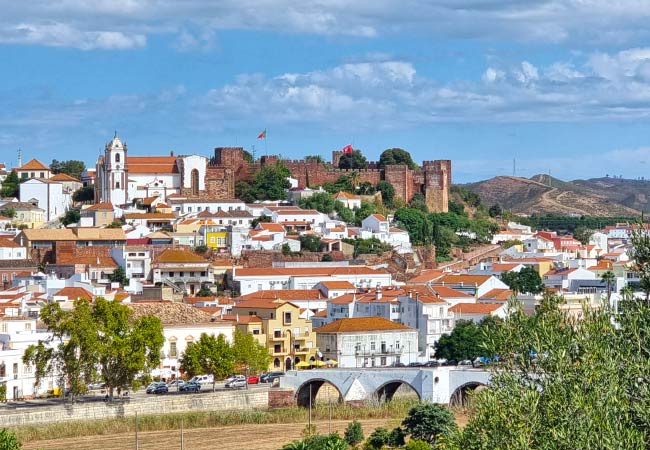
The view over Silves
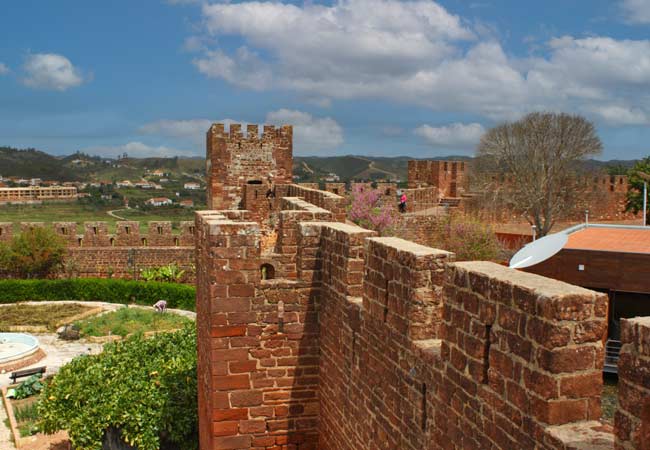
The red brick Castelo de Silves is a highlight of a day trip to Silves
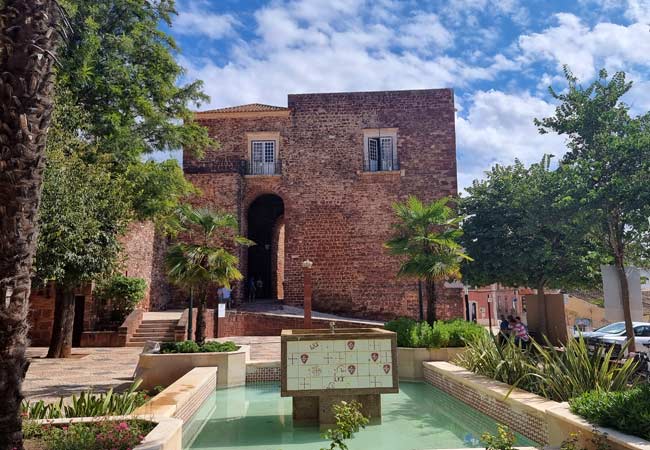
The Praça do Município at the centre of Silves, with the narrow gateway through the town walls
Loulé as a day trip from Albufeira
Loulé is a traditional market town and the ideal destination for experiencing the real Portugal, away from the beaches and resort complexes of the coast.
The town has served as a trading hub since Moorish times, and commerce still defines its character. The covered market is the centrepiece, housed in a striking 19th-century building with red onion domes and horseshoe arches inspired by Moorish architecture. Inside, stalls sell fresh fish laid out on ice, locally grown fruit and vegetables, cured meats, cheeses, and regional honey.
South of the market, a warren of narrow streets forms the old artisan quarter. Traditional workshops still operate here, with coppersmiths hammering cataplana pots, leather workers stitching belts and bags, and ceramic painters decorating tiles by hand. Whitewashed houses line the cobbled lanes, their doorways often open to reveal glimpses of tiled courtyards within. At the top of the old town, a 13th-century castle and the Igreja Matriz church overlook the rooftops.
Saturday morning transforms Loulé into something livelier. A farmers' market sets up outside the covered hall, selling organic produce, homemade jams, and fresh bread direct from local smallholdings. On the edge of town, a sprawling gypsy market spreads across several streets, with vendors selling everything from clothing and household goods to spices, plants, and live chickens. The combination of all three markets makes Saturday the best time to visit.
There is a direct bus from Albufeira bus station to Loulé (VAMUS bus route 10, €4.40, 40 minutes).
Related article: Loulé guide
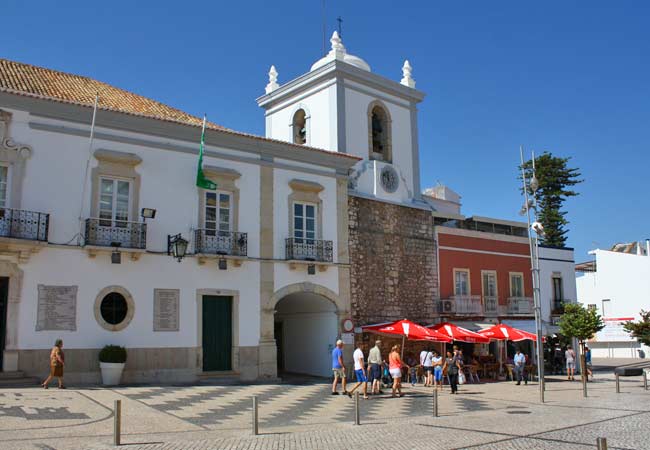
Loulé is a pretty place to visit as a day trip
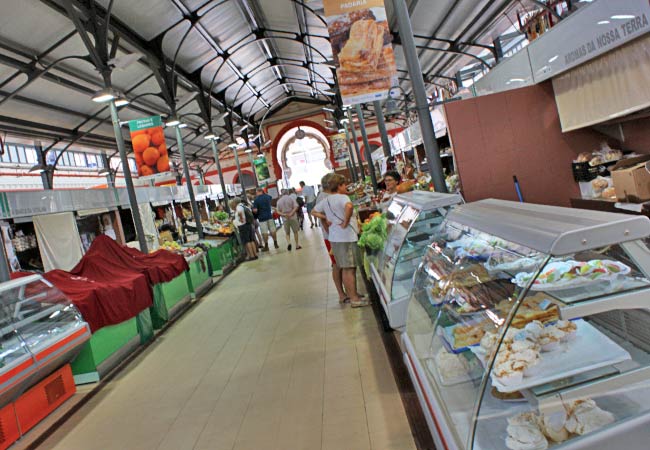
The covered market in Loulé
Faro as a day trip from Albufeira
Although often overlooked, Faro has a surprising amount to offer for a day trip. The Algarve's capital combines a walled medieval quarter, a lively modern centre, and access to one of Portugal's most important nature reserves. The Cidade Velha (Old Town) is entered through the Arco da Vila, an 18th-century gateway built into the medieval walls. Inside, cobbled streets open onto the Largo da Sé, a peaceful square flanked by the Gothic cathedral and the bishop's palace. The cathedral rewards a climb to the bell tower, with views across the terracotta rooftops to the lagoons beyond. The most unusual attraction lies a short walk north of the old town. Capela dos Ossos (Bone Chapel), attached to the Igreja do Carmo, has its walls and ceiling lined with the skulls and bones of over 1,250 monks, arranged in geometric patterns.
Beyond the walls, the modern city centre offers pedestrianised shopping streets that link pretty plazas, with cafe terraces spilling onto the pavements. The harbour district provides access to the Ria Formosa Natural Park, a protected expanse of saltmarshes, lagoons, and barrier islands stretching 60km along the coast. Boat tours depart from the quayside, visiting sandbanks where flamingos feed and islands with deserted beaches.
There is a direct bus from Albufeira bus station to Faro.
Related articles: Faro introduction
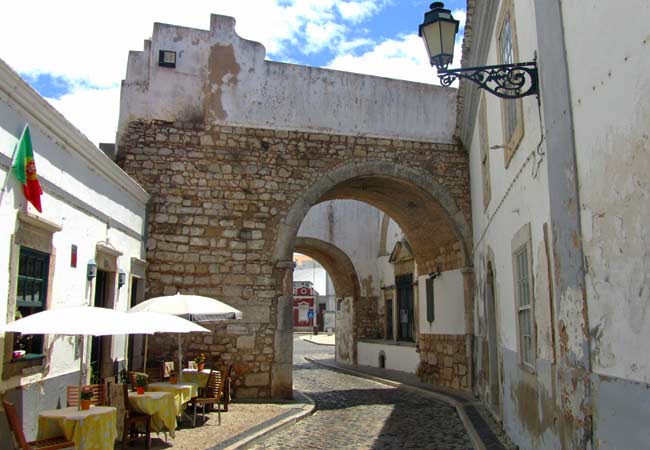
Faro has a pretty historic centre
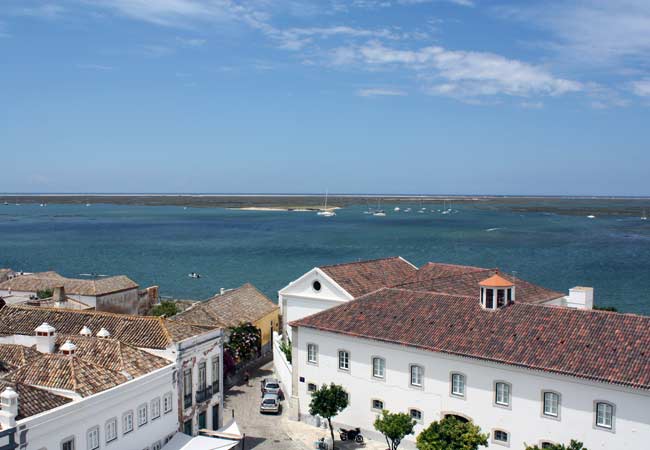
The view from the top of the Sé cathedral looking over the Parque Natural da Ria Formosa
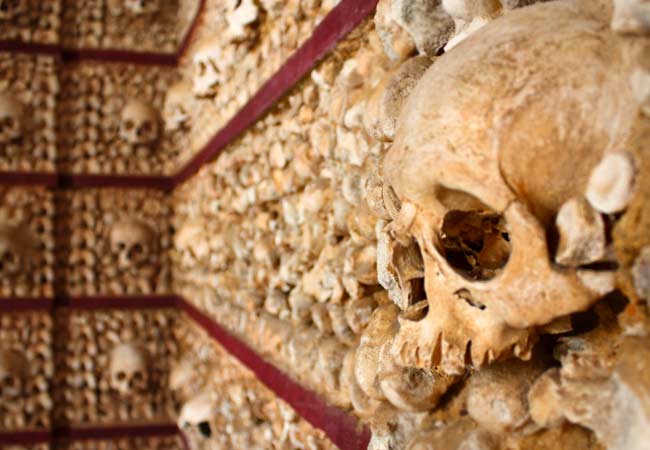
The creepy bone chapel
Zoomarine
Zoomarine is one of the Algarve's top attractions, perfect for a family day trip. This marine-themed waterpark combines the best aspects of a zoo and waterpark to offer entertainment, education, and adventure for all ages.
The main attractions include dolphin and sea lion shows, bird of prey demonstrations, and tropical bird performances. For thrill-seekers, the park features water slides, flumes, and a wave pool alongside a relaxing beach area. Zoomarine also offers the Dolphin Emotions Experience, allowing visitors to interact closely with dolphins.
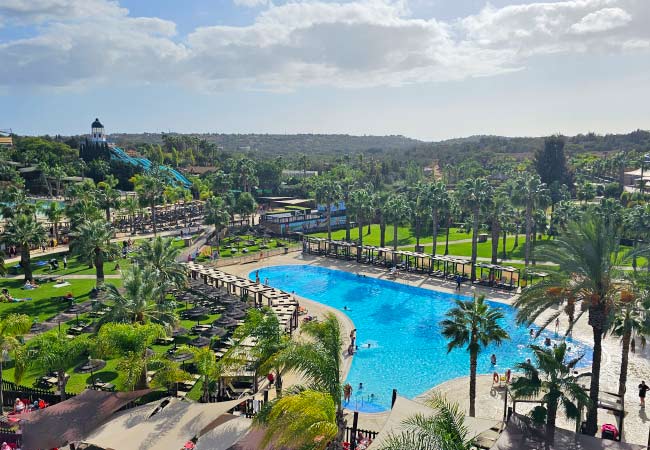
The beach area and flumes of Zoomarine
Vilamoura and Quarteira for a day trip
Quarteira and Vilamoura sit side by side on the Algarve coast, yet they represent two entirely different approaches to tourism. Visiting both in a single day trip offers a fascinating contrast between local Portuguese life and international resort glamour.
Vilamoura is the most sophisticated resort in the Algarve, centred on a marina that could sit comfortably on the French Riviera. Superyachts line the pontoons, their polished hulls reflecting the waterfront restaurants and designer boutiques that curve around the harbour. The resort was planned from scratch, and it shows in the manicured landscaping, and the quiet efficiency of everything from the beach concessions to the golf buggies gliding between fairways
Quarteira offers the antidote. This is a working Portuguese town with a busy fishing harbour where trawlers unload their catch each afternoon. The beach is excellent, a long sweep of golden sand backed by a palm-lined promenade popular with Portuguese families rather than foreign tourists. The real draw is the seafood. Restaurants along the harbour serve grilled fish, cataplana stews, and platters of clams at prices that seem almost absurd after Vilamoura, where a single cocktail costs more than a full meal here.
A pleasant coastal path connects the two towns in around twenty minutes on foot, making it easy to combine Vilamoura's polish with Quarteira's authenticity in a single visit.
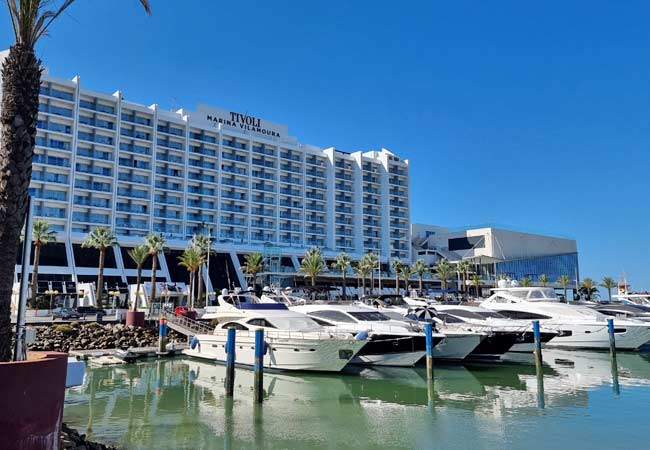
The marina complex of Vilamoura
The Percurso dos Sete Vales Suspensos
The Percurso dos Sete Vales Suspensos (Trail of the Seven Hanging Valleys) is one of the Algarve's most stunning coastal hikes, regularly ranked among the best cliff walks in Europe. The 5.7km trail follows the clifftops between Praia da Marinha and Praia de Vale Centeanes, passing a succession of hidden coves, dramatic rock formations, and viewpoints that justify every superlative.
The name refers to the seven valleys that cut through the cliffs along this stretch of coast, their "hanging" character created where streams once flowed but now end abruptly at the cliff edge. The trail winds along the top, dipping down to cross each valley before climbing again to the next headland. Limestone karst scenery dominates, with the soft rock eroded into sinkholes, natural arches, and sea stacks that glow golden in the afternoon light.
Several beaches punctuate the route, accessible by wooden stairways cut into the cliffs. Praia da Marinha at the eastern end is frequently ranked among the world's most beautiful beaches, with its distinctive double sea arch and crystal-clear water. Further along, the trail passes directly above the Benagil Cave, the Algarve's most famous sea cave, its domed ceiling pierced by a circular skylight.
Related article: The Percurso dos Sete Vales Suspensos
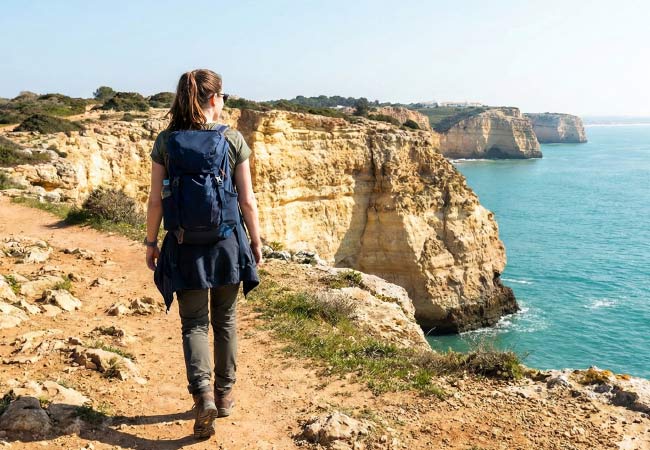
The Percurso dos Sete Vales Suspensos passes many interesting cliff features
Day trips a bit further out from Albufeira
The following day trip destinations are further from Albufeira and require a car due to the distance.
Lagos
Lagos built its wealth on seafaring and exploration. The city contains a diverse selection of tourist attractions, including the ornate Igreja de Santo António, the Bandeira fort, and the Mercado Municipal. The charming historic centre is full of cafes, shops, and restaurants, while at the end of the estuary sits a modern marina complex.
South of Lagos lies the Ponta da Piedade, one of the most beautiful stretches of coastline in the Algarve. This dramatic headland formed of golden sandstone rocks has been carved into unique features by winter storms.
Related articles: Introduction to Lagos
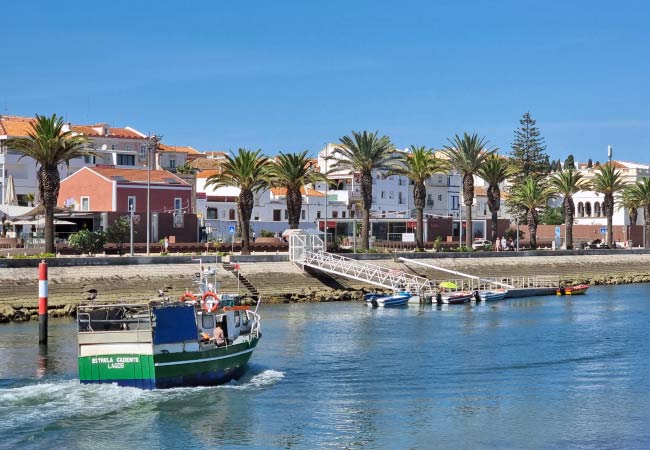
The historic centre of Lagos and the estuary leading to the modern marina
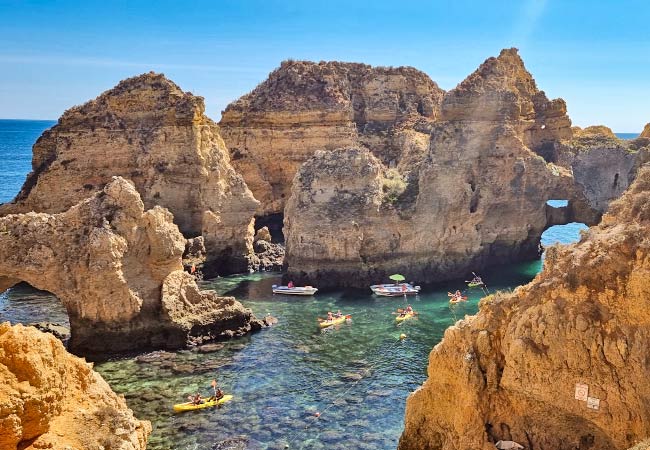
The Ponta da Piedade headland is one of the finest natural features of the Algarve
Monchique and the Algarve Hills (Car needed)
The Serra de Monchique offers a different side of the Algarve, with forested hillsides, thermal springs, and panoramic views replacing the beaches and resorts of the coast.
The N266 winds into the hills, passing first through Caldas de Monchique, a leafy village famed for its hot springs that have drawn visitors since Roman times. Further up, the town of Monchique has a 16th-century church, ruined monastery, and cafes serving the local firewater, medronho, distilled from arbutus berries. A short drive beyond reaches the summit of Mount Fóia (902m), the highest point in the Algarve, with views stretching south across the entire region to the Atlantic.
The magnificent panoramic views from the top of Mount Fóia
Sagres and Cabo de São Vicente (car day trip)
Sagres occupies the windswept southwestern corner of Portugal, a region of massive cliffs, vast beaches, and powerful Atlantic swells. The town has developed into a surfing hub, with schools, board rentals, and laid-back beach bars catering to wave riders from across Europe. The ramshackle appearance belies a quietly trendy atmosphere that reveals itself after a few hours.
The Fortaleza de Sagres dominates the headland south of town, a 15th-century fort defended by sheer cliffs on three sides and a thick wall on the fourth. Inside, the fortress is sparse, but the setting is spectacular, with views along the coast and down to the working fishing harbour below. Three excellent beaches offer swimming when conditions allow.
Six kilometres west, Cabo de São Vicente marks the southwestern tip of mainland Europe. Medieval sailors believed this bleak promontory to be the end of the known world, and the stark landscape does little to dispel that notion. A 19th-century lighthouse stands at the cliff edge, its beam visible 50km out to sea.
Related articles: Sagres guide
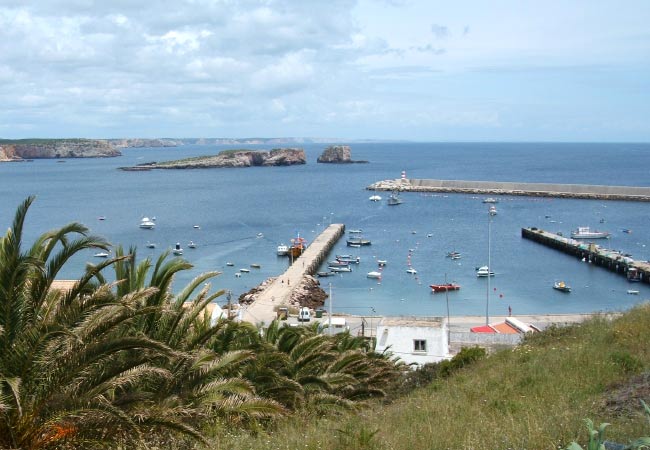
The fishing harbour of Sagres lies on the sheltered side of the peninsula.
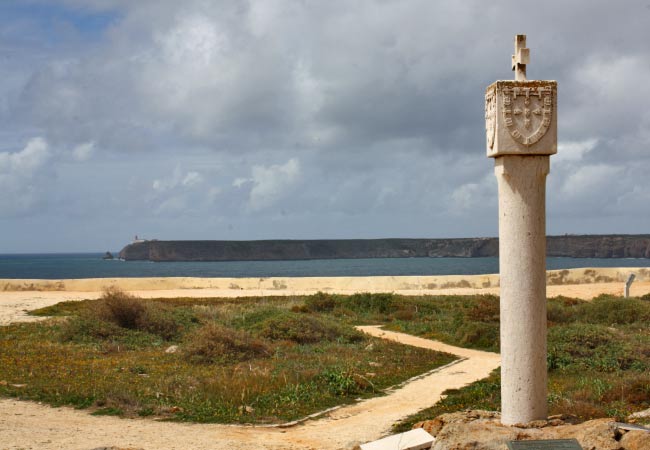
The Fortaleza de Sagres with the Cabo de São Vicente headland in the distance
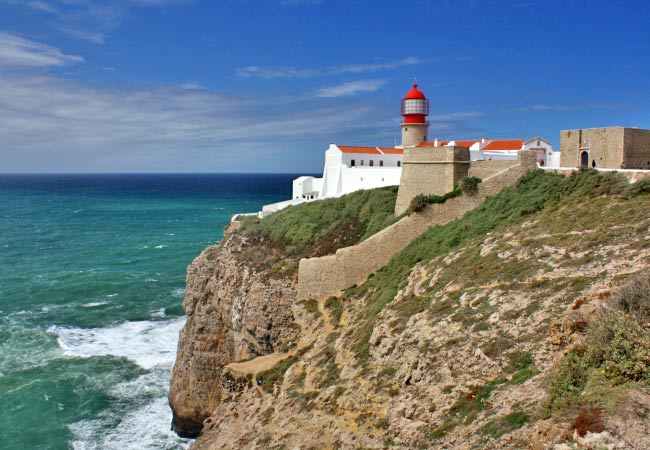
The powerful lighthouse perched atop the cliffs of Cabo de São Vicente
Tavira as a day trip from Albufeira
When tourists imagine the quintessential Portuguese town, they are thinking of Tavira. Cobbled streets wind past over thirty churches, a hilltop castle, and traditional houses decorated with painted tiles. The Gilão River divides the town in two, its banks lined with cafes and crossed by a Roman-era bridge.
The eastern Algarve location keeps Tavira quieter than the central resorts, preserving a genuinely Portuguese atmosphere that has largely vanished elsewhere. Local life continues in the daily market, the riverside cafes, and the fishing boats that still work the waters offshore. The beaches lie a short ferry ride away on the Ilha de Tavira, a sandbar island with kilometres of pristine sand backed by dunes rather than development
Related articles: A day trip to Tavira
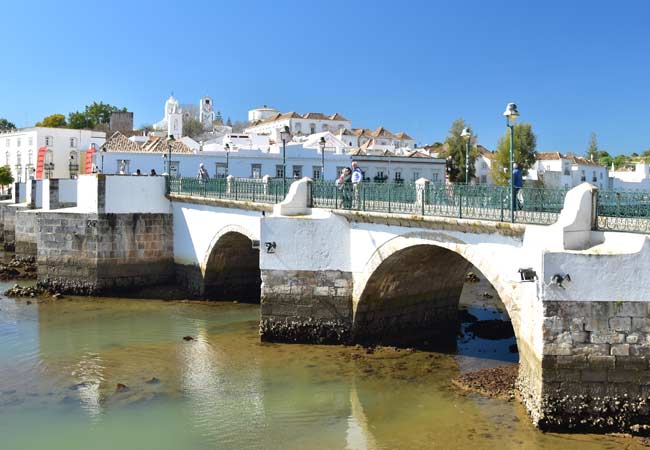
Tavira has a pretty historic centre that includes a mix of Moorish-era buildings.
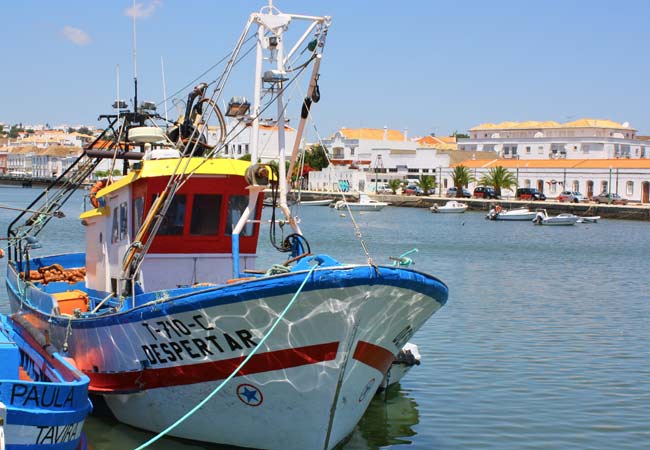
Tavira has a relaxed and slow pace, which is very different from the hectic central Algarve
Olhão as a day trip from Albufeira
Olhão is a working fishing town where tourism takes second place to the catch. Trawlers unload at the harbour each afternoon, and the waterfront restaurants serve some of the freshest and most affordable seafood in the Algarve.
The town has a distinctive character, with a Moorish-influenced old quarter of cubic whitewashed houses and flat rooftops, and a striking red-brick market hall facing the water. Ferries depart from the harbour to the barrier islands of the Ria Formosa, where the Ilha da Armona and Ilha da Culatra offer empty beaches and a small fishing community largely unchanged by tourism.
Related article: Olhão guide
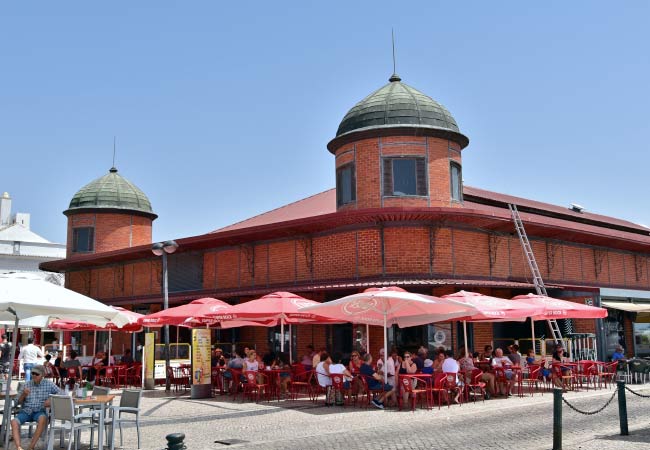
The red brick market building of Olhão
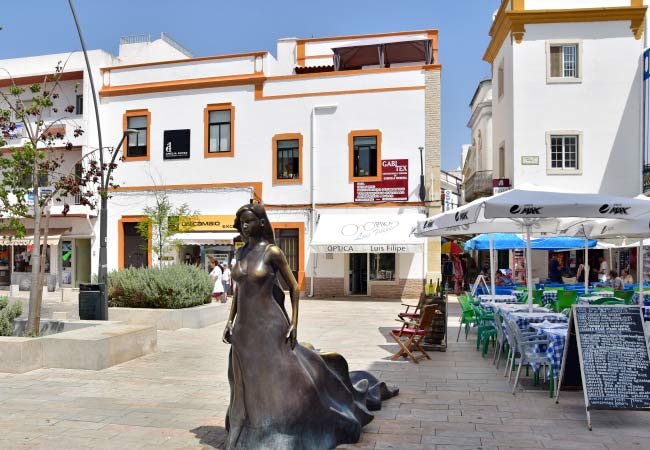
The fishing quarter of Olhão is where the excellent seafood restaurants are located
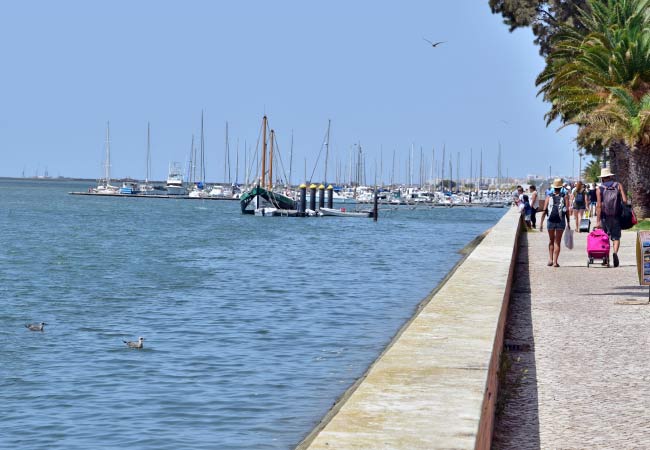
The waterfront of Olhão, overlooking the Parque Natural da Ria Formosa
Portimão and Praia da Rocha as a day trip from Albufeira
Portimão and Praia da Rocha sit side by side at the mouth of the Arade River, but they differ in almost every way.
Portimão is the largest city in the western Algarve, with a history rooted in sardine fishing and shipbuilding. The scenic waterfront and pedestrianised shopping streets make for pleasant wandering, but the real draw is the fish restaurants near the Ponte Velha bridge, where grilled sardines are served at plastic tables for a few euros.
Praia da Rocha is pure holiday resort, built along one of the finest beaches in the region. Themed bars and nightclubs line the western end, while a stylish marina and beach clubs occupy the rivermouth to the east.
Related articles: Guide to Portimão
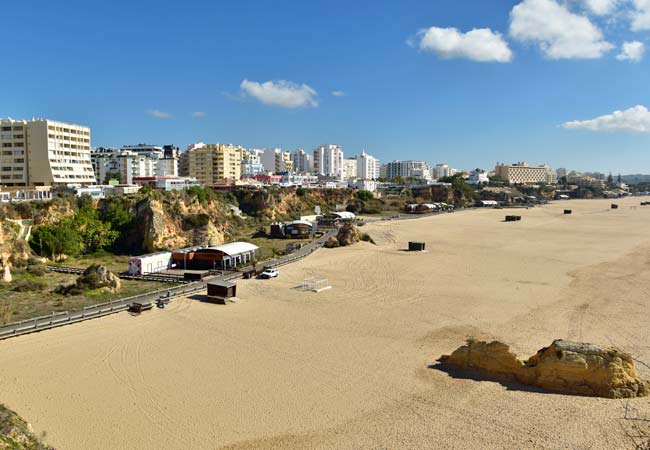
Praia da Rocha is famed for its massive beach
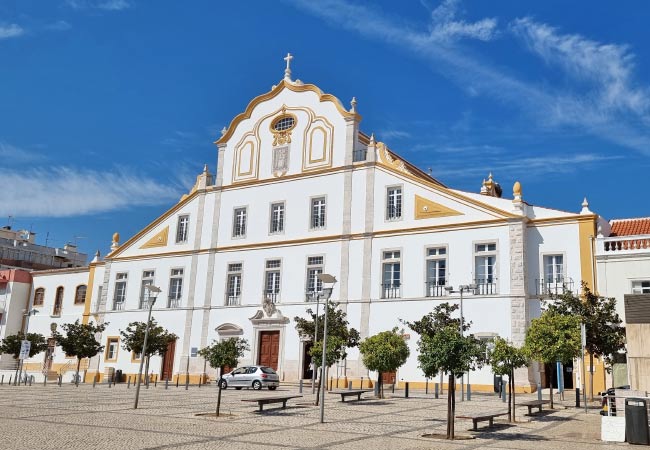
The Convento do Colégio dos Jesuitas in Portimão
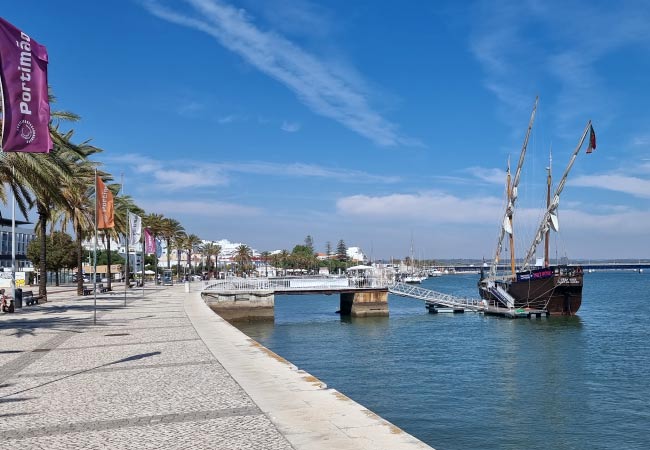
The pretty waterfront of Portimão, blending modern charm with its rich maritime heritage.
Carvoeiro
Carvoeiro sits on one of the most dramatic stretches of the Algarve coast, where golden limestone cliffs hide small sandy beaches in sheltered coves.
The village itself is attractive, with whitewashed houses tumbling down to a central beach framed by rock formations. The coastline to the east offers the best walking, with clifftop paths leading to the Algar Seco rock formation, the Boneca sea cave, and views down to the turquoise water of Vale de Centeanes beach. Boat trips depart from the beach to explore the sea caves, including the famous Benagil Cave a few kilometres along the coast.
Related article: Carvoeiro guide
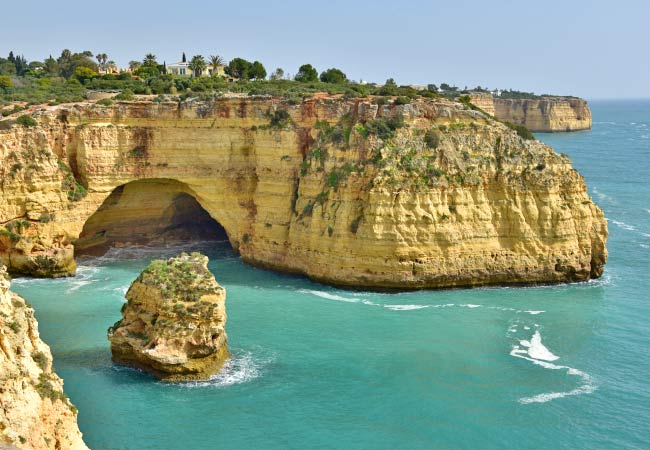
The stunning coastline to the east of Carvoeiro
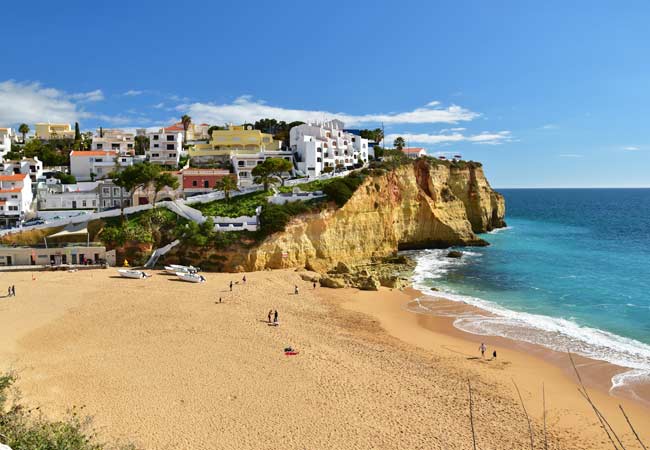
Carvoeiro is a very pretty place to visit for a day trip
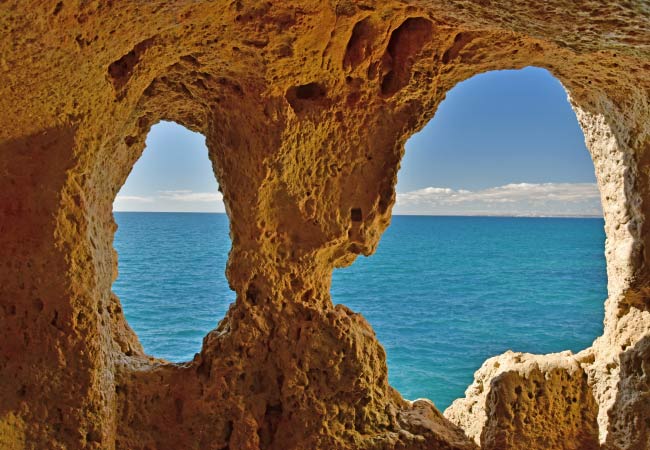
The view from the ‘Boneca’ or ‘Doll’ Cave, which is named as such due to the cliff face resembling a doll with two eyes.
Estoi
Estoi is a small inland village with two of the most important historical sites in the Algarve.
The Palácio de Estoi is a 19th-century Rococo villa, now converted into a luxury hotel but open to visitors who want to admire the ornamental gardens and azulejo-covered terraces. A short walk away, the Milreu Roman ruins date from the 2nd century and contain the remains of a villa complex with temple, bathhouse, and remarkably well-preserved mosaics depicting fish and marine life.
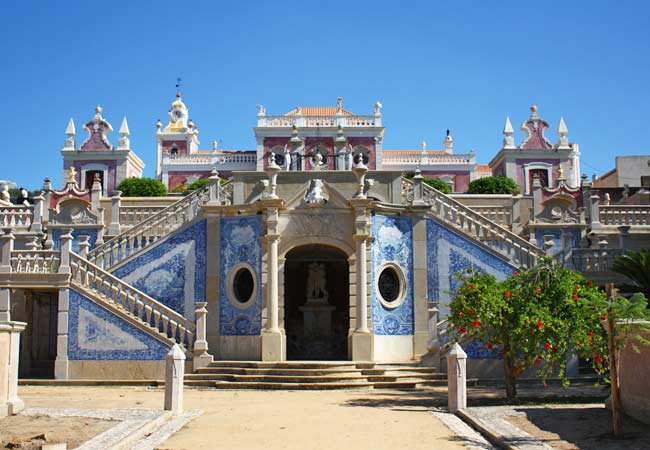
The colourful Palácio de Estoi
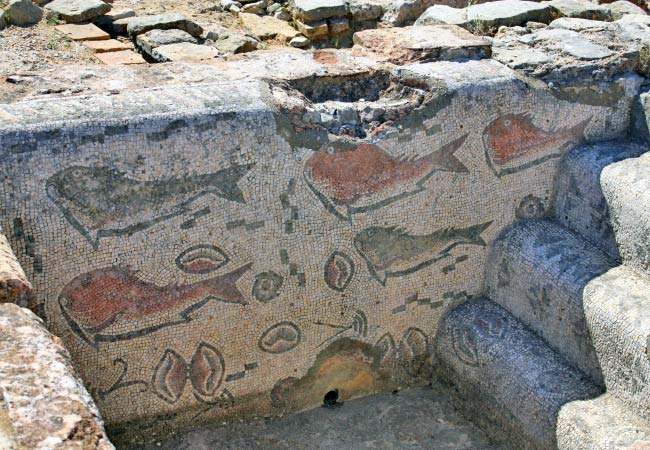
The marine mosaics of the Milreu Roman villa are over 2,000 years old.
Our most popular guides to Albufeira


About the author: I'm Philip Giddings and have been writing these independent guides since 2009. I first visited the Algarve in 2001 when my Portuguese wife, Carla, was proud to show her country to me. We now live in Lisbon, but Carla’s uncle lives just outside Albufeira. This means we are often in Albufeira visiting “Tio” or researching and updating this site. Having both the Portuguese-family connection and friends who live within the Albufeira gives me the local insight and deep understanding of the region.
I love the Algarve region and strive to ensure every practical detail (such as ticket prices, opening hours) is correct, by checking against official sources and confirming in person on the many trips I make. I am experienced in Portuguese travel having written almost 2,000 guides for my wider set of Portugal Guides, and this is my full-time work and passion. The site is funded by affiliate commissions on tour and accommodation bookings, disclosed on every page that carries them. No tourist board, tour operator or attraction pays to appear here. My full story can be read here.