Algarve-Tourist.com
The best independent guide to the Algarve
Algarve-Tourist.com
The best independent guide to the Algarve
Albufeira beaches: a complete guide for 2026
By Philip Giddings · Last updated
Albufeira sits on one of the most varied stretches of coastline in southern Europe. Whether you're after a lively beach five minutes from the bars, a sheltered cove away from the crowds, or a quiet stretch of sand safe for toddlers, you'll find it along the Albufeira coastline.
If you're in the early stages of planning and wondering whether the beaches are any good, they're some of the finest in the Algarve; soft golden sands, clean (if chilly) sea water, and a coastline worth exploring well beyond your hotel beach.
Most visitors tend to stick with the beaches closest to them, Praia da Oura for the New Town and Praia dos Pescadores for the Old Town. But this is the equivalent of saying you've seen Paris by just visiting the Eiffel Tower. There are so many more beaches to discover, some easy, some requiring more effort, and others not really worth the trouble.
Beyond the main town beaches, the limestone cliffs of the Sesmarias headland hide a string of sheltered coves to the west, including Praia de São Rafael, Praia dos Arrifes, and Praia da Coelha. Head further out and you'll find the vast open sands of Praia da Falésia and Praia da Galé, both a short Uber ride away.
I've been exploring the Algarve with my Portuguese wife for over 25 years, visiting with friends on party holidays, with my brother's young family, and with my older parents. This guide covers every beach in the Albufeira area, with honest advice on which ones are worth your time.
The best beaches close to Albufeira
Albufeira sits directly on a sandy shoreline, with glorious beaches within walking distance of the town. The best beaches close to Albufeira are:
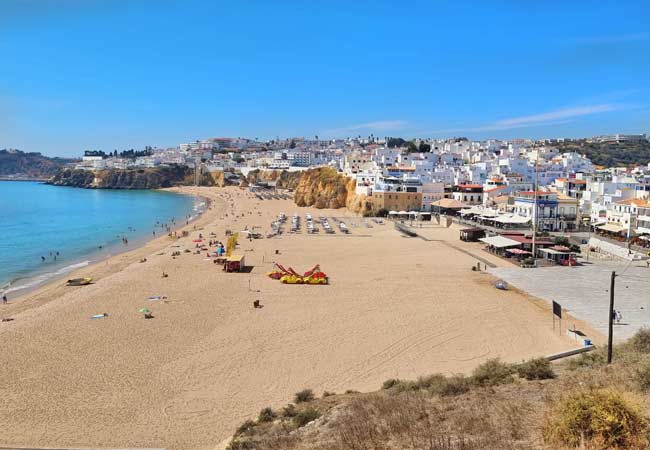
Praia dos Pescadores is the main beach of Albufeira. Its name translates to Fisherman's Beach, a reminder of the days when fishing boats were hauled up onto the sand each evening. Today Pescadores beach is a lively, family-friendly stretch, with the bustling town centre of Albufeira directly behind it. Being the most central beach, Pescadores gets busy, particularly close to the waterline, though there is usually more space further back. Sun loungers line the sand (expect to pay around €20 for a pair), while sea inflatables keep children entertained.
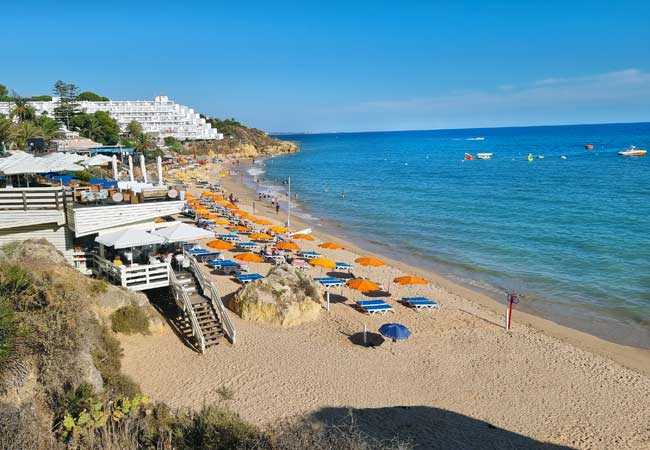
Praia da Oura sits at the base of Albufeira's New Town. As the main beach for the party-focused strip, Oura is lined with beach bars and tends to attract a younger crowd, many of whom are easing into the day after a late night. The central section fills quickly during summer, but walk ten minutes east and you'll reach the much quieter sands of Praia da Oura Leste. The only real downside is the steep hill back up to The Strip, which can be a proper slog in the afternoon heat.
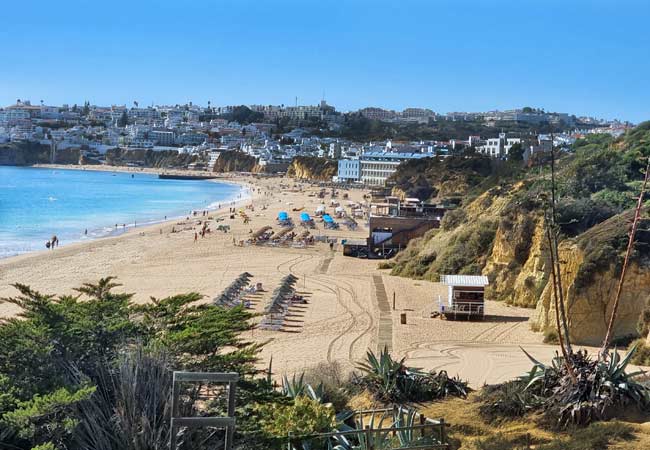
Praia dos Alemães occupies the calmer eastern side of Albufeira's 1.9km sandy coastline. You get the same golden sand and clear water as Pescadores, just without the crowds. It is a good option if you want a central beach with a more relaxed feel.
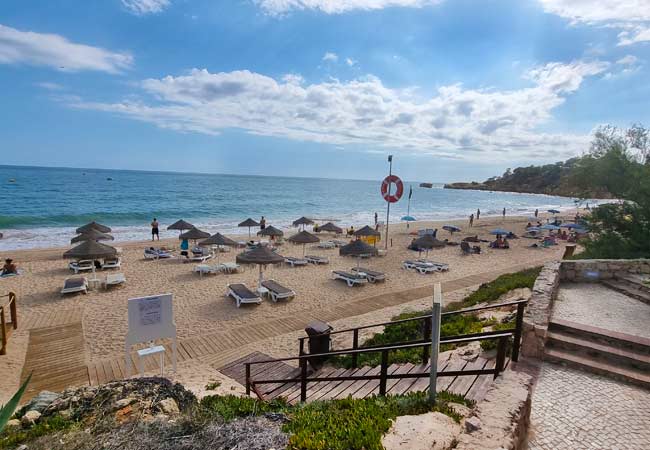
Praia de Santa Eulália is a beautiful sandy beach between Albufeira and the village of Olhos de Água. A rocky headland shelters the bay, creating some of the calmest sea conditions along this stretch of coast. Santa Eulália is an excellent choice for families with young children and serves the large hotel complexes on the outskirts of Olhos de Água.
Related articles: Sights and activities
Map of beaches of the Albufeira region
The interactive map below shows the location of all beaches in the Albufeira region. Yellow pins mark the main beaches of Albufeira, while blue pins show the quieter and less well-known beaches. (Note: zoom in or out to see all points)
The main beaches of the Albufeira region: 1) Praia dos Pescadores 2) Praia do Inatel 3) Praia dos Alemães 4) Praia da Oura 5) Praia de Santa Eulália 6) Praia dos Olhos de Água 7) Praia da Falésia 8) Praia da Galé 9) Praia de São Rafael
The quieter or less famous beaches of Albufeira: 10) Praia da Coelha 11) Praia do Castelo 12) Praia da Oura (east) 13) Praia Maria Luísa 14) Praia do Evaristo 15) Praia dos Arrifes 16) Praia dos Aveiros 17) Praia da Baleeira
The best beaches slightly further from Albufeira
Within 7km of Albufeira Old Town lie many more picturesque beaches. These offer a more pristine or tranquil setting than the main tourist beaches of Albufeira, and are easily reached with a short Uber or Bolt ride.
Praia de São Rafaelis an idyllic cove beach, surrounded by golden cliffs and the unspoilt countryside of the Sesmarias headland. At 250m long, São Rafael is the largest beach in the Sesmarias area, and as a result the most well-known and, in summer, the most crowded. The calm turquoise waters make it an outstanding choice for families.
Kayaks can be hired from the beach to explore the coastline. This is where I took my young nephew for his first kayaking trip, renting them from the beach and exploring the caves. For him it was a holiday highlight, and he talked about it for days! São Rafael lies only 3km from the centre of Albufeira Old Town (4.6km by car).
Related articles: Praia de São Rafael guide
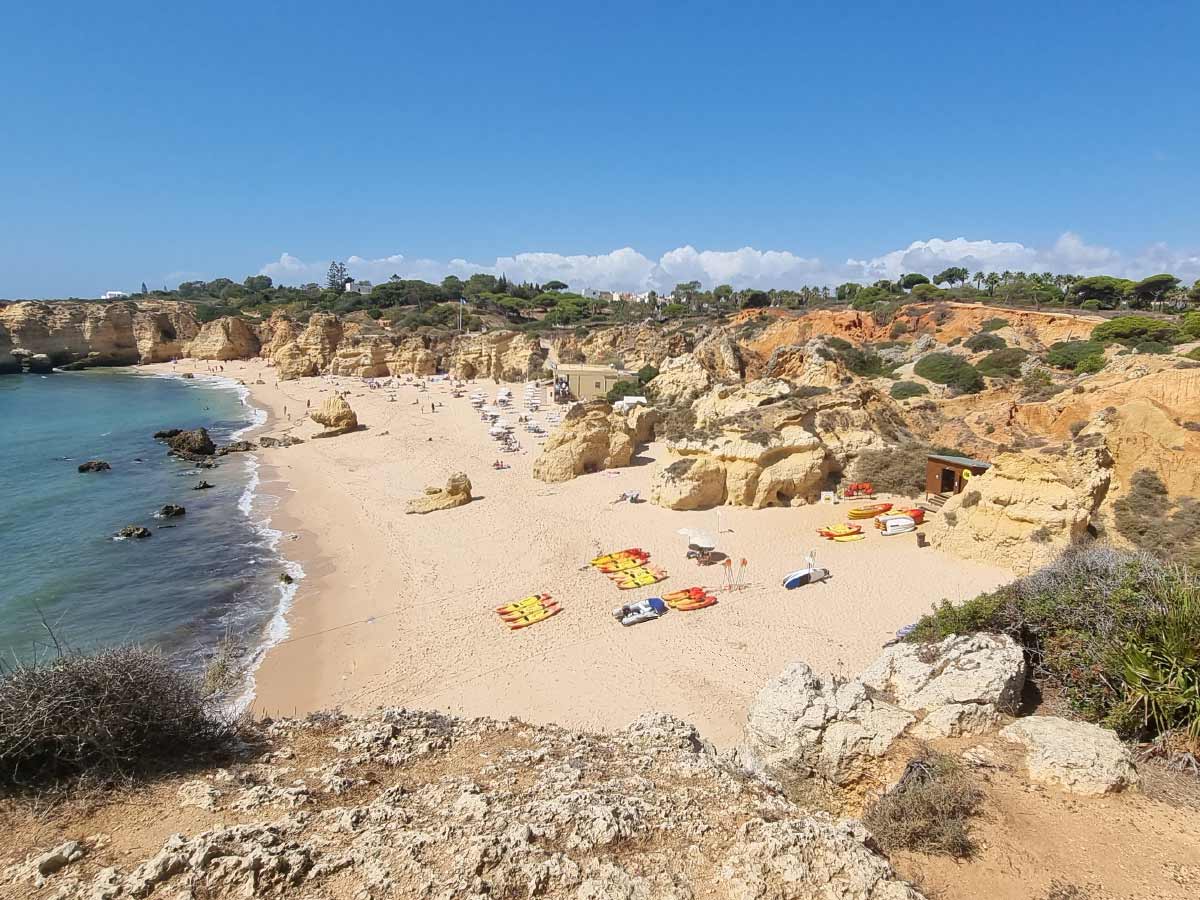
Praia de São Rafael is a beautiful beach, but it won’t be this quiet during the summer
Praia da Falésia is one of the finest beaches in the Algarve and well worth the short journey from Albufeira. Stretching for over 6km from Olhos de Água to Vilamoura, it is backed by towering orange and white clay cliffs that rise up to 42 metres above the sand. Most visitors cluster around the main access points, but walk five minutes in either direction and you'll have the sand practically to yourself. Praia da Falésia lies 10km (by road) from Albufeira Old Town.
Related articles: Praia da Falesia guide
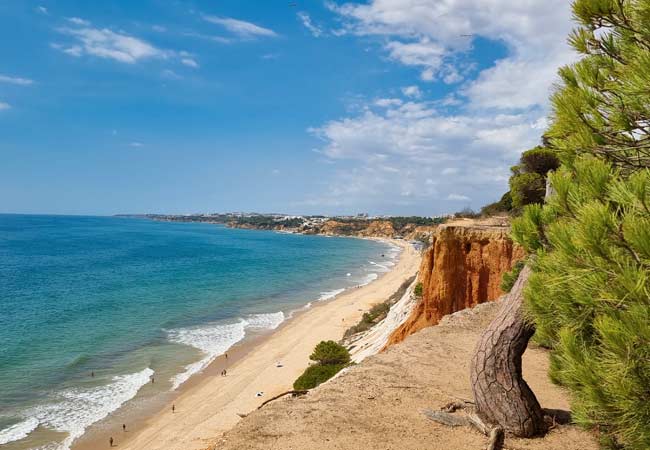
Looking along the cliff top walk of Praia da Falésia towards Olhos de Água
Praia da Galé is really two beaches in one. The eastern side (Galé Leste) is the prettier half, with golden sand tucked between sculpted limestone outcrops that create sheltered cove-like pockets. The western side (Galé Oeste) is a completely different feel: one long, wide expanse of open sand that eventually merges with Salgados beach and stretches for kilometres. Praia da Galé Leste lies 7km (by car) from Albufeira Old Town.
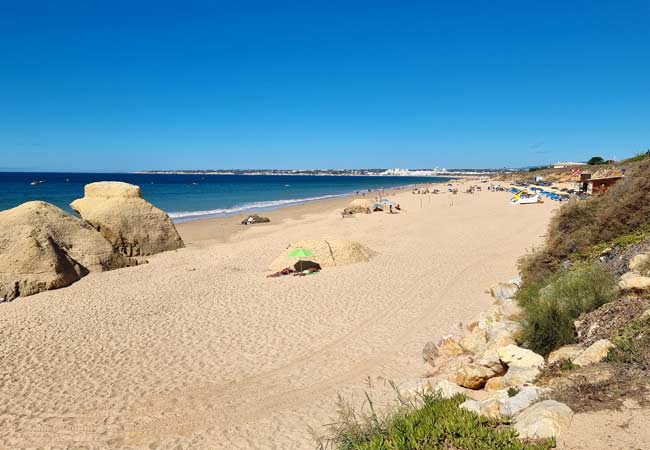
The sweeping sands of Galé Oeste, which extend to Armação de Pêra (in the far distance) and where I walked from on this day.
Praia dos Olhos de Água is the charming beach of Olhos de Água, where fishing boats are still hauled onto the sand after a day out at sea. This golden sand beach is surrounded by rocky headlands and is ideal for families. The only issue is that it is the sole beach for the town, so during the summer months it can feel more crowded than Albufeira's much larger stretches of sand. Outside of peak season, though, it is well worth the visit. Olhos de Água lies 7km from Albufeira Old Town.
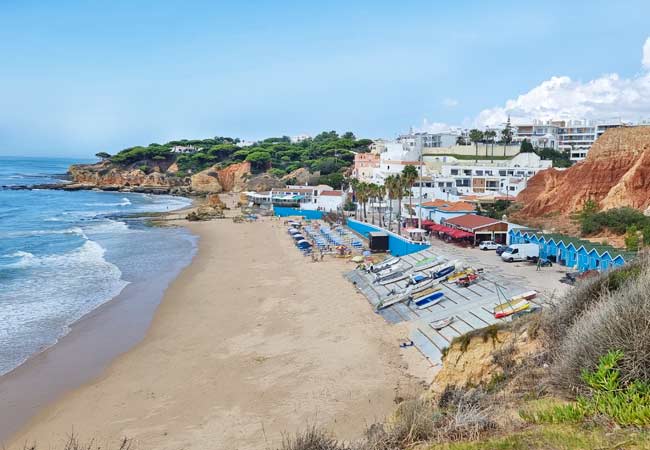
Small fishing boats are pulled onto the pretty beach of Olhos de Água
The best quieter and undiscovered beaches of the Albufeira region
The Albufeira coastline conceals many hidden beaches, barely known to foreign tourists. These beaches may require a walk or Uber ride to reach, but the solitude and tranquillity is worth the effort.
Praia da Oura (Leste) is, surprisingly, one of the quietest and most pristine beaches in the Albufeira region, connected to one of the busiest. The only access to Oura Leste is a 10-minute walk along the sand, and few tourists are willing to make the effort. The result is a beach that remains deserted throughout the day.
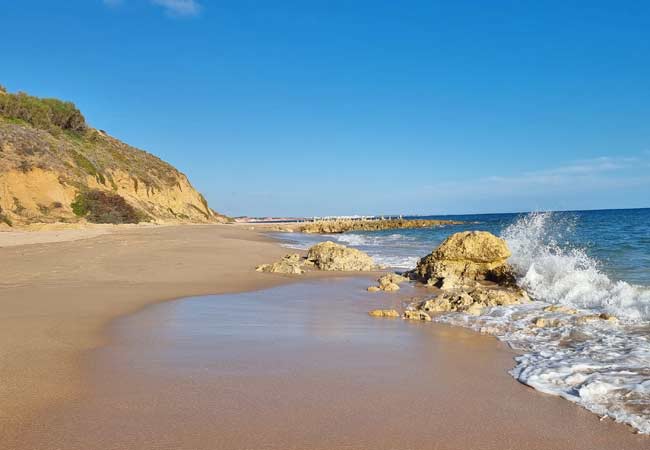
The deserted sections of Praia da Oura Leste, only a 15-minute walk from the hectic area of the beach
Praia dos Arrifes lies on the quieter eastern side of Praia de São Rafael. This is a beautiful beach set within the golden cliffs of the Sesmarias headland, with rocky outcrops jutting into the water. The beach is sheltered from waves and is an ideal spot for snorkelling.
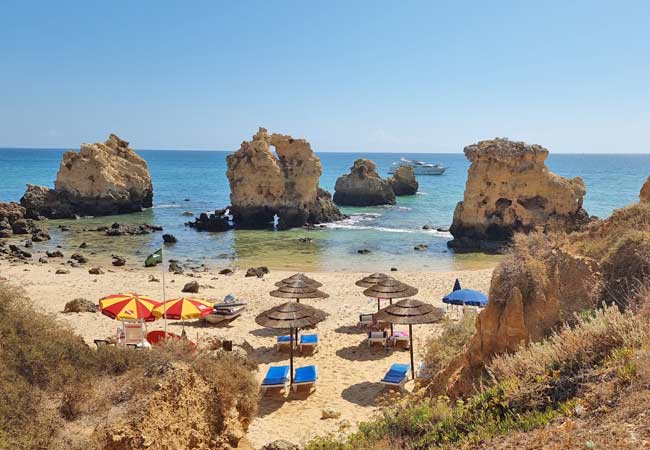
Praia da Coelha is one of the best beaches close to the village of Evaristo. The beach is surrounded by heavily weathered limestone cliffs, and the sea formations include a small natural arch. Praia da Coelha is a favourite with locals and another excellent choice for a calm, family-friendly beach.
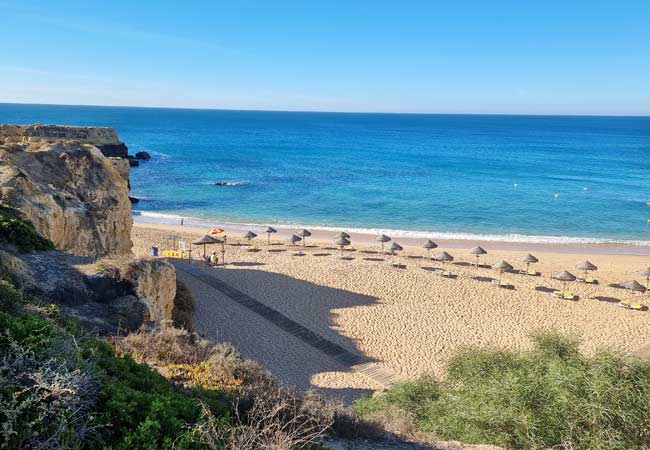
Praia da Baleeira is a small sandy beach at the mouth of Albufeira marina. Reaching it requires a long walk around the entire marina complex, which means it is often deserted. Baleeira is an enjoyable spot to watch pleasure craft coming and going from the marina, and just above the beach sits the Ponta da Baleeira viewpoint.
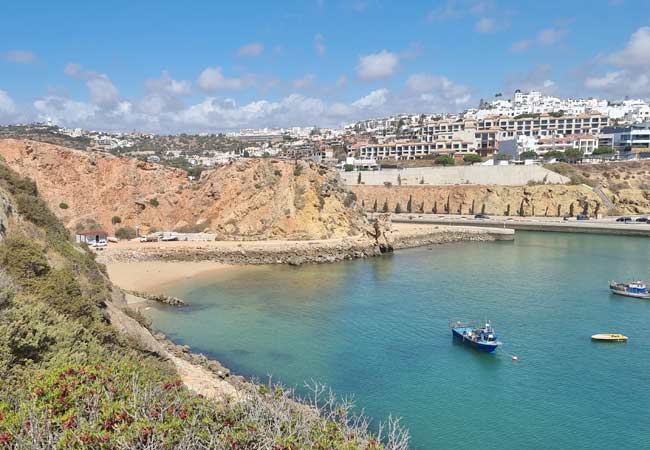
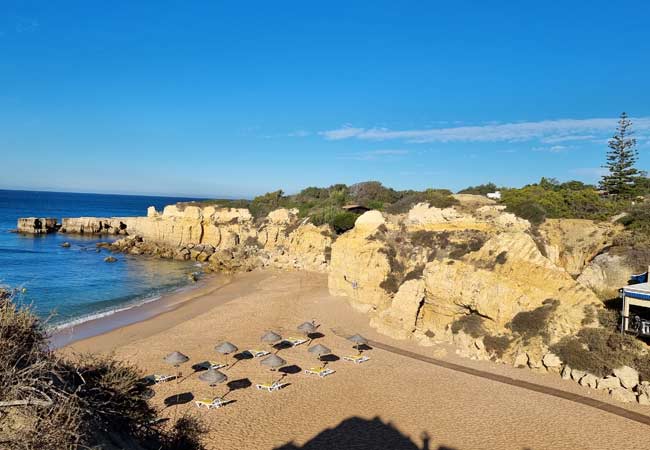
Praia do Castelo is a picturesque beach hidden within the western cliffs of the Sesmarias headland. At only 150m wide, it is one of the smaller beaches in the region, but also one of the quietest. Castelo beach can be easily reached from Praia da Coelha, and many scenic clifftop walks wind around the area.
A warning about Uber and Bolt: Getting to these beaches is usually easy enough in the morning when demand is low, but in the later afternoon there can be very long waits for a driver. If you are heading to the beach with young children, it may be worth leaving an hour earlier than planned just to secure a ride back to your accommodation.
Sea water temperatures of the Albufeira region
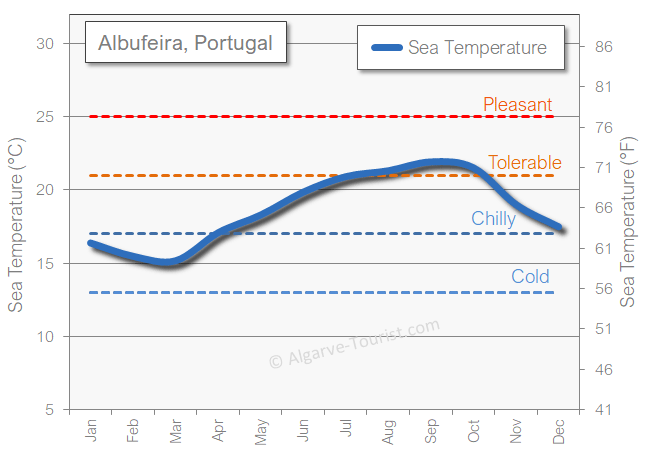
The Algarve's beaches sit on the Atlantic Ocean, not the Mediterranean, and the water temperatures reflect this. Even in high summer, the sea rarely exceeds 22°C, and temperatures of 19-21°C are more typical during July and August. Earlier in the season, May and June see water around 17-18°C, while September often brings the warmest swimming as the sea retains heat from the summer months.
The cooler temperatures owe much to the Atlantic currents that sweep down from the north, combined with upwelling of deeper water along this stretch of coast. On certain days, usually when winds blow from the north, temperatures can drop several degrees without warning as colder water rises to the surface.
For most visitors, the sea is refreshing and bearable after the initial shock passes. When I’ve holidayed with young children, I always suggest a wetsuit, both to help with the cold and avoid the intense sun.
Albufeira weather and beach season
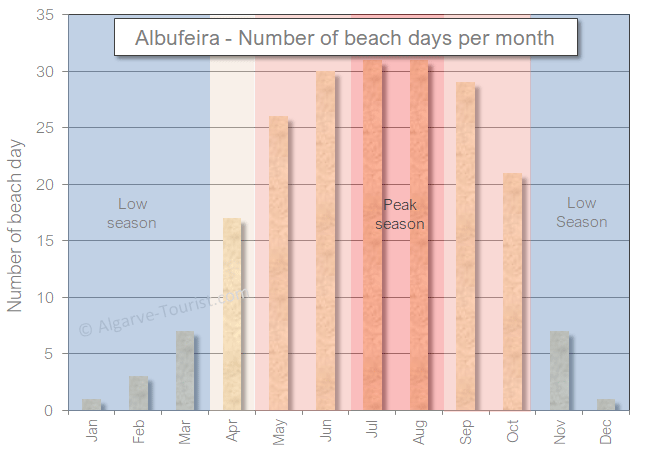
The Algarve enjoys over 3,000 hours of sunshine annually, making Albufeira one of Europe's most reliable beach destinations. Rain between June and September is virtually unknown, and summer brings up to 12 hours of sunshine per day with temperatures reaching 33°C.
The core beach season runs from late May through mid October. July and August guarantee beach weather almost every day, though these peak months bring the largest crowds. June and September offer similar sunshine with fewer visitors, making them the preferred months for many travellers. May and October sit either side of the main season, with plenty of warm, sunny days but less consistent conditions.
The winter months from November to March rarely offer beach weather. Temperatures remain mild at 16-17°C, higher than visitors from northern Europe might expect, but not warm enough for comfortable sunbathing.
Our most popular guides to Albufeira


About the author: I'm Philip Giddings and have been writing these independent guides since 2009. I first visited the Algarve in 2001 when my Portuguese wife, Carla, was proud to show her country to me. We now live in Lisbon, but Carla’s uncle lives just outside Albufeira. This means we are often in Albufeira visiting “Tio” or researching and updating this site. Having both the Portuguese-family connection and friends who live within the Albufeira gives me the local insight and deep understanding of the region.
I love the Algarve region and strive to ensure every practical detail (such as ticket prices, opening hours) is correct, by checking against official sources and confirming in person on the many trips I make. I am experienced in Portuguese travel having written almost 2,000 guides for my wider set of Portugal Guides, and this is my full-time work and passion. The site is funded by affiliate commissions on tour and accommodation bookings, disclosed on every page that carries them. No tourist board, tour operator or attraction pays to appear here. My full story can be read here.