Algarve-Tourist.com
The best independent guide to the Algarve
Algarve-Tourist.com
The best independent guide to the Algarve
The Algarve in March: Is it a good time to visit?
March in the Algarve sits between two versions of the region. Winter has not quite let go, but the landscape is already lush and green in a way that August visitors never see.
For the active traveller, this is arguably the finest time to visit. The blistering heat is replaced by fresh Atlantic breezes and manageable highs of around 20°C, making it ideal for hiking the coastal trails or playing world-class golf without the crowds.
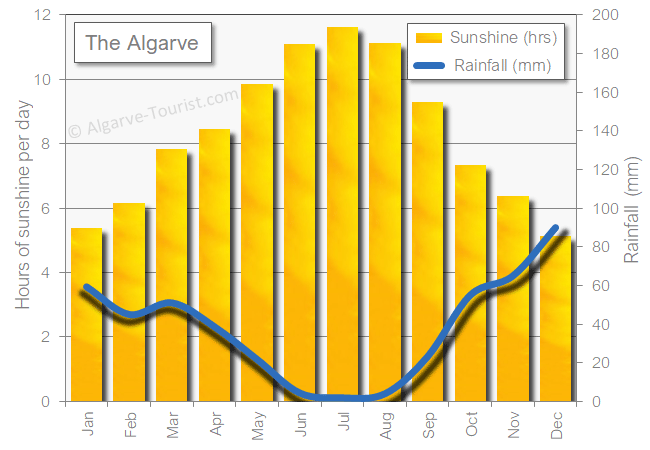
The beach is a different matter. March can deliver bright, clear days but the water is cold and the air temperature rarely warm enough to make a beach day worthwhile. Expect perhaps nine days where conditions are genuinely good, broken up by cooler, greyer intervals. Unlike a city break, the Algarve is at its best in the sunshine, so it is worth keeping that in mind when planning March. If a guaranteed tan is the goal, June is a safer choice.
Where March does deliver is on value. Luxury resorts regularly drop their rates by 30 to 40 percent compared to peak season. You can stay somewhere that would be out of reach in August for a price that makes real sense.
Smaller resort towns can still feel quiet, with limited nightlife and some businesses not opening until Easter. March suits people who want the place rather than the party.
I have been exploring the Algarve with my Portuguese wife since 2001 and March remains one of the most underrated times to visit. Hire a car, explore inland, and you will find a region that feels genuinely Portuguese rather than a stage set for summer visitors. My honest advice for March is to stay flexible and book late.
Highlights of the Algarve in March
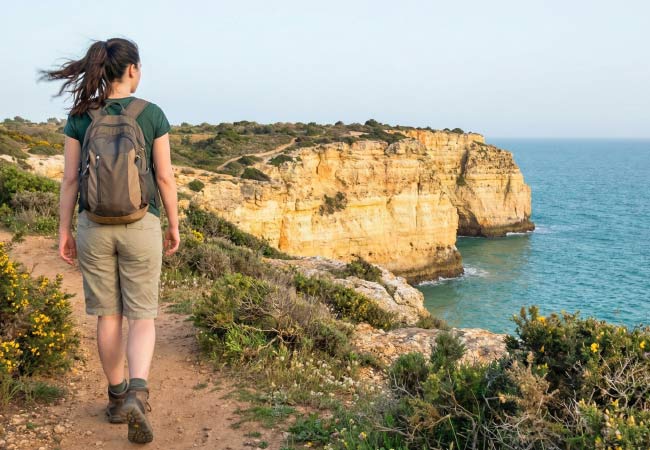
Active Adventure: This is the peak for active tourism. Cool Atlantic breezes make hiking the Seven Hanging Valleys or cycling the Ecovia do Litoral comfortable rather than exhausting. It is also prime for surfing, from the massive Atlantic swells at Sagres to cleaner, beginner-friendly waves on the south coast.
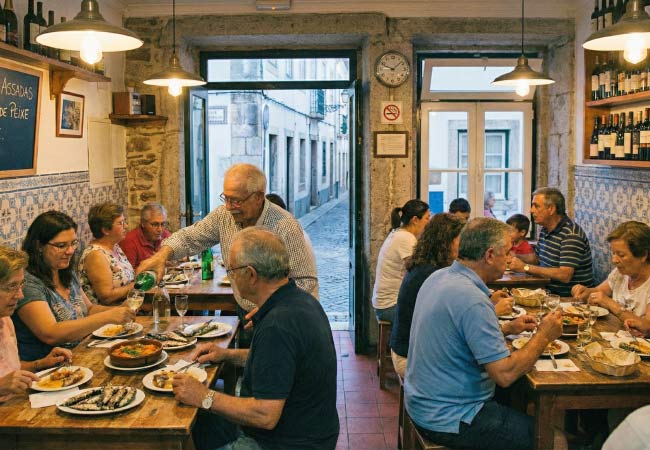
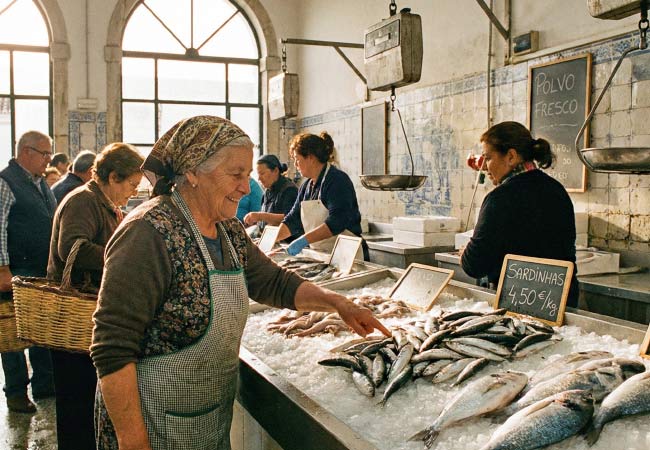
Authentic Culture: Towns like Lagos and Tavira shed their tourist façade to reveal a genuine, lived-in atmosphere. Experience the region as residents do by visiting bustling municipal markets or enjoying leisurely meals at family-run tascas.
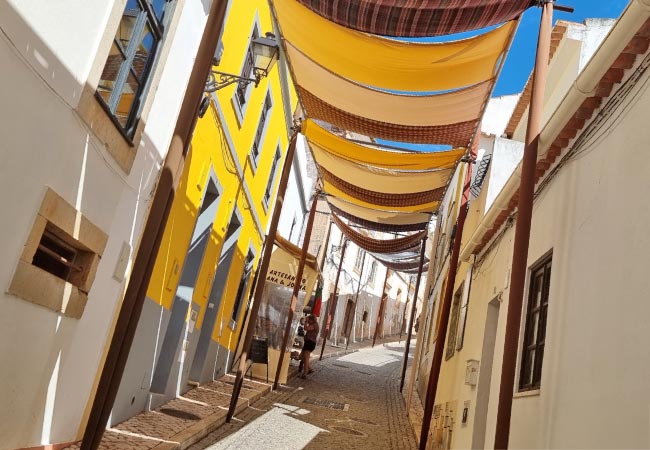
Enjoyable Sightseeing: Discover the region's rich history without the oppressive summer heat. Wandering the red sandstone castle of Silves, the walled Old Town of Faro, or the bustling markets of Loulé is a pleasure in the mild spring sunshine. The lack of crowds turns sightseeing into a relaxed experience.
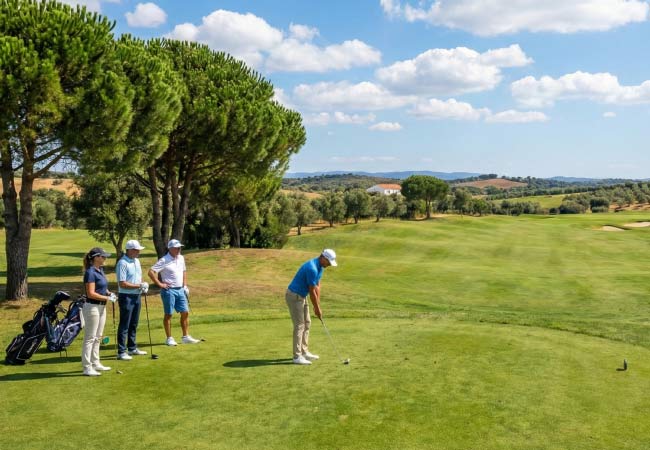
World-Class Golf: March is the start of the prime golf season. The fairways are verdant, and temperatures are perfect for playing 18 holes. Top-tier courses like Monte Rei or the Dom Pedro Old Course are in peak condition before the heat arrives.
Algarve weather in March
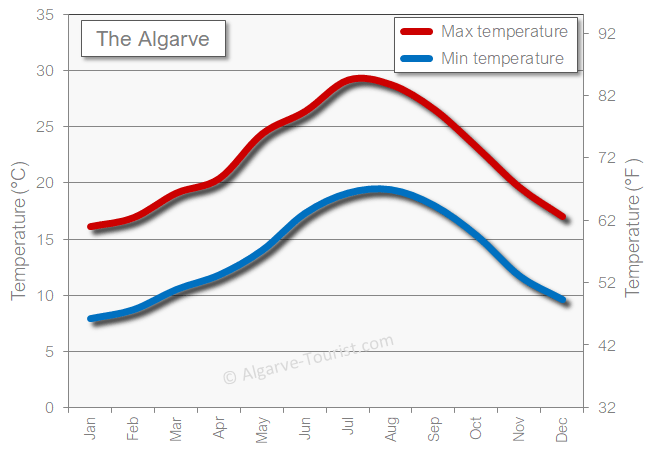
Understanding the Algarve’s climate in March requires looking beyond simple averages. The region is in a state of rapid transition from winter to spring, a period locally known as "marçagão" due to its changeable nature. Daily maximum temperatures typically reach a pleasant 18°C to 19°C, though this figure can be deceptive.
When in direct sunlight and sheltered from the wind, the "real feel" often exceeds 24°C, creating ideal conditions for t-shirt weather during the early afternoon. However, as soon as the sun sets or cloud cover moves in, the temperature drops sharply. Nighttime lows average between 9°C and 11°C, meaning evenings are genuinely chilly and require proper heating or warm layers.
Rainfall is a factor but should not deter you. Statistical data suggests rain occurs on approximately seven to nine days throughout the month, with total precipitation averaging around 50mm. Crucially, a "rainy day" in March rarely means a complete washout. Many of these statistically "wet" days are effectively just grey or overcast periods rather than days of persistent downpours.
For those hoping to swim, the Atlantic Ocean lags behind the air temperature significantly. The sea remains at its winter minimum of roughly 15°C to 16°C, making swimming uncomfortable without a wetsuit.
What to expect from the Algarve in March?
The most frequent complaint from March visitors stems from a misalignment of expectations. If you anticipate the buzzing energy of summer, the reality of the off-season can be jarring.
While cities with a permanent population like Lagos or Faro remain vibrant, small resort towns often feel deserted. In smaller fishing villages or areas built solely for tourism, you may find rows of shuttered businesses and a "ghost town" atmosphere where the holiday season has clearly not yet begun.
Nightlife is another major casualty of the season. The famous "Strip" in Albufeira is largely dormant and devoid of crowds. The riotous parties of August are replaced by a sedate "local pub" vibe. This is not a month for stag or hen parties.
Finally, be aware that March acts as the region’s "maintenance month". As hotels and municipalities rush to finish renovations before the Easter influx, you may encounter construction noise or roadworks that would be paused during the peak tourist season.
Yet, the rewards for the savvy traveller are substantial. The combination of deep discounts on luxury accommodation and the high probability of bright, sunny days firmly outweighs these downsides. It is a rare chance to enjoy a stress-free, authentic Algarve at a fraction of the summer cost.
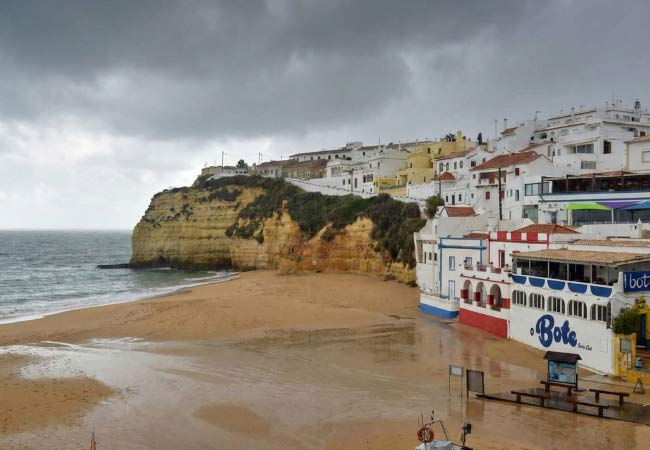
Carvoeiro on a wet day
Who Should Visit in March
March suits couples seeking a quiet escape, active travellers who prioritise hiking or golf over beaches, and anyone who values authenticity over convenience. It works well for those who can adapt plans daily based on weather and who find joy in unexpected discoveries rather than rigid itineraries.
It is less suitable for families with young children expecting beach days, groups seeking nightlife and parties, or anyone whose enjoyment depends on guaranteed sunshine and swimming conditions. If your ideal holiday centres on the beach, wait until June when the odds shift firmly in your favour.
Which town to stay at?
Choosing the right base in March is critical. Unlike summer, when every town is bustling, the off-season creates a sharp divide. Some areas remain vibrant year-round, while others feel largely dormant. The following four towns offer the most reliable infrastructure during this transition month.
Lagos
Best for: Culture seekers, surfers, and digital nomads.
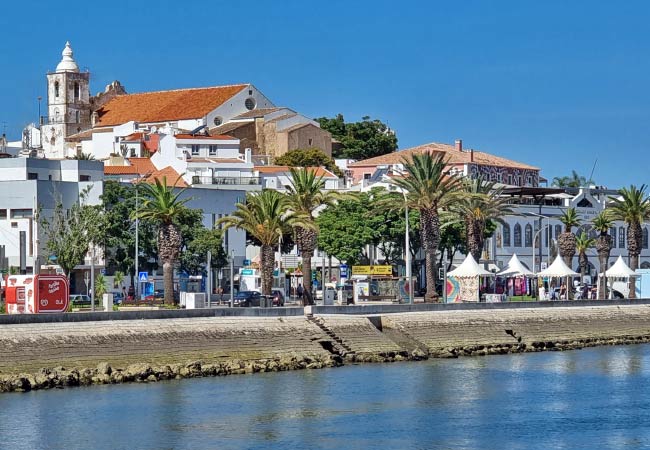
Lagos is consistently identified as the superior choice for travellers prioritizing history and aesthetics. Encircled by ancient 16th-century walls, the historic centre is a complex maze of patterned cobbled streets and plazas that feel distinctly Portuguese. It serves as a working maritime city rather than a seasonal outpost, offering a "bohemian chic" atmosphere that attracts a mix of surfers, digital nomads, and mature visitors.
The culinary scene here is excellent, ranging from traditional tascas to sophisticated modern dining. However, the defining feature is the coastline. The headland of Ponta da Piedade offers some of the finest natural scenery in Europe, with golden limestone stacks rising from the sea, providing a dramatic counterpoint to the expansive golden sands of Meia Praia.
Lagos retains a genuine, lived-in atmosphere throughout the winter. Because it is a working city rather than just a tourist resort, the restaurants, cafes, and markets remain open and lively. The historic centre is walkable and filled with sophisticated dining options that do not require reservations in March. Be aware that this western side of the Algarve is more exposed to Atlantic winds. Our guide to Lagos
Albufeira
Best for: Families, first-time visitors
Albufeira functions as the Algarve's tourism engine, and this dual role shapes what you find in March. The town splits into two distinct personalities that become especially pronounced in the low season.
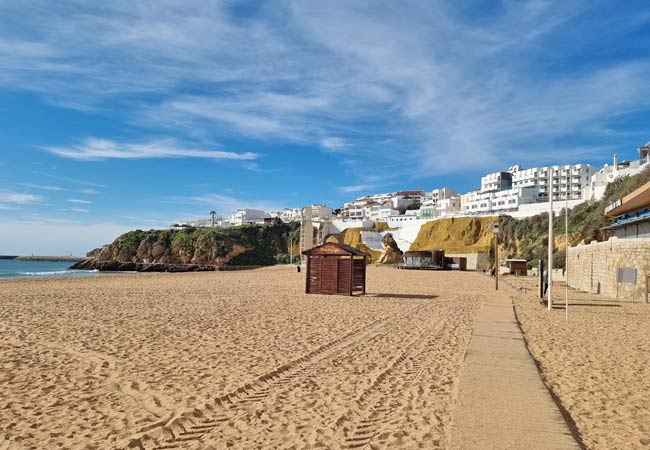
The Old Town (Centro Histórico) retains genuine character year-round. Whitewashed buildings tumble down hillsides towards Praia dos Pescadores, the broad beach once used exclusively by fishermen. The main square, Largo Engenheiro Duarte Pacheco, remains the social heart of the town, surrounded by cafes and restaurants that trade through winter. Here you find locals drinking morning coffee alongside the visitors, and the atmosphere feels authentically Portuguese rather than manufactured for tourists.
The Strip (Areias de São João) tells a different story entirely in March. This neon-lit corridor, famous for summer nightlife that runs until dawn, operates at a fraction of its capacity. Most bars remain shuttered, waiting for the Easter crowds or later. A handful of venues stay open, but the atmosphere is subdued. Ifpartying features anywhere in your plans, March is simply the wrong month.
What Albufeira offers better than anywhere else is geography. Its central coastal position places almost every Algarve attraction within easy reach. Day trips to Lagos, Tavira, Silves, or the inland market towns require minimal driving.
Accommodation choice is widest in Albufeira, spanning budget apartments to large resort complexes, with March prices representing serious value compared to summer rates. The compromise is that resort areas away from the Old Town can feel hollow when occupancy is low. Our guide to Albufeira
Tavira
Best for: Seeking "real" Portugal.
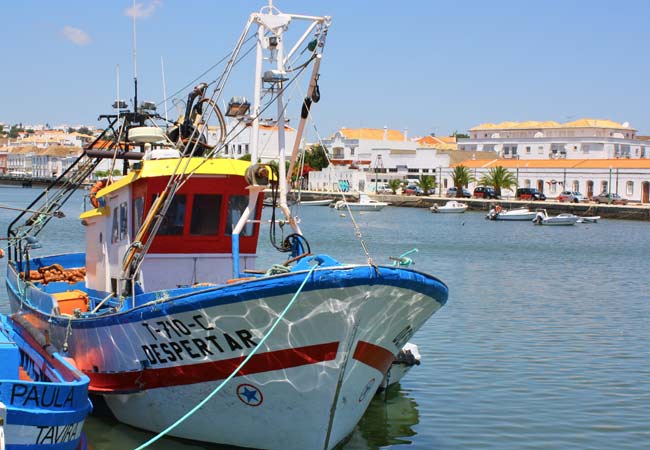
Tavira is widely regarded as the most architecturally graceful town in the Algarve. Located in the calmer eastern region, it straddles the banks of the slow-moving River Gilão, connected by an ancient Roman-style pedestrian bridge. The skyline is defined by the hipped roofs of traditional houses and the towers of over thirty churches, rather than hotel blocks. It offers a dignified, slow-paced atmosphere that feels worlds apart from the commercialised central coast.
The coastline here is unique; the beaches are located on the barrier island of Ilha de Tavira, accessible only by a short ferry ride through the Ria Formosa Natural Park. This separation ensures the sands remain pristine, attracting travellers who value authenticity over immediate resort convenience. The weather here is often slightly warmer and less windy than the west due to natural shelter. Our guide to Tavira
Vilamoura
Best for: Golfers and luxury travellers
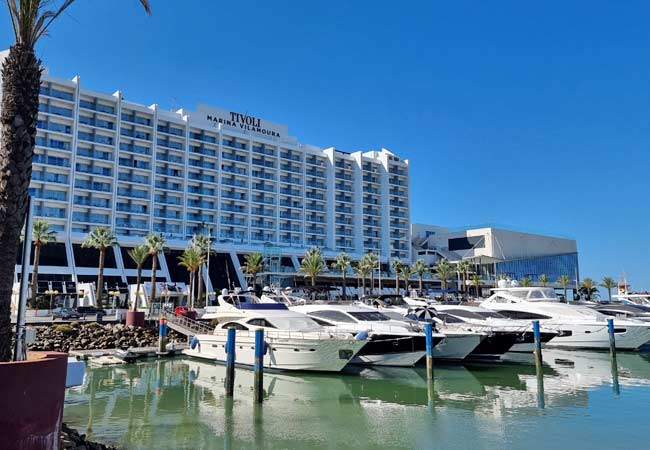
Vilamoura exists in a category apart from the rest of the Algarve. This is not a town that grew organically over centuries but a purpose-built resort designed around a marina and five championship golf courses. In March, this singular focus becomes a genuine advantage.
Golf explains why Vilamoura thrives when other resort areas slumber. March sits squarely in prime playing season, with mild temperatures and immaculate fairways drawing serious players from across northern Europe. The courses remain busy, the hotels maintain occupancy, and the marina restaurants stay open to serve a predominantly older, affluent clientele.
What Vilamoura lacks is soul. There is no historic centre with cobbled streets worn smooth by centuries of footsteps. Everything here exists to serve visitors, which some find comfortable and others find sterile.
If golf features in your plans, nowhere else in the Algarve offers such concentration of quality layouts within minutes of your accommodation. The Dom Pedro courses, Oceanico Victoria, and nearby Quinta do Lago provide options for every handicap and budget.
Our guide to Vilamoura
March. is for Activities
March is statistically the best month of the year for outdoor pursuits. Physical exertion is less taxing than in summer due to mild temperatures, and the landscape is at its most lush.
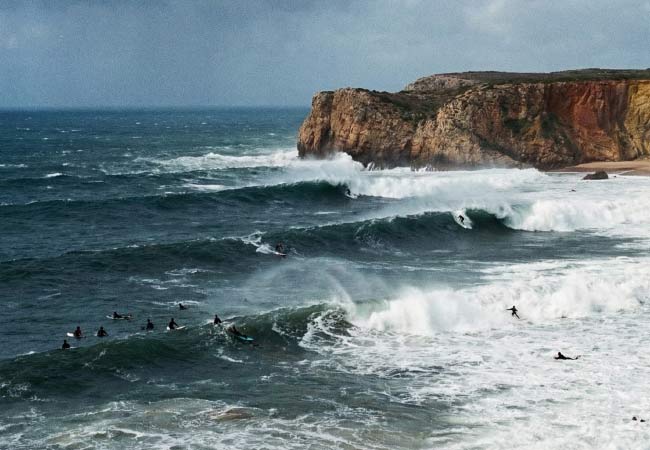
Surfing: March is widely considered a sweet spot for surfers, particularly intermediates. The massive, dangerous winter swells of January have moderated, yet the consistency remains high. The west coast beaches like Arrifana or Sagres offer challenging breaks, while the south coast spots near Lagos can "switch on" with wrap-around swells, providing cleaner, smaller waves. Note that the water temperature is at its minimum (16°C), so a 4/3mm wetsuit is mandatory.
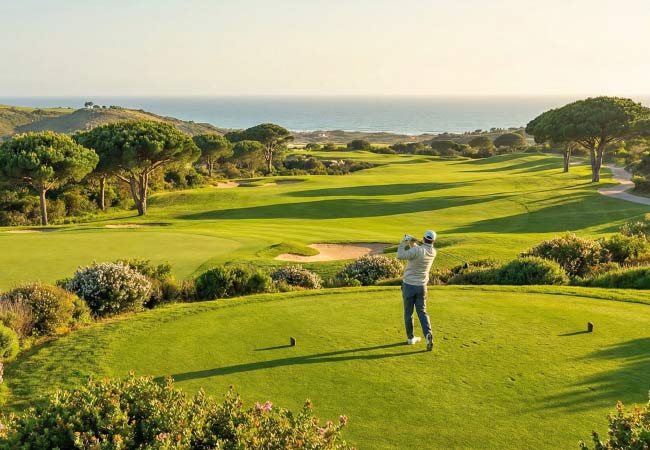
Golf: The Algarve is Europe’s premier golf destination, and March represents what many consider to be the finest playing conditions of the year. The fairways have recovered from winter dormancy and are lush and vibrant, while the mild temperatures make playing 18 holes a pleasure rather than an endurance test. Vilamoura serves as the undisputed capital for the sport, providing a convenient base for accessing prestigious layouts like the Dom Pedro Old Course. For the ultimate experience, serious players should target venues such as Monte Rei or Quinta do Lago South.
Hiking & Cycling: This is the pinnacle of the walking season. The heat is manageable for tackling the Seven Hanging Valleys trail or the climb to Fóia in Monchique, which offers professional-grade gradients for cyclists. For a flatter experience, the Ecovia do Litoral cycle path is largely free of pedestrian congestion, though some unpaved sections may be muddy after spring showers.
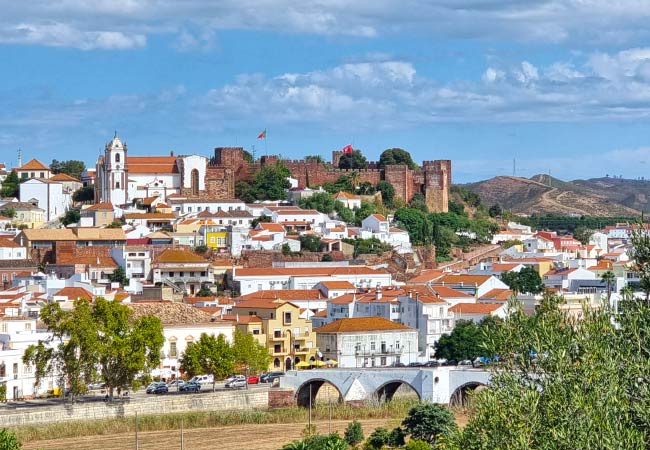
The Pretty town of Silves and the imposing castle
The 1-Week March Itinerary
Day 1: Arrival & The Capital (Faro) Start your tour in Faro, the administrative capital that functions independently of the tourist trade. The focal point is the Cidade Velha (Old Town), accessed through the neoclassical Arco da Vila. Inside the medieval walls, the cobbled streets lead to the Sé Cathedral, a blend of Gothic, Renaissance, and Baroque architecture that offers panoramic views over the Ria Formosa lagoon from its tower.
Just outside the walls lies the macabre Capela dos Ossos (Bone Chapel) within the Carmo Church, lined with the bones of over 1,000 monks. The surrounding marina district provides a sophisticated introduction to the region, featuring landscaped plazas and a working harbour that remains active throughout the year.
Day 2: Albufeira (The Old Town) Albufeira acts as the central anchor of the coast. The Old Town is the primary draw, characterized by its traditional whitewashed architecture and narrow, winding streets that funnel visitors towards the ocean. The defining feature here is the tunnel cut through the cliffs that connects the urban centre directly to Praia dos Pescadores, a vast expanse of golden sand once used exclusively by fishermen. The main square, Largo Engenheiro Duarte Pacheco, is surrounded by local history and cafes that remain open in the off-season.
Day 3: Inland Market Life (Loulé) Loulé offers a stark contrast to the coastal resorts. This inland market town is dominated by the Mercado Municipal, a striking neo-Moorish building with red domes that houses the region’s freshest produce and fish.
The surrounding network of alleys is famous for traditional copper workshops where artisans still beat metal by hand. The ramparts of the Castelo de Loulé date back to the 2nd century and offers views over the rooftops and the region.
The drive to and from Loulé passes through the Barrocal hinterland, a landscape of rolling hills that is vividly green and filled with wildflowers in March.
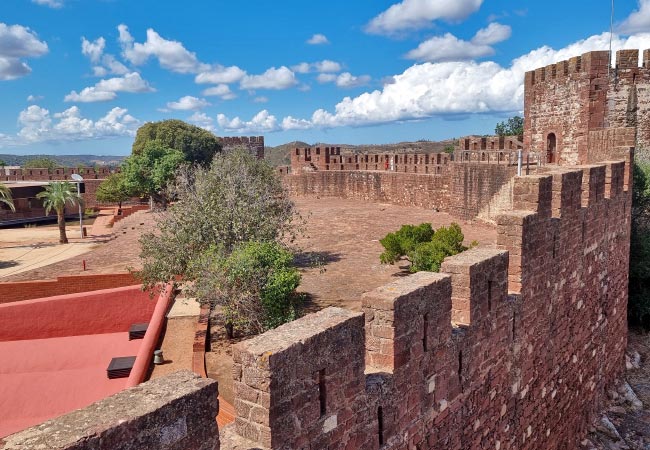
Day 4: The Moorish Capital (Silves) Silves is the historical heavyweight of the Algarve. The skyline is commanded by the Castelo de Silves, a massive fortification built from red sandstone that glows intensely against the blue spring sky. It is the best-preserved Moorish castle in the country, featuring an immense water cistern and walkable battlements.
Below the castle stands the Gothic Silves Cathedral, built on the site of a former mosque. The town sits on the banks of the Arade River, surrounded by extensive citrus groves which are heavy with oranges at this time of year, scenting the air throughout the valley.
Day 5: The Maritime West (Lagos) Lagos is a working maritime city with a rich history of exploration. The historic centre is enclosed by 16th-century walls and features the Forte da Ponta da Bandeira, a 17th-century fortress guarding the harbour entrance. The cultural highlight is the Igreja de Santo António, known as the "Golden Church" due to its spectacularly ornate Baroque interior.
However, the essential experience here is Ponta da Piedade. This headland features a cluster of golden limestone rock formations, sea arches, and grottoes carved by the Atlantic. In March, the lack of boat traffic allows for uninterrupted views of these dramatic cliffs from the coastal boardwalks.
Day 6: The Architectural East (Tavira) Tavira represents the quieter, more traditional side of the Algarve. The town is defined by its distinct "scissor roofs" (telhados de tesoura) and the Roman Bridge that spans the slow-moving River Gilão. The hilltop castle ruins include a garden that provides a 360-degree view of the town’s thirty churches and the salt pans beyond.
Access to the beach involves a ferry ride across the Ria Formosa natural park to the Ilha de Tavira. This barrier island features the "Anchor Cemetery," a monument to the region’s tuna fishing past, where hundreds of rusting anchors are arranged in the dunes.
Day 7: The Spanish Frontier (Eastern Algarve) The final leg explores the borderlands. Castro Marim is dominated by two fortresses: the medieval castle and the 17th-century star-shaped Fort of São Sebastião, which guarded the border against Spain. The surrounding marshlands are massive salt production centres, often filled with flamingos.
A short drive south leads to Vila Real de Santo António, a unique city built on a strict grid system after the 1755 earthquake, resembling downtown Lisbon. The wide promenade along the Guadiana River offers clear views across the water to the Spanish town of Ayamonte, marking the geographic end of the Algarve.
Our most popular guides to the Algarve


About the author: I'm Philip Giddings and have been writing these independent guides since 2009. I first visited the Algarve in 2001 when my Portuguese wife, Carla, was proud to show her country to me. We now live in Lisbon but I'm in the region most weeks researching and updating this site or visiting Carla’s extended family who live here. Having both Portuguese-family and friends who live within the Algarve gives me the local insight and personal connection to the region.
I love the Algarve region and strive to ensure every practical detail (such as ticket prices, opening hours) is correct, by checking against official sources and confirming in person on the many trips I make. I am experienced in Portuguese travel having written almost 2,000 guides for my wider set of Portugal Guides, and this is my full-time work and passion. The site is funded by affiliate commissions on tour and accommodation bookings, disclosed on every page that carries them. No tourist board, tour operator or attraction pays to appear here. My full story can be read here.