Algarve-Tourist.com
The best independent guide to the Algarve
Algarve-Tourist.com
The best independent guide to the Algarve
Algarve in September: Is it a good time to visit the Algarve?
September ranks among the finest months to visit the Algarve. The weather remains reliably warm, the summer crowds have thinned considerably, and the entire region continues to operate at full capacity before the autumn wind-down begins.
The shift in atmosphere is immediate and noticeable. European schools reopen in the first week of the month, removing the large family groups that dominate the beaches and restaurants throughout July and August. In their place come couples, older travellers, and those without school-age children. The beaches that felt impossibly crowded just weeks earlier now offer space to spread out, and restaurants that required reservations days in advance suddenly have tables free.
The climate in September sits at a sweet spot between the fierce heat of midsummer and the cooler, wetter weeks of late autumn. Daytime temperatures hover around 26°C to 28°C, warm enough for comfortable beach days but no longer exhausting for sightseeing or coastal walks. The Atlantic reaches its warmest point of the year, making swimming genuinely pleasant rather than a test of endurance. Rain is rare, typically limited to brief showers that pass within hours.
Prices for flights and accommodation drop from their August peak, though September remains a popular month and should not be mistaken for low season. The real advantage lies in availability rather than dramatic discounts: hotels and rental properties that were fully booked months ahead in summer now have rooms free, giving you far greater choice over location and quality.
I have been exploring the Algarve with my Portuguese wife since 2001 and two decades of firsthand experience points to the same conclusion: September is when the Algarve is at its very best.
Algarve highlights in September
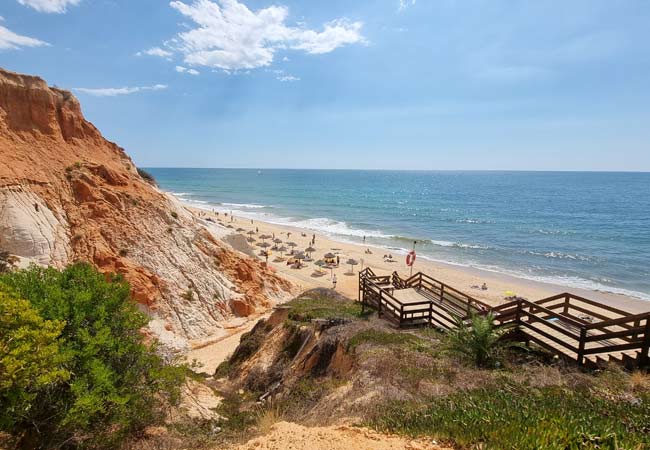
The Beaches - Beaches that felt overcrowded in August now offer room to breathe, while the weather remains warm and the sea reaches its most swimmable temperatures of the year. Praia da Marinha can be appreciated without the crowds, sun loungers are readily available along Praia da Falésia, and even Albufeira's popular sandy beaches take on a calmer, more relaxed atmosphere.
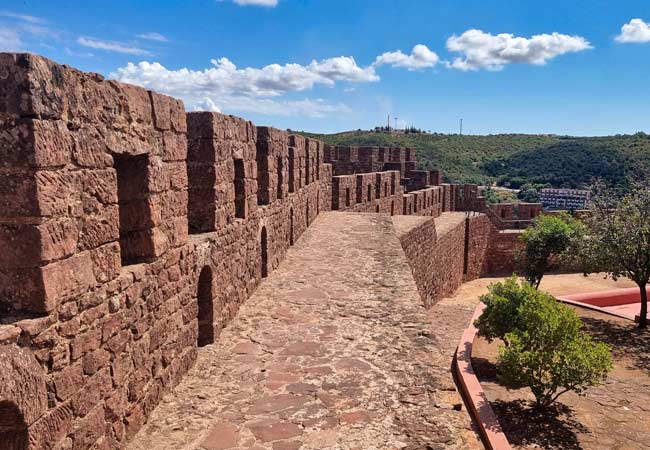
Sightseeing in Silves September's warm but manageable temperatures make it an ideal month for exploring inland. Silves, the former Moorish capital of the Algarve, is dominated by an imposing red sandstone castle with views across the surrounding orange groves.
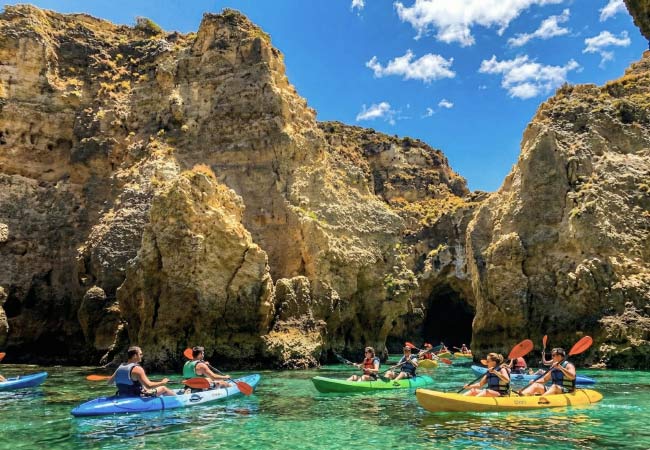
Kayaking Ponta da Piedade Calm September seas create excellent conditions for paddling around this dramatic headland south of Lagos. The Atlantic has carved the golden limestone into a maze of arches, sea stacks, and hidden grottoes accessible only from the water.
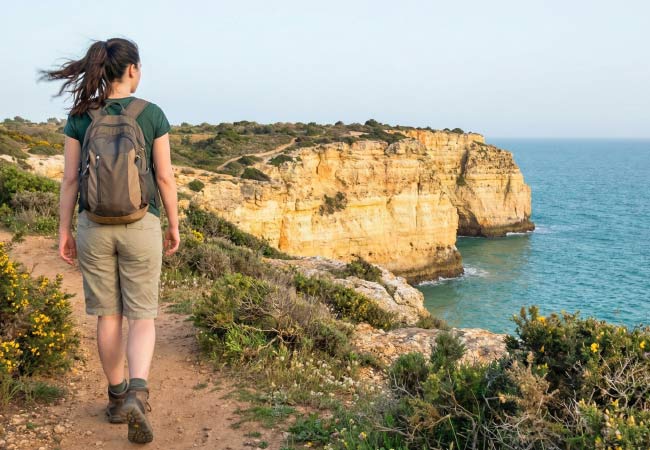
The Seven Hanging Valleys Trail One of Europe's finest coastal walks, this six-kilometre clifftop path runs between Praia da Marinha and Vale Centeanes. September brings cooler hiking temperatures and clear late-summer light that sharpens the views across the Atlantic.
Algarve weather in September
September delivers some of the most stable and comfortable weather of the year in the Algarve. The calendar may mark the beginning of autumn, but the region retains a genuine summer climate without the oppressive heat peaks of July or August. The fierce midsummer intensity softens into reliable warmth and consistent conditions day after day.
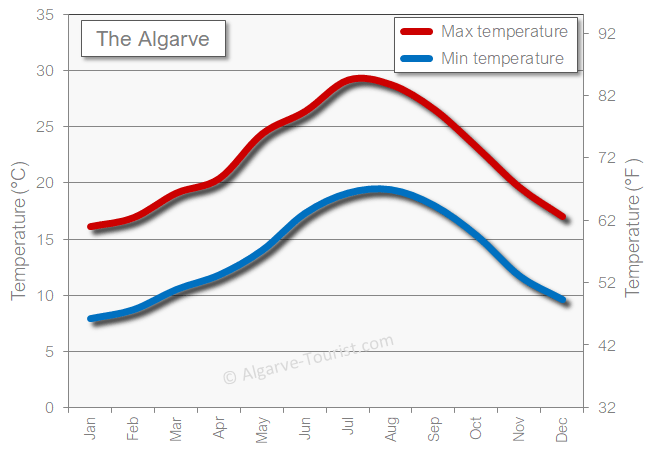
The average day time maximum and the nighttime minimum temperature for the Algarve
Daily maximum temperatures typically range from 25°C to 28°C, though the mercury can push higher when hot air arrives from the Spanish interior. The sun carries real strength from mid-morning onwards, providing nine to ten hours of bright sunshine daily. Despite the warmth, the air stays fresh enough for sightseeing and coastal hiking without the fatigue that midsummer extremes can cause. Evenings are particularly pleasant, with temperatures settling around 17°C to 19°C after dark.
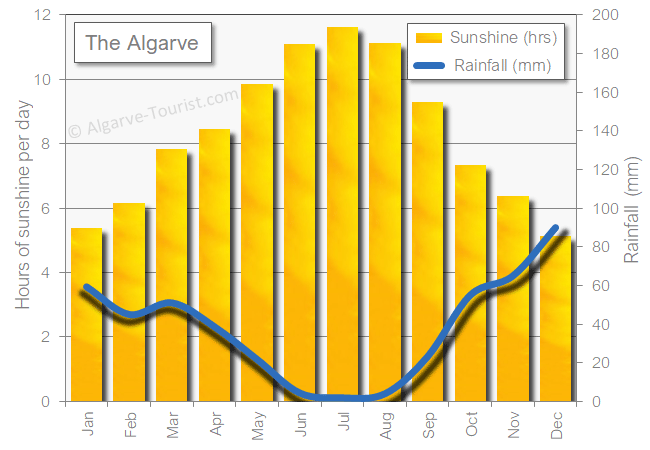
The average hours of sunshine per day and monthly rainfall (in mm)
Rain is rare in September. The region averages only a few days with any precipitation, and total rainfall typically measures in low single-digit millimetres. Showers that do occur tend to be brief Atlantic systems that pass quickly and seldom disrupt plans. Humidity levels stay low, and the sticky nights sometimes experienced in August have passed.
The Atlantic Ocean reaches its annual temperature peak in September, typically ranging from 21°C to 23°C. Warmed by months of intense summer sun, the water crosses the threshold where swimming becomes genuinely pleasant rather than merely tolerable. The sea remains cooler than the Mediterranean and may feel brisk on entry, but extended swimming, snorkelling, and kayaking are comfortable throughout the month.
What to Really Expect in September
September is frequently cited as the best month to visit the Algarve, but it helps to arrive with realistic expectations. The region does not suddenly empty on the first of the month. It retains a lively atmosphere, though the character of the crowd changes noticeably.
A Shift in Atmosphere
The most visible change is the departure of large family groups as schools across Europe reconvene. In their place come more couples and retirees. The major resort towns of Albufeira and Lagos remain busy, but the frantic pressure of peak season lifts. Tables at good restaurants no longer require bookings made days in advance, and service feels less rushed now that staff are not working under the relentless strain of August.
Pricing and Availability
September offers better value than August, but this remains a high-demand period rather than low season. Flight and accommodation prices drop from their summer peak, though they stay well above spring or late autumn rates. The real advantage lies in availability rather than deep discounts. With the summer rush over, a much wider choice of hotel rooms and rentals opens up, allowing you to be selective about location and quality without the months of advance planning that August demands.
Late Summer Landscape
By September, the Algarve has endured several months of intense sun and almost no rain. The lush greenery of spring faded long ago, replaced by parched, dusty brown terrain. The coastal scenery remains spectacular, but the interior sits at its driest point of the year.
Nightlife
The high-energy party scene shifts as the month progresses. Albufeira's famous Strip stays active at weekends, but the clubs and bars operate without the overwhelming intensity of midsummer. For many visitors, this creates a more enjoyable atmosphere where finding a seat and enjoying a drink no longer means battling through crowds. Those seeking 24-hour chaos and packed dance floors every night of the week may find the late-summer mood more subdued than expected.
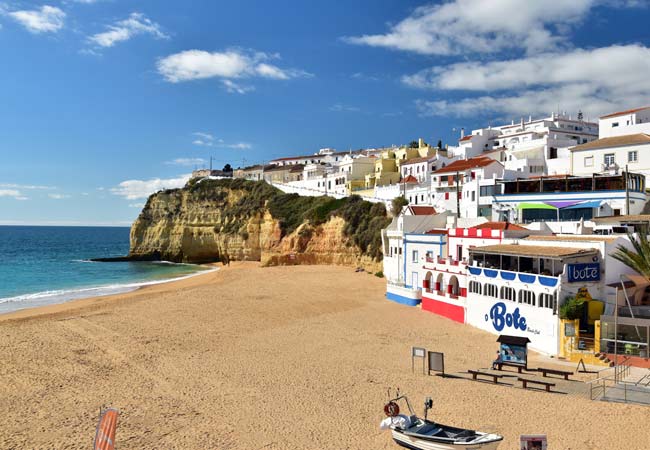
Carvoeiro is a great holiday destination
Which town to stay at?
Choosing your base in September differs from the peak of summer. With the intense crowds gone, you have the freedom to select a location based on its personality rather than simply where rooms are available. Every town remains fully operational, so you will not encounter the shuttered businesses of winter, but the atmosphere varies considerably between the east and west of the region.
Lagos
Lagos balances historic character and coastal beauty in a way few other towns can match. The old centre sits within 16th-century walls, its maze of cobbled streets opening onto small plazas where restaurants set tables under the open sky. A significant year-round population gives Lagos the feel of a living Portuguese town rather than a purpose-built resort.
The coastline here delivers the visual drama the Algarve is known for. South of town lies Ponta da Piedade, a headland where the Atlantic has carved golden limestone into stacks, arches, and grottoes. Boat and kayak tours run frequently in September but without the frantic booking pressure of August. For beaches, you can choose between Meia Praia, a vast sweep of sand with space to spare, or the smaller cove beaches reached by wooden stairs cut into the cliffs. The dining scene ranges from traditional fish restaurants to modern, ambitious kitchens, and the bars stay lively late into the night without the aggressive edge of larger resort towns. Our guide to Lagos
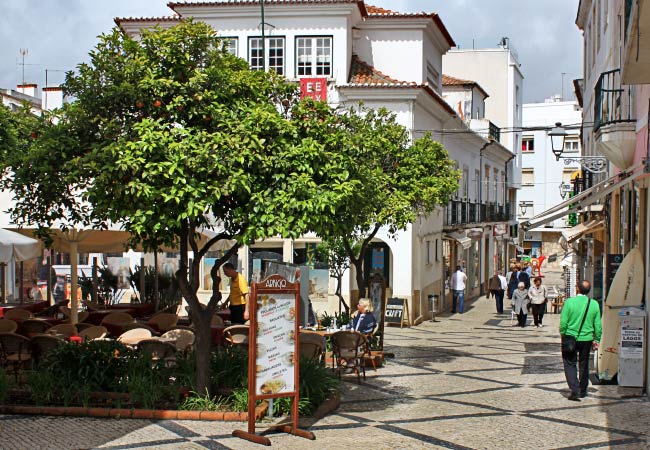
Tavira
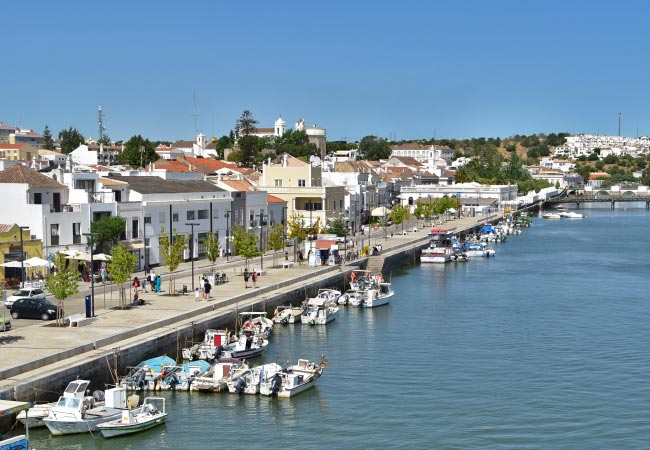
Tavira offers a glimpse of the Algarve before mass tourism arrived. Located in the quieter eastern region, this small Portuguese city moves at a pace set by its residents rather than visitors. The architecture stands apart from the rest of the coast, with traditional four-sided scissor roofs and over thirty church towers defining the skyline. The River Gilão flows through the centre of town, crossed by a Roman-era bridge that serves as the main meeting point.
The beach experience here differs from anywhere else in the Algarve. The sands lie on Ilha de Tavira, a barrier island reached by a short ferry crossing over the Ria Formosa lagoon. This natural separation keeps the beaches feeling remote and unhurried. The island stretches for kilometres, offering far more space than the cove beaches of the central coast. Tavira sits further from the water parks and western cliffs, but suits those who prefer exploring salt pans, wetlands, and quiet riverside cafés. Our guide to Tavira
Albufeira
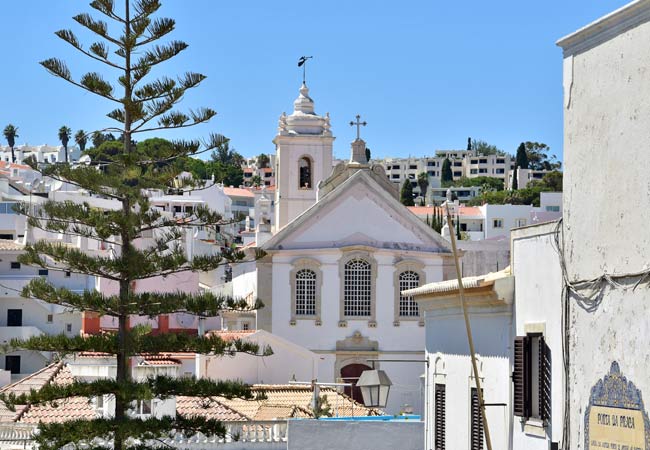
Albufeira is the Algarve's main resort hub. By September, the town finds its stride: busy and energetic, but no longer chaotic. Two distinct areas make up the resort. The Old Town occupies a hillside above the beach, its whitewashed buildings lining narrow pedestrian streets. A few kilometres east lies The Strip, a long road dedicated to high-energy bars and clubs.
The main advantage of Albufeira is its central position. Nowhere in the Algarve puts you closer to the full range of attractions: the best beaches, the water parks, and historic towns like Silves all sit within a short drive. Accommodation options here are the widest in the region, making it straightforward to find something that fits your budget. Families who want to simplify logistics while keeping dining and activities on the doorstep will find Albufeira the most practical base - Our guide to Albufeira
Vilamoura
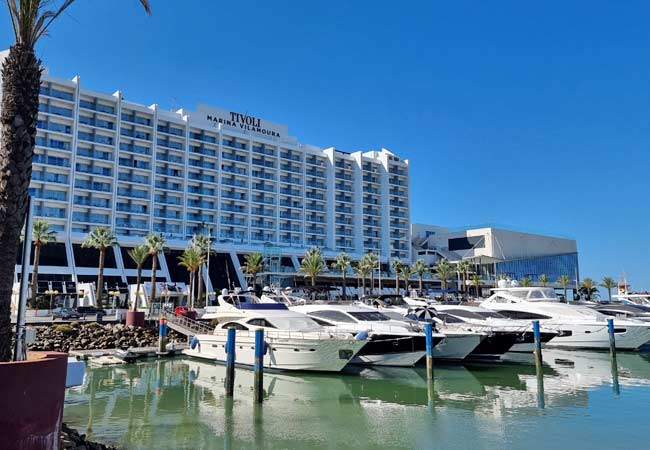
Vilamoura is a purpose-built resort that prioritises comfort, manicured grounds, and a polished atmosphere. The town centres on a large marina where yachts fill the berths and the waterfront is lined with upmarket restaurants. Vilamoura makes no claim to the organic history of Lagos or Tavira, but delivers a high standard of service and convenience. For golfers, Vilamoura is the undisputed capital of the Algarve.
Championship courses cluster within minutes of each other, including the renowned Dom Pedro layouts. September brings ideal conditions, with the summer heat easing just enough for comfortable midday rounds. The evening crowd here tends to be more affluent and somewhat older than in Albufeira, suiting those who want a refined base for their holiday - Our guide to Vilamoura.
The Algarve’s smaller towns
Beyond the four main hubs, several smaller towns offer alternatives for visitors seeking quieter settings. In September, these places retain a calm atmosphere while restaurants, shops, and facilities remain fully open.
Alvor
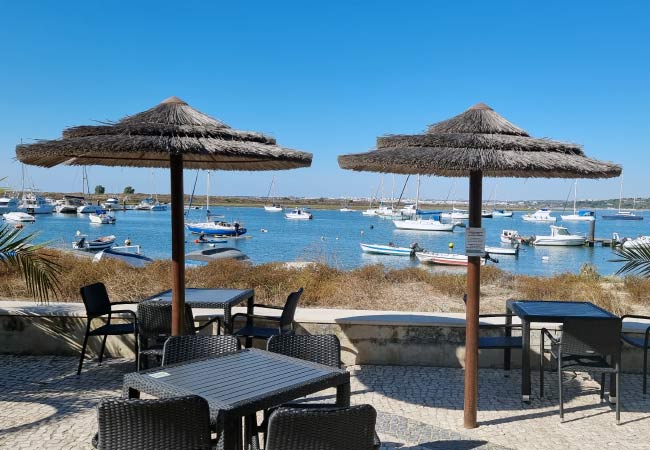
Alvor combines the character of a working fishing village with easy access to one of the region's finest beaches. The old centre clusters around a small harbour where boats still land the daily catch, its narrow streets lined with seafood restaurants. A wooden boardwalk stretches across the Ria de Alvor estuary, winding through wetlands busy with wading birds before reaching a beach that continues for kilometres. Alvor draws older visitors and couples looking for a relaxed holiday with genuine Portuguese character - Our guide to Alvor.
Carvoeiro
Carvoeiro occupies a striking position, its whitewashed buildings stacked around a small cove framed by golden cliffs. The village centre is compact and walkable, with enough restaurants to sustain a week without repetition. East of the beach, the Algar Seco boardwalk winds along the clifftops past unusual rock formations, blowholes, and viewpoints. The main beach is small, but quieter coves lie within walking distance for those wanting more space - Our guide to Carvoeiro
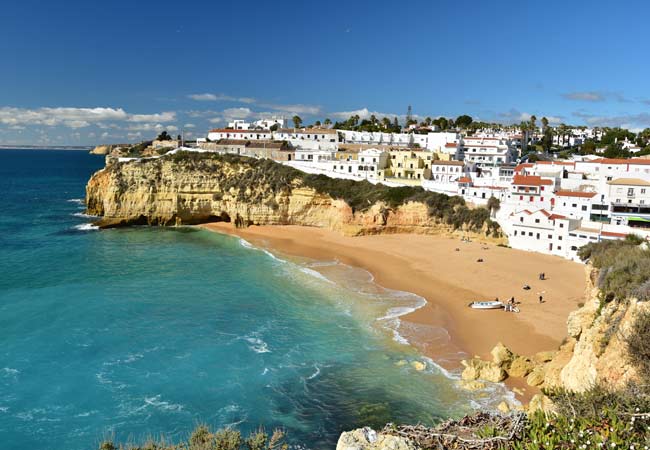
Olhos de Água
Olhos de Água retains traces of its fishing village origins despite the development that has spread along this stretch of coast. The beach occupies an attractive cove named for the freshwater springs that bubble through the sand at low tide. Seafood restaurants cluster near the shore, and the atmosphere feels more local than neighbouring Albufeira. Olhos de Água suits visitors who want proximity to the central Algarve but prefer a smaller, community-focused setting.
Praia da Luz
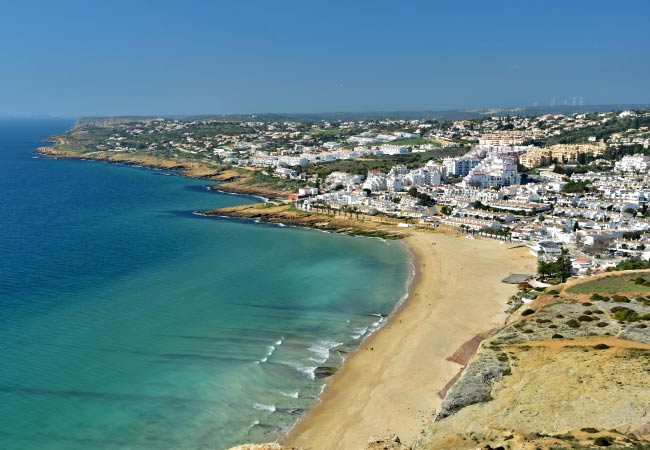
Praia da Luz has grown around a broad sandy beach without losing its village scale or relaxed pace. The seafront promenade is lined with restaurants and cafés offering enough choice without becoming overwhelming. A ruined fortress and a black rock promontory add character to the western end of the sand. The town attracts returning visitors and families who value its quiet, friendly atmosphere over the livelier scene in nearby Lagos.
Armação de Pêra
Armação de Pêra sits behind one of the longest beaches in the Algarve, a vast sweep of sand that absorbs crowds without ever feeling full. The town itself is more functional than picturesque, but the location works well for families with young children. A small fishermen's quarter at the western end retains traditional restaurants, and the dramatic coastline towards Benagil cave is easily reached by foot or boat. Our guide to Armação de Pêra
What to pack for a holiday to the Algarve in September
Since September is a transition month, your wardrobe needs to handle both the peak daytime heat and the cooling effect of the Atlantic after dark. During the day, temperatures often reach 28°C, so you should prioritize lightweight and breathable fabrics such as linen or cotton to stay comfortable. Because the region enjoys around ten hours of daily sunshine and a high UV index, sun protection is essential; ensure you pack high-quality sunscreen, a wide-brimmed hat, and polarized sunglasses.
The evening air changes quickly once the sun sets, with temperatures typically settling around 19°C. A medium-weight sweater, cardigan, or light jacket is necessary for outdoor dining to protect against the refreshing Atlantic breeze.
Practical footwear is the final essential for navigating the region's unique geography. Sturdy walking shoes are vital for the steep, cobbled streets, as these surfaces can be uneven and slippery. While sandals are perfect for the sand, a versatile pair of loafers or flats will be much more useful for long evenings spent exploring the town centres.
September is for Sightseeing
The warm, pleasant weather of September makes it the perfect time for sightseeing in and around the Algarve. The region’s many varied towns and natural sites are waiting to be explored, and there are plenty of fantastic day trips to enjoy. Here are some of the top recommendations for your sightseeing adventures:
Tavira
Head to Tavira, a beautiful town known for its charming architecture, Roman bridge, and peaceful ambience. It’s perfect for a leisurely day of exploration and relaxation.
Ria Formosa
Visit Ria Formosa, a natural park with a unique ecosystem. Explore the diverse wildlife, go on a boat tour, or simply enjoy the serene beauty of this protected area.
Benagil Cave
Take a boat tour to the Benagil Cave, one of the most famous natural landmarks in the Algarve. The cave’s stunning skylight and impressive rock formations make it a must-see.
Silves
Travel to Silves, a historic town with a rich Moorish heritage. Explore the well-preserved castle, visit the cathedral, and learn about the town’s fascinating history.
Seven Hanging Valleys
Hike the Seven Hanging Valleys Trail, a scenic coastal path offering some of the most breathtaking views in the Algarve. It’s perfect for nature lovers and photography enthusiasts.
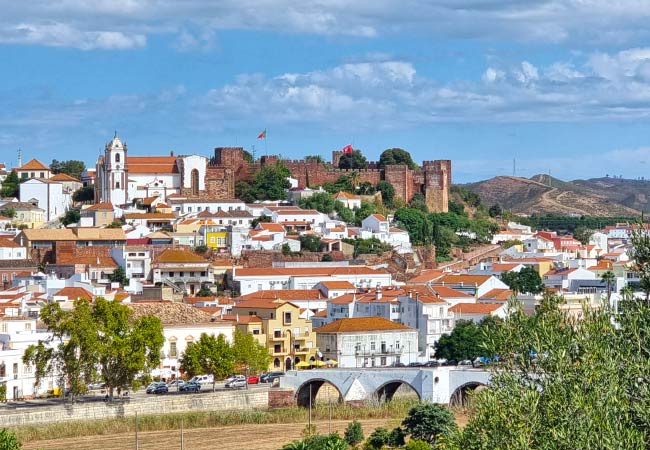
The Pretty town of Silves and the imposing castle
Our most popular guides to the Algarve


About the author: I'm Philip Giddings and have been writing these independent guides since 2009. I first visited the Algarve in 2001 when my Portuguese wife, Carla, was proud to show her country to me. We now live in Lisbon but I'm in the region most weeks researching and updating this site or visiting Carla’s extended family who live here. Having both Portuguese-family and friends who live within the Algarve gives me the local insight and personal connection to the region.
I love the Algarve region and strive to ensure every practical detail (such as ticket prices, opening hours) is correct, by checking against official sources and confirming in person on the many trips I make. I am experienced in Portuguese travel having written almost 2,000 guides for my wider set of Portugal Guides, and this is my full-time work and passion. The site is funded by affiliate commissions on tour and accommodation bookings, disclosed on every page that carries them. No tourist board, tour operator or attraction pays to appear here. My full story can be read here.