Algarve-Tourist.com
The best independent guide to the Algarve
Algarve-Tourist.com
The best independent guide to the Algarve
The Algarve: an independent travel guide for 2026
By Philip Giddings · Last updated
Most people come to the Algarve for the beaches. They picture golden sand, glorious sunshine and a week of doing very little. What they don't always expect is everything else: hilltop castles half-hidden among cork oaks, fishing villages where the daily catch still sets the menu, and a rugged western coastline that pulls surfers from across Europe. Portugal's most popular holiday region has far more depth than its beachside reputation suggests.
There are wide sand bays where families spread out for the day, and narrow coves tucked between sandstone cliffs, reached only by boat. Resort towns with busy marinas sit a short drive from quiet old quarters where cobbled lanes wind between whitewashed houses and the loudest sound is a church bell. Head inland and the landscape shifts again, to the wooded hills of Monchique, to small towns built around Moorish-era castles, and to a pace of life that feels a long way from the coast.
This variety is what makes the Algarve suit such different kinds of trip. My cousin with her last-minute break with friends, all beach bars and late-night cocktails in Albufeira. My sister and her young family choosing Alvor for somewhere calm and safe. My parents settling into the slower pace of Tavira, and me falling for Lagos and never really wanting to leave.
The Algarve has welcomed visitors for decades, and it shows. Not in a tired or overdeveloped way, but in the quiet competence of the place: well-kept accommodation at every price point, service that just works, and the Portuguese trait of making visitors feel at home. It is a region that knows how to look after its guests without making a fuss about it.
I have lived in and explored the Algarve since 2001, and together with my Portuguese wife, have come to know this region intimately. This guide draws on two decades of that firsthand knowledge to help you discover the Algarve and find the right place for your holiday.
Related articles: Algarve Highlights - The best beaches
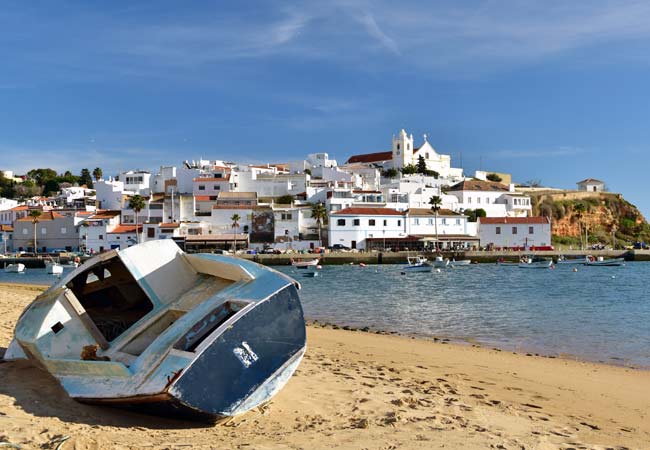
Ferragudo is a traditional Algarve fishing village
Where to go in the Algarve
The Algarve stretches for over 200km along Portugal's southern coast, and choosing where to base yourself is probably the biggest decision you'll make when planning your trip. It helps to think of the region in broad terms before narrowing down to individual towns.
Most visitors end up somewhere along the central and western coast, roughly between Lagos in the west and Vale do Lobo in the east. This is where the Algarve's tourist infrastructure is strongest: the beaches are easily reached, the restaurants and bars are plentiful, and there is a reliable choice of accommodation at every budget. If you're coming for a week or two of sun, sea and evenings out, this stretch has you covered.
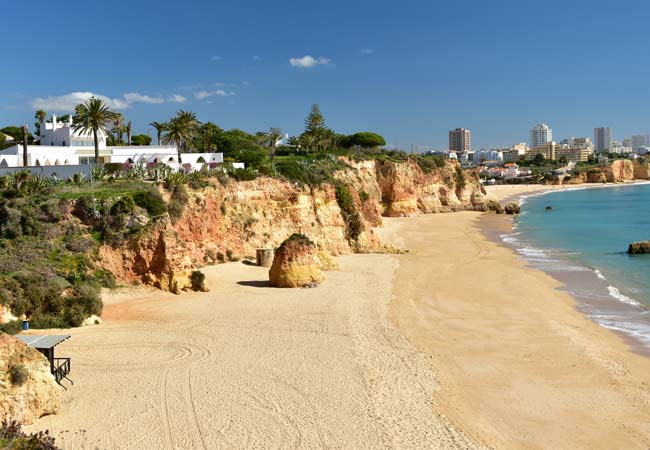
The beautiful beaches just to the west of Praia da Rocha (which can be seen in the background)
The four largest resort towns in this part of the Algarve are Albufeira, Lagos, Vilamoura and Praia da Rocha. Each has a distinct personality.
Albufeira is the busiest and the most popular for good reason. On one side of town is the Strip, a long road of bars and clubs that draws a younger crowd looking for big nights out. On the other, about two kilometres away, is the Old Town, a cluster of narrow streets and small squares that feels completely different: more Portuguese in character, and popular with families and longer-stay visitors. The two sides of Albufeira barely feel like the same place, which is part of its appeal.
Lagos is the one that tends to win people over, and is my favourite town. It feels more like a working Portuguese city than a purpose-built resort, with a walled old town, a good food scene and some of the most dramatic beach scenery in the region. It attracts a broad mix of visitors, from backpackers to couples to families, and holds its character year round.
Vilamoura is polished and upmarket, built around a large marina lined with restaurants and cocktail bars. It is particularly well known for its golf, with four courses within easy reach, and suits visitors looking for something a little more manicured and high end.
Praia da Rocha sits above a wide sweep of golden sand and has long been one of the Algarve's liveliest resorts. In recent years it has started to reposition itself, with newer hotels and a shift towards a slightly more refined feel, though it still has plenty of energy after dark.
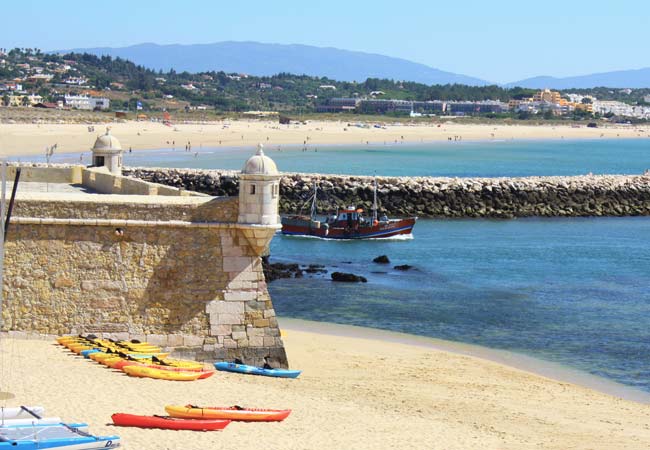
The Forte da Bandeira once guarded the entrance to Lagos harbour
Beyond the big four, the Algarve has a string of smaller towns along the same stretch of coast that suit visitors looking for something quieter. These places don't have the nightlife or the sheer scale of Albufeira or Lagos, but for many people that is exactly the point.
Carvoeiro is built around a small sheltered cove at the foot of a valley, with whitewashed houses climbing the slopes on either side. It has kept a genuine village feel, and its real draw is the coastline just beyond the town: golden limestone cliffs, hidden grottoes and sandy coves, including the much-photographed Benagil Cave.
Alvor sits between a long, sweeping beach and the calm waters of the Ria de Alvor estuary. It still feels like the fishing village it once was, with narrow cobbled streets sloping down to a harbour where boats come in each morning, but it has a surprisingly good choice of restaurants and enough low-key nightlife to keep evenings interesting. It is one of my favourite places in the Algarve, and the town I chose when my sister wanted somewhere safe and relaxed for her young family.
Olhos de Agua is tucked into a cove just east of Albufeira, close enough to reach the bigger town's restaurants and nightlife within minutes, but with a pace of its own. Fishing boats still line the beach and the seafood restaurants along the waterfront are among the best on this stretch of coast.
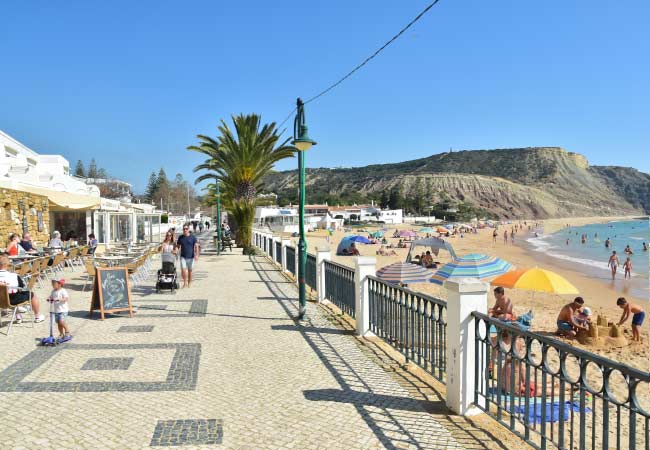
Praia da Luz further west, is the quietest of the four. There are no waterparks or club strips here, just a sheltered beach, a pleasant promenade and a handful of good restaurants where the staff will know your name by your second visit. Lagos is only six kilometres away when you want more energy, which for many visitors is exactly what makes Luz work so well.
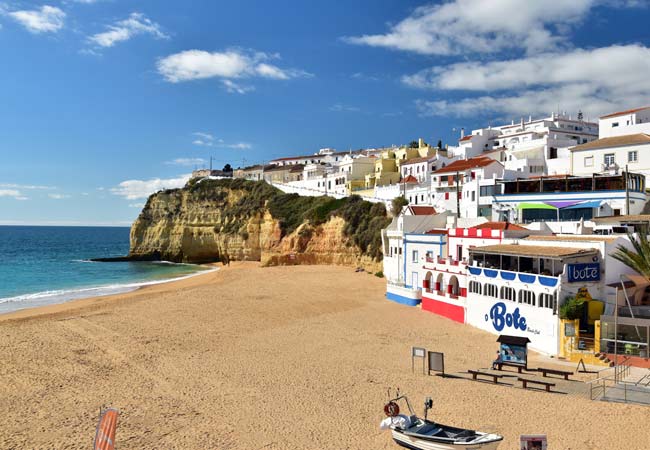
Carvoeiro is a pretty town and popular holiday destination
Beyond the main resort coast
East of Faro, the Algarve changes character. The big resorts thin out and the coastline is shaped by the Ria Formosa, a long stretch of tidal lagoons, salt marshes and barrier islands that runs roughly from Faro to the Spanish border. The beaches here are reached by ferry rather than by footpath, which has kept large-scale development at bay. The towns feel more Portuguese and less geared towards tourism, and the pace drops noticeably.
Tavira is the standout of the eastern Algarve. It is a genuinely handsome town, built along both banks of the River Gilão and filled with churches, tiled facades and small leafy squares. It has enough good restaurants and low-key bars to fill a week without trying, and its beaches, a short ferry ride across the Ria Formosa, are among the quietest and most beautiful in the region. Tavira suits couples and older travellers particularly well, though it is by no means dull.
The western coastline is something else entirely. North of Sagres, the coast turns and faces the open Atlantic, and the landscape becomes wilder and more dramatic. The cliffs are tall and dark, the beaches sit in deep coves or stretch wide and empty, and the sea is rougher and colder than on the south-facing coast.
There is very little development here. Much of it falls within the Parque Natural do Sudoeste Alentejano e Costa Vicentina, and it has more in common with the rugged coastlines of Ireland or Brittany than with the sheltered bays around Albufeira. If you are a surfer, a walker or someone who just wants wild scenery and not much else, this is where to come.
Inland, the Algarve rises into the low, wooded hills of the Serra de Monchique. It is sparsely populated and quietly beautiful, all cork oaks, eucalyptus and small villages where tourism barely registers. Most visitors see it as a day trip from the coast. The inland towns of Silves and Loulé are also well worth a visit: Silves for its enormous Moorish castle overlooking the river, and Loulé for its covered market and old quarter, which comes alive on Saturday mornings.
The map below shows the main resort towns and villages of the Algarve. Large resorts are marked in green, mid-sized towns in yellow and smaller villages in blue.
The large resorts (green): 1) Lagos 2) Praia da Rocha 3) Albufeira 4) Vilamoura
Medium size resorts (yellow): 1) Alvor 2) Carvoeiro 3) Armação de Pêra 4) Olhos de Água 5) Quarteira 6)Tavira 7) Monte Gordo
Small villages (blue): 1) Praia da Luz 2) Porto de Mós 3) Ferragudo 4) Galé 5) Cabanas
Where to go in the Algarve
With dozens of towns spread across 200km of coastline there is no single best place to stay. What works for a family in August is completely different to a romantic couple's holiday in June, my parents' unhurried week in Tavira, or my cousin's last-minute girls' trip.
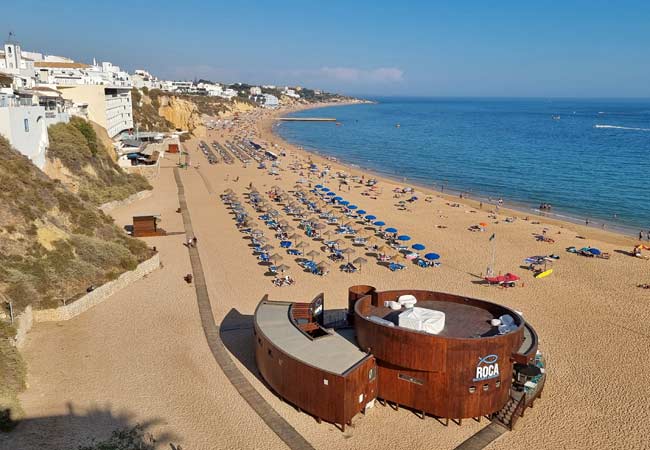
Families with school aged children
For a summer school holiday the central Algarve, roughly between Lagos in the west and Vilamoura in the east, is the obvious choice. Wide sheltered beaches, well-established resort infrastructure and easy reach of the water parks and theme parks for days out.
The main question is how much going on you want around you. The four biggest towns are Lagos, Albufeira, Vilamoura and Praia da Rocha. Albufeira is the liveliest and best for older teenagers, but be prepared, it is a full-on resort town and not for everyone.
Lagos has the best beach scenery in the region and feels like an actual Portuguese town rather than a resort built around tourism. This is where I took my brother and his family in August and it worked well for all ages.
Vilamoura is the most upmarket of the four and you pay a premium for it. Polished and influencer-trendy, but it has little Portuguese character and personally I find it a bit soulless.
Praia da Rocha is the compromise worth considering; lively but not as chaotic as Albufeira, generally cheaper than Lagos, and with a fantastic wide beach right in the town. Often overlooked, but one of the better family options on this stretch of coast.
If you want something smaller and calmer but still close to everything, Alvor, Carvoeiro, Armação de Pêra and Olhos de Água. Alvor is the one I suggest most often, a real fishing village with a long safe beach, a good range of restaurants, and narrow cobbled streets that haven't been flattened into a resort.
Couples
The most useful advice here is not about location but timing. Travel in June, early July or September and almost every Algarve town is close to ideal. Quieter beaches, easier restaurant bookings and a more relaxed atmosphere generally. August is louder, more crowded and more child-focused everywhere.
If you are tied to the school holidays, location matters more. Tavira in the eastern Algarve is the standout for couples wanting genuine peace and Portuguese character. A handsome town of tiled facades, river bridges and quiet squares, but it can feel remote and is a good hour from the waterparks and buzzing nightlife of the central Algarve.
Vilamoura works well in peak summer for couples who want comfort and good restaurants without much effort. For younger couples who want beaches, culture and easy access to everything else, Lagos is the smarter base. The best beach scenery in the region, a walled old town and vibrant nightlife.
My own preference, with the freedom to choose timing, is Lagos in June or September. But if quiet and genuinely Portuguese is what you are after, Tavira is probably the better answer.
A number of hotels in the Algarve are adults-only, which is worth knowing if you are travelling in peak summer and want to escape the chaos at the pool.
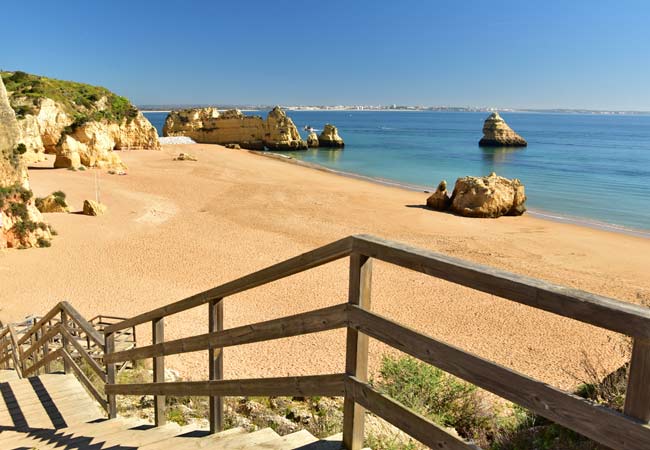
Older travellers
If you have the flexibility to visit outside peak season, May to mid-July and September to October are the sweet spot. The crowds thin, the prices drop and every town becomes noticeably more relaxed and equally appealing.
I took my parents to Tavira in June and they loved it. The small village of Cabanas is popular with long-stay visitors, Alvor and Olhos de Água both suit a quieter pace well, and Lagos is ideal if you want more to explore.
One often overlooked option is Albufeira old town, which in May, June and October feels like a completely different place to the resort town it becomes in summer.
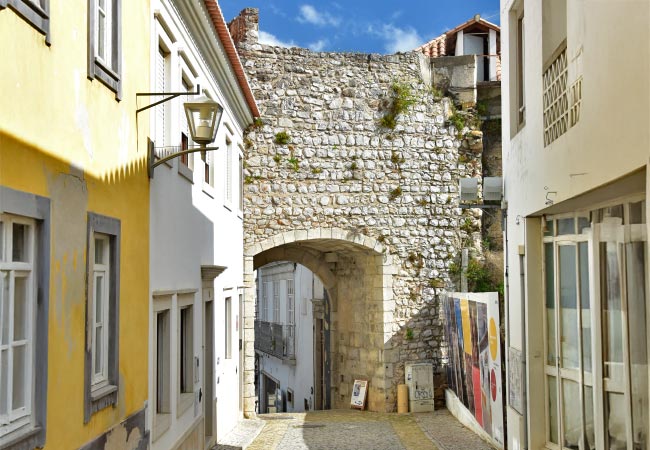
Families with toddles and babies
Travelling with my sister and her 18-month-old and three-year-old made me realise that all you really want for this kind of holiday is a beautiful beach and a calm, safe town. I took her to Praia da Luz in the far western Algarve for exactly that reason. Even in peak summer it stays noticeably quieter than the central resorts. Outside summer, Alvor and Armação de Pêra are both excellent choices for the same reasons.
Groups and party holidays
Albufeira is the honest answer for most groups. The Strip, a long road of bars and clubs about two kilometres from the old town, is purpose-built for big nights out, while Praia da Oura beach is ideal for recovering on. During peak season and shoulder weekends in June, July and September, expect themed bars, wild nights and lots of people there for exactly the same reason.
One important note for stag and hen groups: stick to Albufeira and the Strip. This is the part of the Algarve that is set up for it and will welcome you. Book a villa in a quiet resort and you will not be popular with your neighbours, and frankly you will have a much worse time too.
Lagos suits a slightly different kind of group. Friends in their mid-twenties or older who want good bars and late nights but also decent restaurants, sea kayaking, cliff walks and something to do with a hangover. It has a real town centre rather than a strip, which changes the feel considerably.
Vilamoura gets overlooked for group trips but works well for groups who want to spend money rather than save it. The marina restaurants, the casino and the golf make it a solid choice for a more upmarket lads or hens weekend.

Surfers and walkers
Go west. The coastline north of Sagres faces the open Atlantic and has almost nothing in common with the sheltered resort beaches further east. Tall dark cliffs, wide empty beaches, cold rough water and very little development. Sagres is a small town with a strong surf culture and access to some of the best breaks in Europe.
Most of this coastline sits within a protected natural park, which has kept the developers out and the scenery intact. It is not the place for a conventional beach holiday, but if wild coastline and empty paths are what you are after, nothing else in the Algarve comes close.
When to visit the Algarve
The Algarve is one of the sunniest regions in Europe, with over 300 days of sunshine a year and summers that are reliably hot and dry.
July and August are the peak months. Temperatures regularly reach 28 to 30°C, considerably hotter if you are lying on the sand in full sun. These are the school holiday months across most of Europe, so beaches are at their busiest, resort towns are at full volume and popular hotels can sell out weeks in advance.
June and September offer what many visitors consider the best balance: warm settled weather without the intensity of high summer. September in particular catches people out. It is one of the busiest months in the Algarve, as visitors without children take advantage of warm sea temperatures and quieter beaches. If you are planning a late summer trip, do not assume availability will be easy.
The sea is warm enough for comfortable swimming from June through to October, though the beaches are enjoyable from May onwards.
Spring and autumn are my favourite times. April, May and October bring temperatures in the low twenties, perfect for walking the coastal trails, exploring inland towns like Silves and Loulé, or simply enjoying the region without the heat and crowds.
From November the smaller resort towns wind down noticeably. Restaurants reduce hours or close for the season and the quieter villages can feel very empty. Winters are mild by northern European standards, around 15 to 17°C, but the weather becomes unpredictable. If you are visiting in winter, base yourself in one of the larger towns such as Lagos, Albufeira or Tavira where enough stays open year round to keep things comfortable.
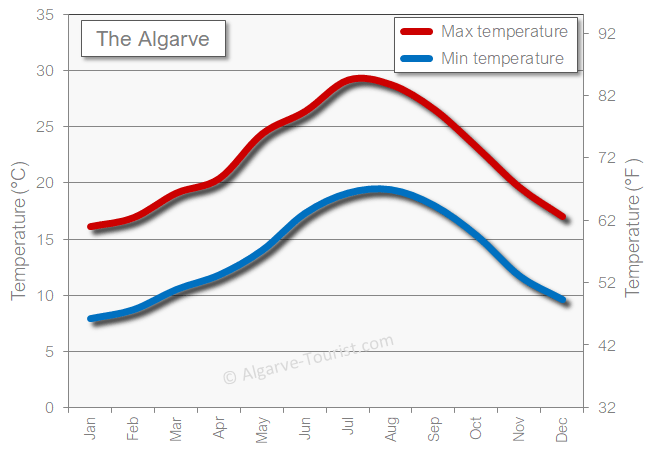
The daytime maximum temperature (measured in the shade) and night-time minimum
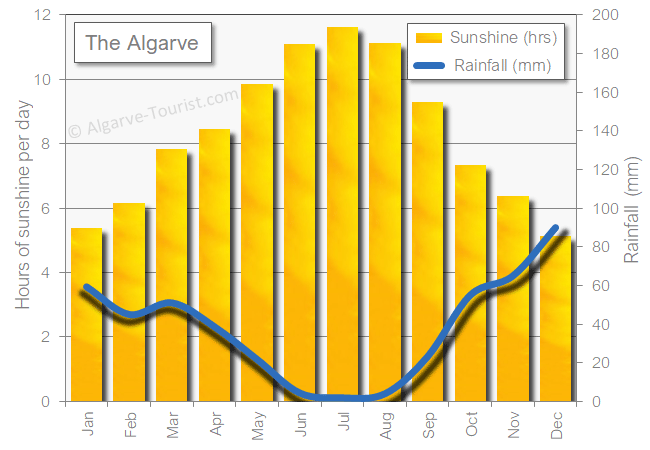
The average hours of sunshine per day and amount of rain
Summary of the Algarve's Major Towns and Resorts
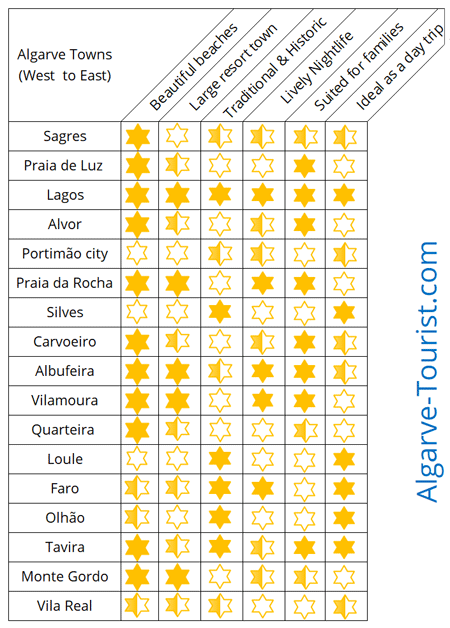
Choosing the right destination
Below is a quick summary of the main resorts within the Algarve. (Note: links open new tabs)
Our favourite places in the Algarve - Tavira, Carvoeiro and Lagos
Best large resort town - Lagos, Albufeira or Vilamoura.
Best smaller resort town - Carvoeiro, Praia da Luz or Alvor
For young children - Almost all of the central Algarve (excluding the Strip in Albufeira)
For teenagers -
Albufeira to Olhos de Agua, and Praia da Rocha,
Where to party -
Albufeira, Praia da Rocha or Lagos
For a mature and relaxing holiday -
Tavira, Alvor, Praia da Luz, Carvoeiro or Olhos de Agua
Expats favourite -
Olhos de Agua and Albufeira
Exclusive and stylish - Vilamoura or Vale do Lobo Region
Historic and cultural - Lagos, Tavira, Faro or Vila Real de Santo António
Stag or hen do's - The Strip in Albufeira (Stag do guide here)
Somewhere different - Faro, Tavira, Carvoeiro or Monte Gordo
Golfing Holiday - Vilamoura, Albufeira or Quarteira
Surfing Holiday - Sagres
In winter - Albufeira, Lagos or Olhos de Agua (the Algarve is not a winter sun destination)
Escape package tourists –
Vila Nova de Milfontes, Burgau, Vila Real de Santo António
If the Algarve is sold out or is too expensive in the summer -
Lisbon or Porto
(Lisbon and Porto both have great beaches, cheap flights and lots of accommodation, ideal for families and couples)
Touring the Algarve
One of the advantages of the Algarve is how much it changes over a relatively short distance. The calm tiled streets of Tavira feel nothing like the marina buzz of Vilamoura, and neither has much in common with the wild cliffs north of Sagres. No two towns are more than an hour's drive apart, which makes it easy to split a holiday across two or three bases and experience quite different sides of the region.
A common route works east to west: a few days in Tavira for the Ria Formosa and a slower pace, then moving to somewhere central like Albufeira or Lagos for beaches and evenings out, and finishing on the west coast around Sagres for dramatic scenery and quieter days. It works just as well in reverse.
My own favourite split is a week between Lagos and Tavira, two of the best towns in the Algarve with completely different characters, and between them they cover most of what makes the region worth visiting.
Related articles: Touring holiday ideas
For visitors from the USA
Portugal is rightfully becoming one of the most popular destinations for US tourists; there’s history, culture, and diversity, while still being one of Europe’s least expensive countries to visit.
The Algarve is one of the most beautiful regions of the country, but it cannot be fully seen in just an extremely short excursion from Lisbon. If you’re planning to visit the Algarve, allow sufficient time (five or more days) and embrace the relaxed pace of life of the region.
As indicated before, hotels need to be booked well in advance during the summer. For a cultural trip head to Lagos or Tavira, while for 5-star/golfing break visit Vilamoura. Public transport does not have the same social stigmas as in the US, and buses and trains are widely used by everyone.
Our most popular guides to the Algarve


About the author: I'm Philip Giddings and have been writing these independent guides since 2009. I first visited the Algarve in 2001 when my Portuguese wife, Carla, was proud to show her country to me. We now live in Lisbon but I'm in the region most weeks researching and updating this site or visiting Carla’s extended family who live here. Having both Portuguese-family and friends who live within the Algarve gives me the local insight and personal connection to the region.
I love the Algarve region and strive to ensure every practical detail (such as ticket prices, opening hours) is correct, by checking against official sources and confirming in person on the many trips I make. I am experienced in Portuguese travel having written almost 2,000 guides for my wider set of Portugal Guides, and this is my full-time work and passion. The site is funded by affiliate commissions on tour and accommodation bookings, disclosed on every page that carries them. No tourist board, tour operator or attraction pays to appear here. My full story can be read here.